Postponement thwarts NASA attempt to rescue Swift Observatory space telescope from collision with Earth

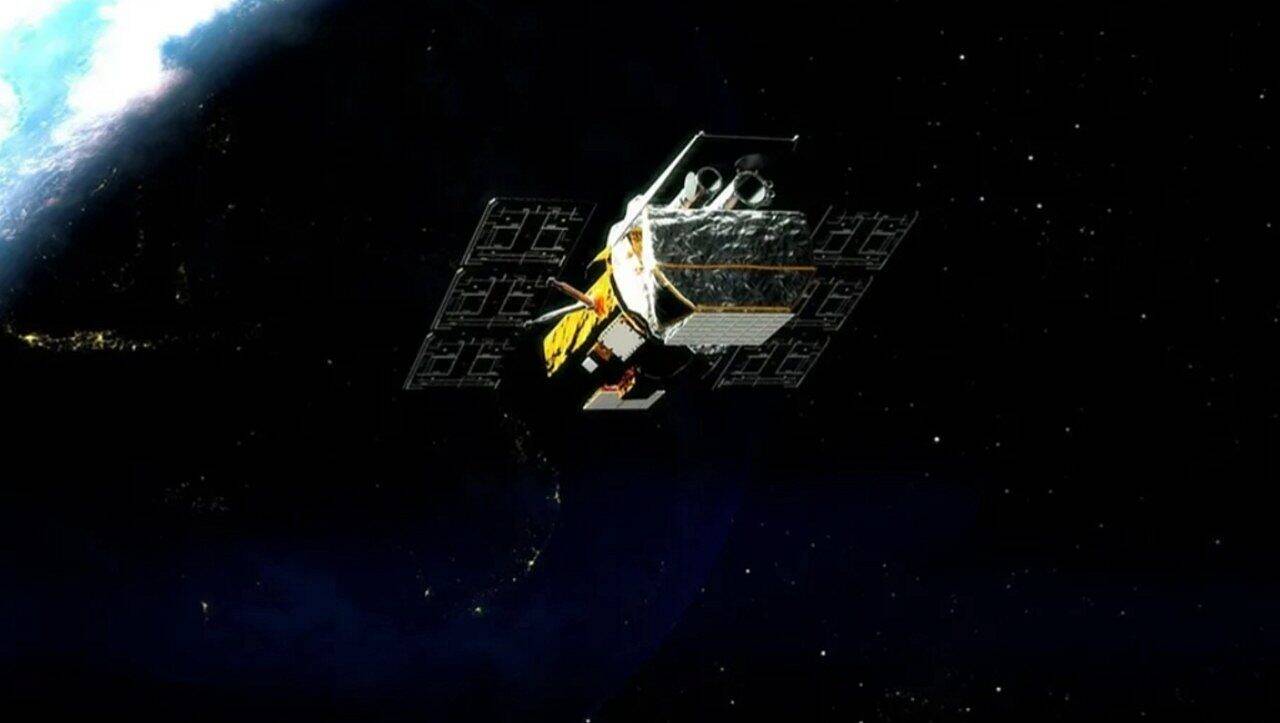
An unprecedented mission to prevent a NASA telescope from falling into the Earth’s atmosphere has been postponed yet again. The rescue spacecraft, scheduled to boost the observatory to a higher orbit, had its departure postponed for the second time in two days.
The initial plan called for the pioneer mission to launch at 5:09 am EDT (09:09 am GMT) on Thursday, July 2. A Lockheed Martin L-1011 aircraft would depart from the Marshall Islands, carrying the Link probe, equipped with a robotic arm. In flight, a Northrop Grumman Pegasus XL rocket would launch Link into orbit so it could encounter NASA’s Neil Gehrels Swift Observatory, a gamma-ray telescope that has been gradually losing altitude toward an early end.
However, a problem with the launch vehicle forced the operation to be suspended. This is the second consecutive postponement, following a canceled attempt the day before.
The private company Katalyst Space developed the Link probe with an investment of 30 million dollars. Katalyst’s goal is to find the Swift Observatory, which was launched in 2004 and is falling, and raise it to a higher orbit using Link’s robotic arms and thrusters. Despite its loss of altitude due to Earth’s natural atmospheric drag, Swift still possesses considerable scientific value; Without this assistance, scientists predict it should re-enter Earth’s atmosphere later this year.
Shawn Domagal-Goldman, director of NASA’s Astrophysics Division, highlighted the nature of the undertaking. He stated that this is a “high risk, high reward” mission offering many benefits. The effort is more affordable than replacing Swift capabilities and promotes the development of the satellite maintenance industry in the United States, with benefits for all.
The Swift cost US$250 million in 2004, which corresponds to approximately US$450 million today, considering inflation. This value makes it a relatively economical observatory, especially when compared to the $10 billion James Webb Space Telescope. Its original mission was to investigate gamma-ray bursts, which are gigantic cosmic explosions resulting from the collapse of massive stars into black holes. Over more than 20 years, Swift has made numerous observations of these explosions, as well as monitoring other stellar activity, such as X-ray flares and supernova explosions, and transient objects, such as comets and asteroids.
At its core, the Swift telescope offers valuable insight into the changing dynamics of the universe over short intervals.
S. Bradley Cenko, Swift principal investigator and astrophysicist at NASA’s Goddard Space Flight Center, described the observatory as NASA’s “all-in-one tool for studying the cosmos.” He highlights that Swift observes the sky in a broad spectrum of light, with the ability to quickly target short-lived events, alerting other space and ground-based facilities to coordinate complementary observations.
The rescue mission faces several important challenges. Swift was not designed for in-orbit servicing when it was launched, which adds logistical complexity to the project. Furthermore, NASA only awarded the contract to Katalyst in September, driven by recent high solar activity that expanded Earth’s atmosphere, unexpectedly accelerating the telescope’s fall due to increased drag. This required the mission to be ready for space in less than a year, despite the usual rigorous design, construction and testing requirements.
Katalyst accepted the challenge motivated by its interest in performing this type of service more frequently. Ghonhee Lee, CEO of Katalyst, stated that to build a lasting presence beyond Earth, the ability to manipulate the space environment is essential. This entails the use of robotic spacecraft that can reposition, repair, refuel and equip satellites after launch.
If Swift had not changed its operations plan, the spacecraft would have been unrecoverable by July. To allow as much time as possible for Link’s rescue, the operations team at Penn State’s Eberly College of Science implemented modifications.
As part of these changes, Swift’s scientific activities were minimized, and the telescope began to observe targets only when positioned in an “aerodynamic” way to reduce drag, as explained by NASA. Power consumption has also been drastically reduced, allowing Swift’s solar panels to operate in a “more aerodynamic orientation,” which also decreases the drag that accelerates the spacecraft’s descent.
These modifications will allow the Swift to remain above the minimum rescue altitude of 298 kilometers (185 miles) until the fall, according to the agency’s models. During this time, Katalyst will perform the Link “commissioning” process to ensure all systems are operational. NASA estimates it will take Link about a month to catch up to Swift.
After these steps, Link will approach Swift for a detailed evaluation. Next, Katalyst will use Link’s robotic arms to dock with NASA’s observatory. With its propulsion system, Link will gradually raise Swift’s orbit to approximately 595 km (370 miles), an altitude considerably above the path of the International Space Station, which orbits about 400 km (250 miles) from Earth.
NASA did not specify how long Swift would remain operational after safely reaching the new orbit. However, data from the European Space Agency indicates that spacecraft at an altitude of 500 km (310 miles) re-enter the atmosphere in about 25 years. This suggests that if Swift’s instruments remain functional, scientists could count on many additional years of observations.
Beatriz Lima é colaboradora da redação do Mix Vale, portal de notícias com cobertura de Brasil e mundo. Produz conteúdo nas editorias de economia e benefícios, com foco em informação de serviço para o leitor brasileiro. Escreve para o portal desde 2024.