

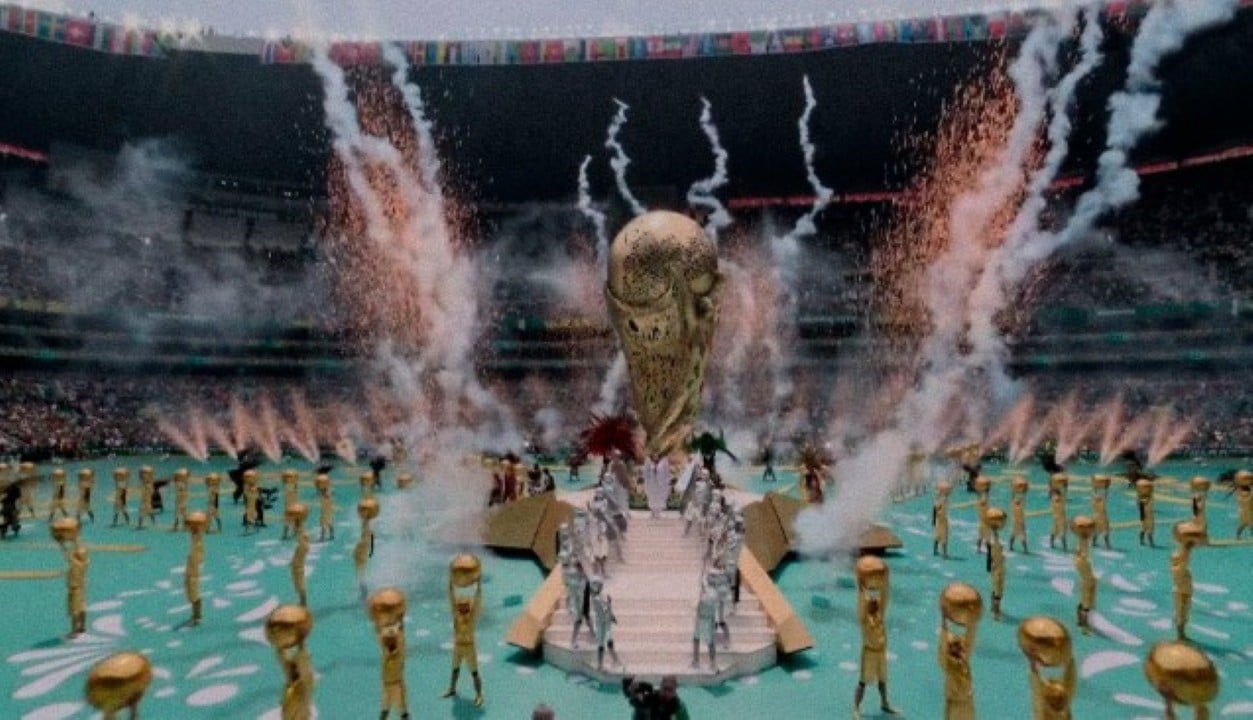
Conmebol, the highest entity in South American football, intensified its campaign to host a World Cup with 64 teams in the 2030 edition, but the proposal faces significant obstacles and is considered unlikely at this time. The initiative seeks to further expand the format of the tournament, which will already feature 48 teams from the 2026 edition onwards.
Although the 2026 World Cup, with 48 teams, generated impressive numbers, such as record attendance and high goal averages, providing arguments for the “bloating” of the competition, the idea of adding 16 more teams for 2030 is met with strong opposition. The transition to an even larger tournament raises serious logistical and financial concerns among the confederations.
Conmebol seeks expanded tournament to celebrate the centenary of the World Cup
Since last year, Conmebol has been the main defender of expanding the World Cup. The official justification for this desire is to make the competition more inclusive, especially as it is the edition that will celebrate 100 years of the first World Cup, played in Uruguay in 1930.
Behind the rhetoric of inclusion, the South American entity aims to bring a considerable number of games to the continent. Initially, Argentina, Paraguay and Uruguay will guarantee one game each as hosts in 2030, a historic agreement after losing the main candidacy to Spain, Morocco and Portugal.
Details of the South American proposal to host more games
Conmebol seeks to expand South America’s participation in the 2030 World Cup from just three to 18 matches, proposing that each of the South American countries receive a full group. This arrangement aims to strengthen the region’s presence in the commemorative tournament.
The change in format would also resolve the complexity observed in the North American Cup, where eight best third-placed teams will advance. Conmebol’s suggestion is to organize 16 groups with four teams, with the top two of each progressing to the knockout stage, increasing the number of group stage games from 72 to 96.
Logistical challenges and international resistance to the format
Despite Conmebol’s arguments, the idea of a World Cup with 64 teams faces significant barriers. The confederations Concacaf (North America and the Caribbean) and AFC (Asia) have already expressed their clear opposition to the expansion proposal.
UEFA, which represents European football, emerges as the main antagonist. The entity expresses concerns about the immense logistical difficulties that a tournament of this size would entail. In May, the European confederation announced a new classification model for the 2030 World Cup, mirroring the Champions League league format.
While the first phase of the 48-team World Cup in 2026 was successful with attendance and goals, the transition to 64 teams is seen as an overly ambitious leap, with infrastructure and sporting calendars as major impediments.
- Numbers for the World Cup with 48 teams (in the first phase):
– 4.6 million people in stadiums during the first phase.
– 215 goals scored, an average of almost three per match.
– Nine African teams advanced to the second phase, a historic record.
The financial impact on the South American qualifiers
Paradoxically, the proposal to expand the World Cup to 64 teams is met with resistance even within Conmebol itself, mainly due to financial issues. The South American qualifiers, with 18 matches in a free-for-all format, are a crucial source of revenue for most of the continent’s federations through the sale of broadcasting rights.
Currently, Conmebol has six direct places and one playoff place in the World Cup. With a tournament of 64 teams, this number of places would increase significantly, which, in the view of some directors, would devalue the qualifiers.
For 2030, the situation worsens with the automatic classification of Argentina, Paraguay and Uruguay as host countries, making the next qualifiers less attractive. Conmebol is discussing the creation of a League of Nations, with prizes and titles, to maintain interest and revenue, allowing those classified in advance to also compete in the competition.
The expansion proposal was included on the agenda of a FIFA Council meeting in October last year, but ended up not being debated. Conmebol, however, continues its lobbying work in favor of its ambitious project for the next edition of the World Cup.




