China’s Tianwen-2 mission begins collection on asteroid Kamoʻoalewa, suspected of being a fragment of Earth’s moon

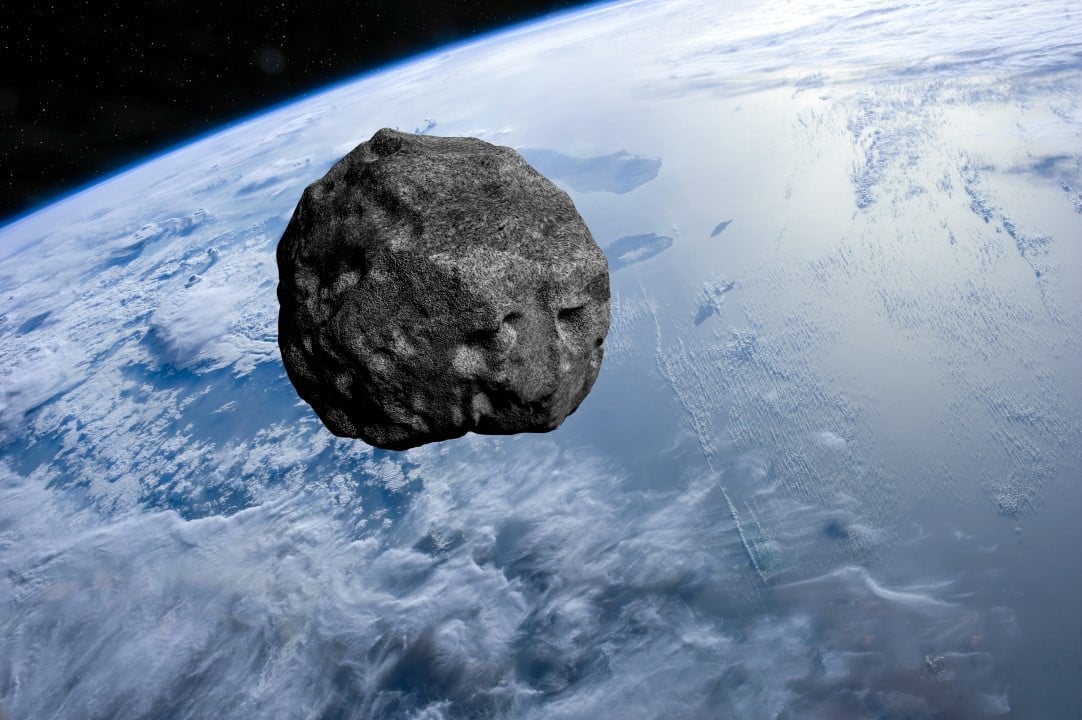
The Tianwen-2 space probe, developed by China, has completed its long journey and arrived at the asteroid Kamoʻoalewa, one of seven celestial objects known as Earth’s quasi-satellites. The main objective of this complex mission is to collect samples from the asteroid’s surface and bring them back to our planet for detailed analysis, seeking to discover whether Kamoʻoalewa is, in fact, a fragment of Earth’s Moon. Confirmation of this hypothesis could redefine the understanding of lunar formation and the dynamics of impacts on the solar system.
Tianwen-2’s ambitious journey to the quasi-moon
Tianwen-2’s journey began on May 29, 2025, on a journey that lasted 400 days, covering an impressive distance of one billion kilometers. On July 2, 2026, the Chinese spacecraft finally reached the vicinity of Kamoʻoalewa, taking the first close-up images from a distance of approximately 20 kilometers. These photographs revealed an oblong rocky body, about 20 meters wide, confirming previous estimates from ground-based telescopes.
Unraveling the concept of Earth’s quasi-satellites
Quasi-satellites, like Kamoʻoalewa, represent a fascinating category of celestial objects. Although they orbit the Sun, they maintain a peculiar gravitational relationship with Earth, moving synchronously with our planet and remaining at a relatively close average distance, about 9 million miles. This complex orbital dance distinguishes them from typical asteroids, which generally follow more independent trajectories, and differentiates them from true moons, which directly orbit a planet. Tianwen-2 will now explore one of these rare companions of our system up close.
Kamoʻoalewa: the asteroid with lunar DNA
The theory that Kamoʻoalewa could be a piece of Earth’s Moon has gained momentum in the scientific community. The asteroid was discovered in 2016 by astronomers using the Pan-STARRS 1 telescope, located in Haleakalā, Hawaii. Subsequent observations, including those made by the advanced James Webb Space Telescope, helped refine estimates of its size and shape. The orbital proximity to Earth and the characteristics of its composition raise the intriguing possibility of a lunar origin.
Evidence pointing to a lunar origin
Several scientific investigations in recent years have offered important clues about the possible origin of Kamoʻoalewa. The Tianwen-2 mission seeks definitive proof that can confirm these hypotheses and rewrite parts of lunar history.
– 2021 Spectral Analysis: Researchers analyzed Kamoʻoalewa’s spectrum and found that its composition matches that of lunar rocks collected during NASA’s Apollo missions.
– 2024 Study: Research suggested that the asteroid may have been ejected from the Moon by an impact that created the Giordano Bruno crater, an event that occurred between 1 million and 10 million years ago.
– Probe observations: Close-up images of Tianwen-2 corroborate size estimates compatible with a lunar fragment, solidifying the theory that it could be a fragment detached from our moon.
The next steps: sample collection and return to Earth
Upon arrival at the asteroid, Tianwen-2 will begin the most critical phases of its mission. The probe is scheduled to land on Kamoʻoalewa and collect a sample of its surface material. In parallel, it will spend several months carrying out remote sensing observations, which will provide additional data on the asteroid’s composition and structure. The return of these samples to Earth is critical as it will allow scientists to analyze the material with advanced laboratory equipment that is impossible to transport to space, offering the chance to confirm Kamoʻoalewa’s lunar link.
The success of the Tianwen-2 mission will not only answer a fundamental question about the origin of Kamoʻoalewa, but also expand knowledge about the dynamics of impacts in the solar system and the geological history of the Moon. The recovery of samples from an asteroid with such unique characteristics represents a significant milestone in space exploration, opening new frontiers for planetary research and understanding the building blocks of our own system.