
Earth reaches appellation 2026: furthest point from the Sun, but this does not define the seasons

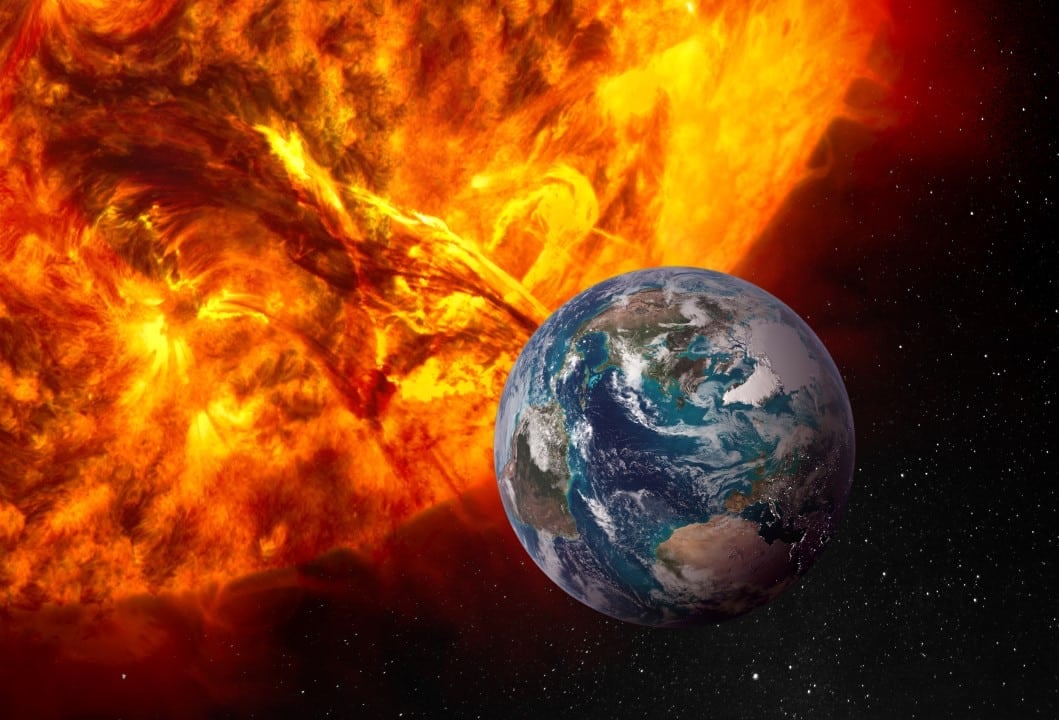
This Monday, July 6, 2026, planet Earth reached the furthest point in its orbit in relation to the Sun, an astronomical phenomenon known as aphelion. This year, the event placed the Earth approximately 152 million kilometers from the star, around five million kilometers more than the distance recorded in January, during perihelion. It is crucial to understand that, despite this greater distance, this phenomenon is not responsible for changes in global temperatures or the occurrence of seasons.
Understanding Earth’s elliptical motion
The path that the Earth takes around the Sun is not a perfect circle, but rather an ellipse. This oval shape causes the distance between the planet and the star to constantly vary throughout its annual journey. Aphelion represents the moment when the Earth is at the furthest point from the Sun, while perihelion marks the point of greatest proximity. The path variation between these extremes is approximately 3% of the total distance, a natural aspect of orbital mechanics.
The real cause of the seasons: tilt of the earth’s axis
There is a common belief that winter occurs because the Earth is further from the Sun, but science debunks this idea. The seasons are, in fact, mainly determined by the tilt of the Earth’s axis of rotation, which remains at around 23.5 degrees. This inclination causes different regions of the planet to receive different amounts of direct sunlight at varying periods throughout the year.
A clear example of this influence is that, while the Southern Hemisphere goes through winter with less sunlight, the Northern Hemisphere experiences summer, even though both are at the same distance from the Sun. If orbital distance were the primary factor, all regions of the planet would experience the same season simultaneously, which does not happen.
Small changes in solar speed and radiation
Although aphelion does not determine the seasons, it causes some physical changes, although imperceptible to Earth’s inhabitants. Kepler’s second law, which describes the movement of planets, predicts that celestial bodies move more slowly when they are further away from the star they orbit and accelerate as they get closer. Consequently, the Earth slightly reduces its translation speed during aphelion.
Furthermore, the amount of solar energy that reaches the planet also varies slightly. At the point of greatest separation, the Earth receives about 7% less solar radiation compared to perihelion. However, this difference is considered minimal and does not significantly impact the global climate, whose main influence continues to be the planet’s axial tilt.
The predictability of the phenomenon for astronomy
For the scientific community, aphelion is a predictable and essential event for the study of celestial mechanics and Earth’s orbit. Its annual occurrence allows astronomers to deepen their understanding of the movements of our planet. The phenomenon reinforces the importance of differentiating the real causes of climate variations, such as the tilt of the Earth’s axis, from misperceptions related to the distance between the Earth and the Sun.





