
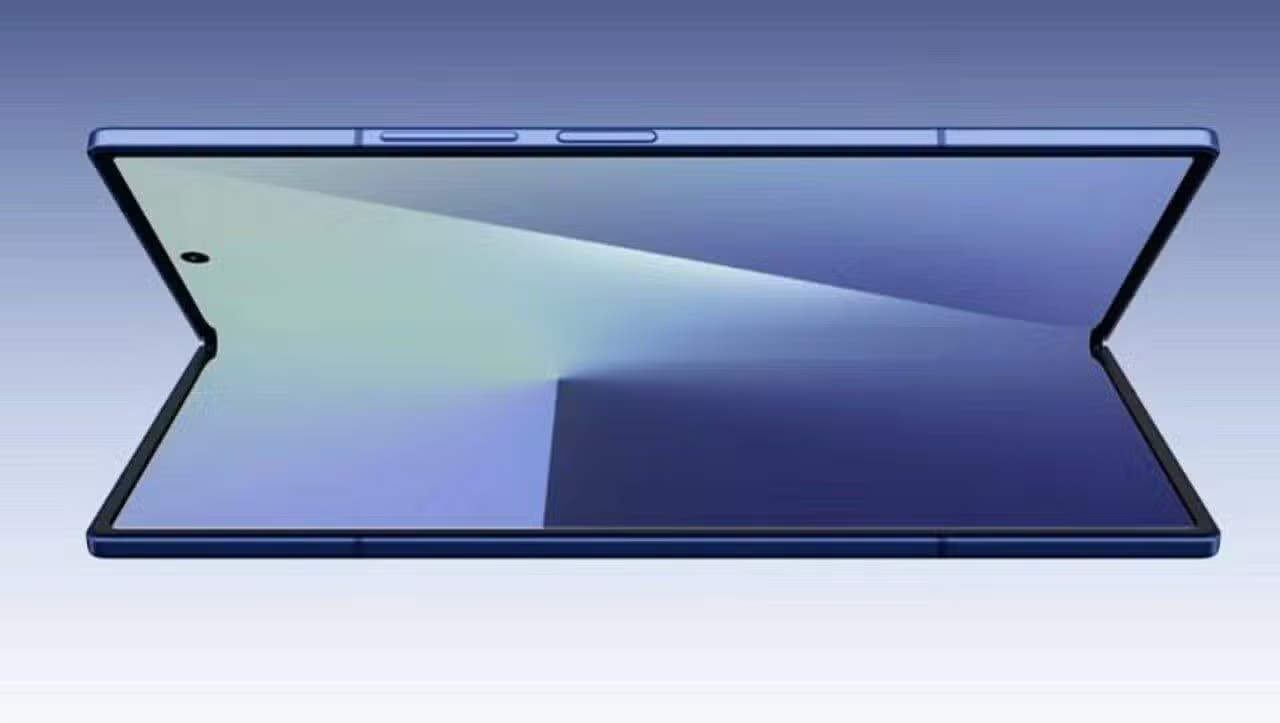
After the presentation of the Galaxy S26 line in February, Samsung is moving to expand its range of high-tech devices. Known for its annual Galaxy Z Fold and Galaxy Z Flip foldable smartphones, the South Korean giant plans to launch a third model in 2026, introducing a new design to the Galaxy Z series.
Confirmations and teasers about the upcoming Galaxy Z Fold 8
There has been great speculation online in recent months about the likely format of the third device in the Galaxy Z family. Recently, the company itself confirmed that it will launch a new smartphone with a flexible screen, which will have very different characteristics from the current Flip and Fold models. Samsung shared the first details on its digital platforms, generating high expectations among technology enthusiasts.
The images released suggest that Samsung’s next foldable phone will have a slightly wider silhouette, breaking with the profile present in the Galaxy Z Fold models. This new look is reminiscent of the Microsoft Surface Duo concept, but with true folding capability. The company has maintained complete discretion over the full specifications of its future line of flexible devices to date.
Leaked details and speculation about Samsung’s new foldable
Even with Samsung’s great secrecy regarding its new flexible device, several industry sources have already revealed a vast amount of information based on rumors.
Unofficial reports indicate that the mysterious model will be called ‘Galaxy Z Fold 8’. Meanwhile, the Galaxy Z Fold 7 is expected to be succeeded by the ‘Galaxy Fold 9 Ultra’, which promises an elegant finish when closed. The Galaxy Z Fold 8, in turn, will feature a larger screen when opened, being shorter and wider than the Galaxy Z Fold 7, with a 4:3 screen ratio. A sophisticated construction in resistant aluminum is expected, protected by Gorilla Glass Victus 2 and IP48 certified, guaranteeing greater resistance to water and dust.
Regarding visual characteristics, the smartphone must have a 5.4-inch borderless external screen and a 7.6-inch internal screen when unfolded. Both screens are expected to employ LTPO OLED technology, with a refresh rate of 120Hz and a peak brightness of 2,600 nits. For photography capabilities, there are hints of a dual rear camera system, including a 50MP main lens and a 50MP ultra-wide lens. There are also rumors of a 10MP front camera present on both the internal and external screens.
This new foldable device is expected to be powered by Qualcomm’s latest chip, the Snapdragon 8 Elite Gen 5. It should also offer RAM memory options of 12 GB or 16 GB, combined with internal storage of 256 GB, 512 GB and 1 TB.
The well-known “leaker” Ice Universe has already released a clearer preview of the likely appearance of the future Galaxy Z Fold 8, showing that the phone could be available in colors such as lilac, white, black and blue.
Price estimates and launch window for the new model
Projections indicate that the upcoming Samsung Galaxy Z Fold 8 could be priced between $1,800 (equivalent to around ₹1.72 lakh) and $1,900 (roughly ₹1.81 lakh). The entire new line of flexible devices is expected to be unveiled worldwide on July 22, 2026.
Samsung’s strategy when innovating with a third foldable device
To understand the reasons for this decision, it is essential to note that the change in Samsung’s strategy for foldable cell phones comes at a crucial time. The flexible screen smartphone segment has shown continuous growth, expanding its market share. An IDC survey, released at the beginning of the year, predicts an increase of 30% per year in the global foldable market until 2026. At the same time, Counterpoint projects that global deliveries will grow 20% in 2026, with Samsung maintaining absolute leadership.
Despite the small variations in the numbers, both studies agree that Apple’s arrival in the foldable sector will be a decisive catalyst to boost global sales. “The launch of Apple’s first foldable iPhone will mark a watershed moment for the segment… This initiative will likely raise category awareness and intensify consumer interest,” said Francisco Jeronimo, vice president of client devices at IDC, in his report last year. Similarly, Counterpoint predicts that Apple will capture 28% of the foldable market after its debut in 2026, a share close to Samsung’s 31%.
With the introduction of its new foldable smartphone with a design that resembles a notebook, Samsung seeks to achieve two primary objectives. Firstly, the intention is to further strengthen its position in the global foldable market and establish the Galaxy Z Fold line as the reference premium devices, surpassing competitors such as the Pro Max and Ultra models. Secondly, it aims to compete directly with Apple, which should finally present its first iPhone with a flexible screen — be it iPhone Fold, iPhone Ultra or another name later this year, consolidating the dispute for leadership in innovation in the segment.
The format that imitates a notebook, speculated for the Galaxy Z Fold 8, offers a more logical proposal for everyday life, going beyond the compact functionality of the Galaxy Z Flip phones. While the clamshell format facilitates portability, current Z Fold models already provide additional screen area for content consumption on a slightly larger display. For most daily tasks, such as using messaging and social media apps, making calls, listening to music or managing emails, users can operate without having to unfold their smartphone. However, these devices still do not completely replace a mini tablet, and it is exactly this usability-to-productivity gap that the new notebook-style design aims to fill. It represents a viable alternative for those looking to maximize their productivity and prefer to avoid carrying multiple devices.
Certainly, the device will not replace a 13-inch iPad Pro or a 14.5-inch Galaxy Tab S Ultra, as that is not its purpose. It is also not intended to replace laptops. However, it will provide users with clarity about when a high-performance tablet is truly necessary and when a large-screen smartphone can suffice for most of their daily productivity demands.