
Xuxa opens up about sexual freedom and plans for the future by celebrating 40 years of career with Último Voo da Nave

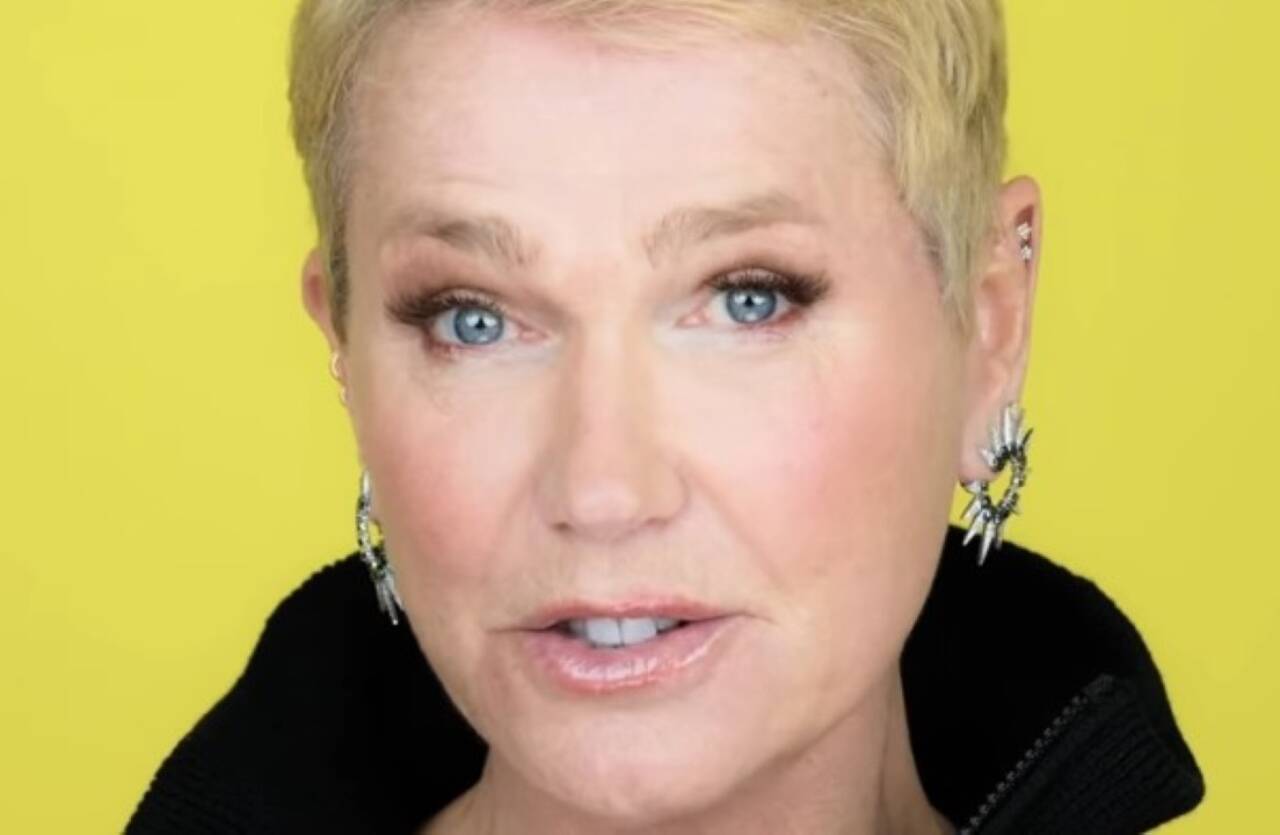
The journalist in charge of following Xuxa’s cover shoot for Quem magazine, at Estúdio X itself, at Rainha dos Baixinhos’ house, reports having felt an intense mix of expectation and enthusiasm. Even with more than two decades of experience in entertainment journalism and having interviewed the presenter previously, the fan side prevailed.
In the environment adorned by photographs and objects that narrate more than 40 years of professional career, the reality of being at Xuxa’s residence was confirmed when touching the classic pair of white boots from the 80s, part of one of the ten costumes in the session. On the way to the studio, the image that accompanied him was that of a Xuxa with chuquinhas and microphone, like on the mornings of “Xou da Xuxa”. However, what he found was Maria da Graça Xuxa Meneghel, recently woken up, barefoot and without makeup, calm, greeting the team with kisses.
During photo breaks, Xuxa cuddled her Yorkshire Terrier Doralice, shared videos on her cell phone and talked about different topics, creating an atmosphere of familiarity. Quickly, the mythical star of her imagination gave way to a simple and genuine woman. At that moment, the idea of showing off her records or bothering her with childhood memories lost its meaning, the desire to just observe her and truly get to know her prevailed.
In a frank interview with reporter Marina Bonini, who grew up watching his programs, Xuxa revealed the insomnia caused by the anticipation of the commemorative tour “O Último Voo da Nave”, which starts on July 25th. She addressed the obstacles overcome in her career to recognize her own success, the profound transformation after the birth of her daughter, Sasha Meneghel, the sexual freedom found at the age of 49 alongside Junno Andrade, and her reflections on ageism at the age of 63, in addition to envisioning her future in another two decades.
Upon returning to São Paulo the next day, the journalist listened to songs from Xuxa’s first albums at the gym, and the image of the Rainha dos Baixinhos resurfaced. He recalled his childhood, when he saw himself being inspired by her and believed that, following the message of “dreams always come to those who dream”, he would fulfill his desire to work with what he loved most.
Preparations and farewell to the iconic ‘Last Flight of the Ship’
The presenter clarified that the retirement of the “ship” symbolizes the end of her image associated with chuquinhas and a younger face, an idea that she has had for around three years. However, she emphasized that this does not mean the end of her presentations or public appearances, as she is not yet considering retirement from her career.
Xuxa confessed to feeling anxious and nervous about the tour, to the point of not being able to sleep, but believes that this phase of apprehension will soon pass.
She explained that she intensified her physical activity routine in preparation for the tour, training daily except Sundays. Despite increasing the frequency of exercise to avoid fatigue, her vegan and healthy diet has not changed.
The “O Último Voo da Nave” tour promises new choreography and costumes that evoke the atmosphere of the 80s and 90s. The setting will be entirely virtual, using current technology, including artificial intelligence, and the main ship will be presented in 360 degrees, an innovation that Xuxa considers incredible for the time.
The artist demonstrated her belief in the existence of extraterrestrial life, stating that it is impossible to imagine humanity as the only form of life in such a vast universe. She joked that if she had any experience with flying saucers or ETs, she would make a point of sharing it publicly, just as she did when reporting seeing elves.
The artist describes her 23-year-old version, who started the ship’s first flight in 1986, as a young woman full of aspirations and with the main desire to satisfy her mother, Alda Meneghel, who passed away in 2018. Her biggest dream was to be able to constantly treat her mother to gifts.
She stated that she maintains the dreamy spirit of that time, but now with the conviction of being a victorious woman. Xuxa revealed that what she would like to have left behind was the tendency to believe less in herself and more in other people.
Xuxa recalled that the global notoriety she achieved, including being listed by the French newspaper Libération in 1987 among the ten most influential women on the planet alongside figures such as Margaret Thatcher, was not fully understood by her at the time. She highlighted the difficulty of obtaining worldwide recognition before the internet, highlighting that such projection for someone who came from the interior of Rio Grande do Sul and grew up in the Rio suburbs was something unusual and of a magnitude that she only realized later.
She emphasized that she never needed her mother to remind her of her essence. On the contrary, her mother constantly encouraged her, telling her that she was “different and special” and capable of achieving anything, strengthening her self-esteem.
The presenter revealed that she faced countless jokes and prejudices in the 80s, which were considered “normal” in society at the time, such as the idea that “all blonde women were stupid”. She recalled the jokes about her relationship with Pelé, where people doubted their love, and he himself made jokes. Xuxa felt bad, but was unable to react, realizing that, even before her merit was taken away, she herself did so by putting herself in a position of not defending herself.
Xuxa vehemently refuted the invention that she had made a pact, stating that her leader is God, whom she affectionately calls “the guy up there”, a youthful slang that she maintained by talking to him daily. She reiterated that her success came through God and criticized those who attribute value to other forces.
She detailed how her inclusion initiative emerged naturally, without a prior plan. Xuxa brought children with Down syndrome, blind and deaf to the program (with the support of a friend, Gilmar, affectionately called “Mudinho”, who taught her the Libras language). She always wanted to work for all children, without distinction.
Xuxa stated that inclusion was a non-existent concept when she began to give visibility to people who were previously “hidden” by society, especially on television. Contrary to the common practice of agencies that placed “beautiful” people in the front rows of the audience, she insisted on working for all children, calling wheelchair users, children with Down syndrome, blind people and mutes close to her. This, however, shocked some people.
She recalls receiving criticism via fax in Argentina during the airing of her program, as the public did not appreciate seeing children with disabilities singing alongside them, especially at lunch time. Xuxa remembers having responded on television that she felt ashamed of reading such messages and of being part of a world where affection and respect for others were neglected. She also faced resistance when singing “I’m different from you, you’re different from me”, as they said “we were all the same”, but she defended the beauty of being different.
Despite the difficulty in generalizing the impact of four decades, Xuxa believes that one of her greatest contributions to the four generations that accompanied her was inspiring them to pursue their dreams. She exemplified it with her own trajectory, coming from the countryside and raised in the suburbs of Rio, which achieved everything by not giving up on her initial dream of providing the best for her mother.
Xuxa expressed the desire to use her voice and credibility for important causes in the future, such as veganism, LGBTQIA+ rights and the fight against child abuse. She believes that her greatest and most beautiful purposes are yet to come, and she feels flattered by the respect that her audience shows for her story. The presenter attributes everything she has to God and the audience that followed and values her.
The turning point in his career and personal life, when he decided to take control of his own choices, occurred after Sasha’s birth. Xuxa didn’t want her daughter to see her as someone who just took orders, but rather someone who stood on her own two feet. She realized that, over time, people who initially treated her well ended up controlling her life, and this situation needed to change.
She acknowledged that she sometimes turned people into “monsters” by allowing them to take over her life, a pattern she decided to break when she became a mother.
Xuxa’s main motivation for this change was the desire for Sasha to be proud of her, something that, in her own assessment, was not possible with her previous attitude.
The 2023 documentary about her life made her revisit painful memories and relive her entire journey, a process she finds valuable. She realized that she had “erased” some of her own history and now values the detailed, well-produced record of the documentary, which she plans to show to her future grandchildren.
The artist stated that she has not made peace with situations or people from the past and has no intention of doing so, preferring to move away from what she considers harmful. She prays daily for God to keep her away from all evil, seeing the resumption of unresolved relationships as “stupidity”.
Despite being surrounded by the affection of children, who told her daily “I love you”, Xuxa describes her journey as quite lonely, returning home without a partner or children, accompanied only by her animals. She found a new family in her work team, citing her housekeeper Maria as a second mother, who would stay by her side regardless of her financial condition.
Even though she received a lot of affection from children, Xuxa felt the lack of romantic love and, mainly, the desire to be a mother, something that took a long time in her life, longing for a person who had come out of her to have around for the rest of her life.
Xuxa describes Sasha as a person with an “old” soul and a lot of personality from an early age, who built her own professional trajectory and was not limited to being an “heiress”. She believes that Sasha came “ready”, aware of everything she would experience, and that her intelligence and determination guide her, regardless of social demands. The presenter sees her daughter brilliantly opening her own paths and believes that the world will discover much more of her potential.
The presenter notices strong traits of her mother, Aldinha, in her daughter Sasha, especially in her passion for design and sewing, seeing a reflection in her. She jokes that Sasha has more of her mother’s DNA than she does.
Xuxa reveals that the famous phrase “in Brazil, there is no man for me”, which became a milestone in his career, was uttered by Ayrton Senna. He would have said: “Look, in Brazil, there is no man for you. You stay with me or you won’t be with anyone else.” She repeated the phrase after the separation, admitting that her direct and assertive manner, which she maintains to this day, scared some men.
She admits to having thought a few times in her life that it would be impossible to find a partner to share her life with.
Xuxa and Junno Andrade have been together for 13 years, since they met again on December 12, 2012, marking their longest-lasting relationship. She attributes the longevity of the relationship to complicity, mutual respect for each other’s space, will and desire, all washed down with lots of love, sex and passion. She points out that Junno provides a balance in her life that she has never experienced.
The artist highlights complicity, respect for individual space and passion as fundamental pillars of her lasting relationship with Junno Andrade, which provides her with an unprecedented balance.
At the age of 50, Xuxa discovered sexual freedom, which for her means the ability to do whatever she wants with her partner, without worrying about external judgments about childishness, boldness or vulgarity, and argues that “in four walls, anything goes”.
Xuxa reports having gone through menopause lightly, without the changes in libido, dryness or mood swings that many women experience. She met Junno again at the age of 49 and, since then, has not felt any negative impact, having taken hormone replacement cream about six or seven years ago.
Xuxa emphasizes that her sexual life gained new vigor after the age of 50, indicating that there is still a lot to live, experience and learn in all aspects of life.
The pressure to not age does not only come from the public, but also from herself, a reflection of having worked with her image since she was 16. She admits that it is very normal.
Dealing with aging is a challenge for Xuxa, who recognizes that there are better and worse days. She feels strong social demands and even a personal reluctance to see herself grow old, but understands that this is part of the natural cycle of life.





