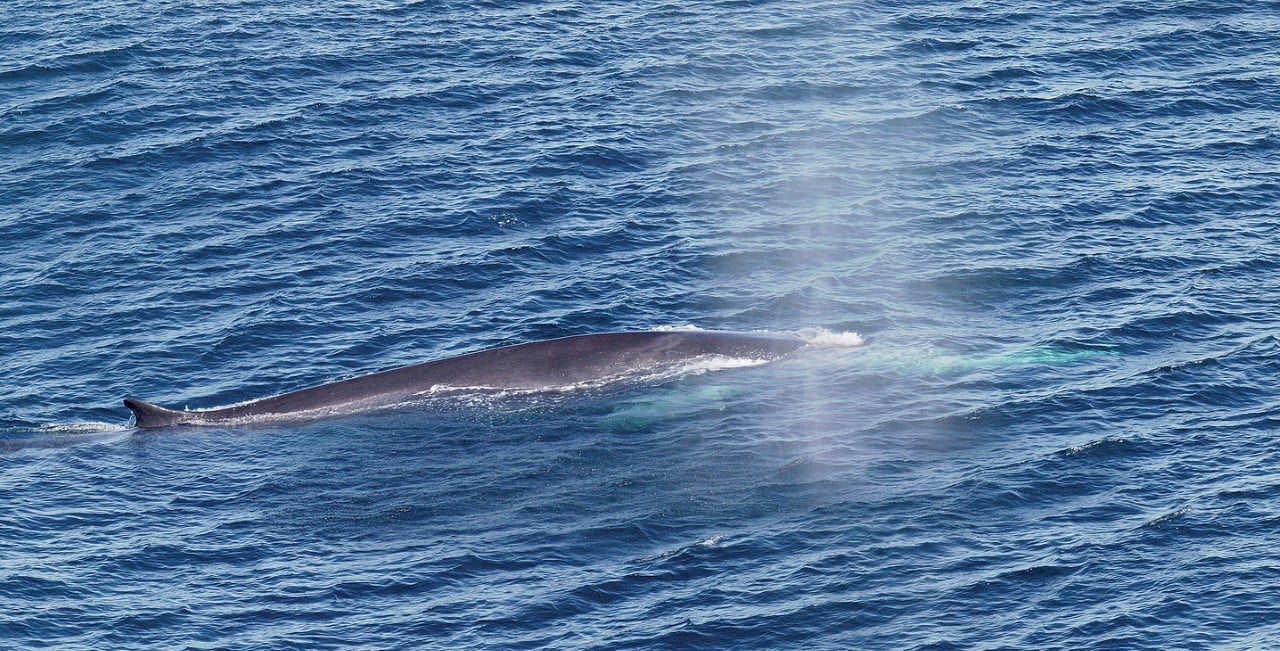
A stunning aerial footage captured a gigantic fin whale, an endangered species, as it swam and fed near the coast of Long Island, New York state. The recording, made by a drone, reveals details of the animal’s rare appearance.
Known as the second largest whale species on the planet, fin whales are also incredibly fast, making sightings a challenge. This characteristic makes them even more difficult to observe in their natural habitat.
The video, obtained on Wednesday, July 1, 2026, shows the large fin whale displaying its slender, elongated body, “V”-shaped head and distinctive hooked dorsal fin, characteristics that identify it.
This marine mammal faces a serious risk of disappearing, a direct consequence of the intensive commercial hunting that took place in the middle of the last century. The drastic reduction in its population places the species in a critical state of conservation.
During the recording, the flying equipment followed the whale as it moved through the water, diving and returning to the surface to look for food. The scene demonstrates the natural feeding behavior of these animals in their ecosystem.
The person responsible for operating the drone, Virginia Fitzgerald, reported discovering the fin whale by chance while filming a humpback whale that was also feeding nearby. The unexpected meeting resulted in unique images.
During the search for food, the fin whale was accompanied by a group of dolphins and several seagulls, which joined the hunt. This interaction between different marine species is an interesting natural spectacle.
In one of the video clips, the whale opens its massive jaws, swallowing large volumes of water and what appears to be food. According to information from NOAA Fisheries, these animals’ diet usually includes krill, small fish that form schools or squid.
Fin whales remain classified as an endangered species, a status maintained after decades of whaling decimated their populations in the 20th century. Population recovery is slow and still requires conservation efforts.
For this reason, they receive legal protection through the Marine Mammal Protection Act, a crucial instrument for the conservation and recovery of their populations in the United States.
Currently, one of the biggest risks to the survival of fin whales is collisions with vessels, a problem that has worsened with the increase in maritime traffic. This danger highlights the constant threat to marine life.
NOAA Fisheries highlighted that “fin whales are probably the most vulnerable species to ship strikes, after North Atlantic right whales”, indicating the urgency of preventive measures.
As recently as mid-June, a cruise ship in Alaska was spotted carrying the body of a pregnant and lifeless fin whale on its bow, a shocking incident that highlighted the dangers faced by these animals.
The first analyzes of the Alaska case indicate that the most likely cause of the whale’s death was a collision with the cruise ship itself, reinforcing the seriousness of the problem facing large vessels.
The latest fin whale population estimates, carried out in 2016, indicated the existence of approximately 6,800 individuals along the Atlantic coast of the United States and Canada. The sighting on Long Island, given this reduced population and ongoing threats such as collisions, is an important reminder of the fragility and need for constant monitoring for the survival of the species.