
How Elon Musk’s SpaceX reached a value of $1.8 trillion with space exploration milestones

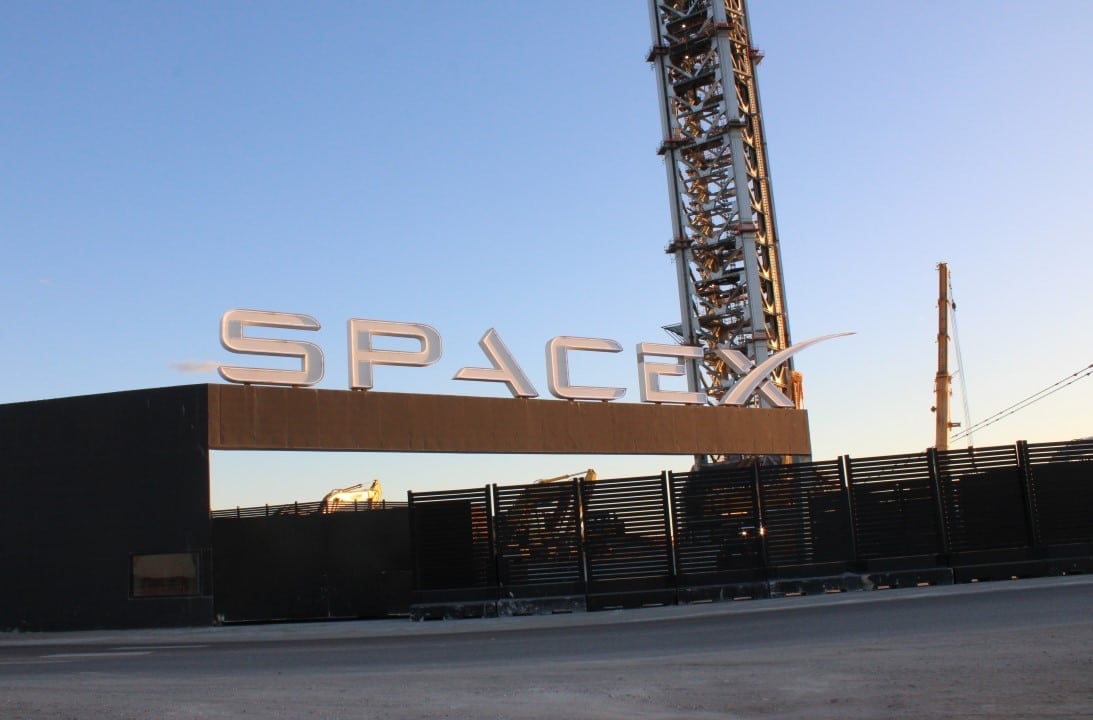
The company, which started as a startup with big ambitions, has evolved into one of the most valued technology companies globally. It pioneered the creation of reusable rockets, sent astronauts to NASA, established the largest network of internet satellites and developed Starship, a spacecraft destined for missions to the moon and, in the future, to Mars.
Below, we highlight the main achievements that shaped SpaceX, converting it from a promising startup into a global power in space.
2002: the founding of SpaceX by Elon Musk
Elon Musk established SpaceX in 2002 with the bold goal of significantly reducing the cost of sending cargo into space. Its objective was also to help humanity become a multi-planetary civilization.
During this period, dominance of orbital launches belonged to state agencies and established aerospace companies. SpaceX, however, chose to design and produce most of its equipment internally, seeking to develop launch systems with reusability.
Why it mattered: The company questioned the decades-old traditional model of rocket design, construction and operation.

2008: Falcon 1 rocket reaches orbit
The company’s first propellant, the Falcon 1, was unsuccessful in its first three attempts. However, the fourth time, on September 28, 2008, the launch was successful, making the Falcon 1 the first liquid-fueled rocket from a private company to reach Earth orbit.
Why it mattered: This success demonstrated SpaceX’s ability to manufacture an orbital launch vehicle, coming at a crucial time of scarce financial resources for the company.
2008: NASA contracts SpaceX for commercial resupply
Months after the Falcon 1 triumph, NASA chose SpaceX for its Commercial Resupply Services program. The purpose was to transport supplies to the International Space Station.
The agreement guaranteed financial stability and increased the company’s credibility. This contributed to SpaceX going from being a startup in the testing phase to becoming a trusted partner of NASA.
2010: debut of the Falcon 9 rocket
In June 2010, Falcon 9 was successfully launched for the first time. This larger rocket has established itself as the pillar of SpaceX’s launch operations, carrying commercial satellites, military payloads, NASA missions and, in the future, Starlink satellites. The initial launch of the Falcon 9 represented a pivotal point for private space flights.
Why it mattered: Falcon 9 laid the foundation for almost all of SpaceX’s subsequent great feats.
2012: Dragon capsule arrives at the International Space Station
The Dragon capsule was the first spacecraft developed by a private company to transport cargo to the International Space Station. The mission’s success demonstrated that commercial companies are capable of safely supporting NASA’s human spaceflight programs. Dragon’s arrival at the ISS was a historic event.
Why this mattered: SpaceX demonstrated that it was capable of going beyond launching rockets, also operating spacecraft in orbit.
2015: SpaceX performs orbital rocket landing
On December 21, 2015, SpaceX successfully landed the first stage of the Falcon 9 rocket, after launching a payload into orbit. Previously, orbital rockets were mostly considered expendable.
Why it mattered: The recovery of a rocket booster opened up the possibility of a significant reduction in launch costs thanks to its reuse.
2017: reused Falcon 9 rocket performs new flight
Landing a booster rocket was just the beginning. In March 2017, SpaceX successfully launched and landed a previously used Falcon 9 booster, confirming that reusable rockets can integrate into routine operations. This historic mission demonstrated the feasibility of reusing propellants.
Why this mattered: Reusability has established itself as one of SpaceX’s main competitive differentiators, allowing the company to execute more missions at reduced costs.
2018: Falcon Heavy makes its first flight
In February 2018, the Falcon Heavy made its debut, becoming the world’s most powerful operational rocket at that time. Its initial mission was known for sending Elon Musk’s Tesla Roadster into deep space, while two boosters landed at the same time.
Why it mattered: The Falcon Heavy expanded SpaceX’s ability to launch heavier government, scientific and commercial payloads.
2019: the start of the Starlink project
SpaceX began launching its first large set of Starlink satellites in 2019, beginning to form what would become the largest global satellite internet constellation. Since then, Starlink has expanded beyond residential connectivity into industries such as aviation, marine navigation, corporate networks, emergency communications and direct cellular connectivity.
Why it mattered: Starlink offered SpaceX a business model with ongoing revenue that significantly transcends rocket launch operations.
2020: SpaceX sends NASA astronauts into space
On Tuesday, May 30, 2020, the Crew Dragon Demo-2 capsule transported NASA astronauts Bob Behnken and Doug Hurley to the International Space Station. This was the first manned orbital launch from American soil since the Space Shuttle was retired in 2011. The relevance of the Demo-2 mission was widely recognized.
Why it mattered: The mission demonstrated that a private company had the capability to carry NASA astronauts into orbit, setting the stage for SpaceX’s subsequent crewed operations.

2021: NASA chooses spacecraft for the Artemis program
NASA chose SpaceX’s Starship human landing system to support the Artemis program’s return to the Moon. This decision positioned Starship as a central element in the space agency’s long-term plans for lunar exploration. The Starship Human Landing System project has been officially awarded.
Why this mattered: Starship was no longer just a project aimed at Mars. It also became the basis for NASA’s future lunar aspirations.
2022: NASA expands the role of Starship
NASA later exercised an option for Starship to support the Artemis IV program, cementing the agency’s long-term engagement with the vehicle. NASA indicated that the extra financial contribution would require SpaceX to develop and demonstrate a Starship lunar landing module that would meet the agency’s requirements for a manned landing in the Artemis IV program.
Why it mattered: The additional contract award highlighted that NASA viewed Starship as a component of a broader exploration architecture, not just an isolated demonstration.
2023-2026: Starship testing continues
SpaceX intensified the development of Starship through a series of increasingly bold integrated flight tests. Although several tests were unsuccessful, each provided critical engineering data for future versions of the vehicle. The system remains crucial to SpaceX’s plans to launch heavy payloads and to NASA’s Artemis program.
Why it mattered: Starship constitutes SpaceX’s biggest technological bet, with the potential to eventually surpass Falcon 9 if its full reuse operations become routine.
2024-2026: Starlink consolidates itself as a global communication platform
SpaceX has maintained a rapid pace in launching Starlink satellites while simultaneously expanding the network. This expansion reached sectors such as aviation, maritime navigation, government, emergency response and direct connectivity services for cell phones.
Why it mattered: Starlink transformed SpaceX from a launch company to a communications and infrastructure company with recurring revenue on a global scale.

2026: SpaceX launches initial public offering
SpaceX completed its long-awaited Initial Public Offering (IPO) in June 2026. Shares were launched at US$135, giving the company a valuation of around US$1.8 trillion, positioning it as one of the largest IPOs in history, as indicated by market reports.
At the beginning of trading, the company’s shares rose above the offer price, but then declined. This occurred as investors analyzed the company’s long-term growth expectations.
Why it mattered: The company’s IPO gave investors direct access to SpaceX’s launch services, Starlink, and Starship’s advancement. At the same time, it placed the company under the watchful eye and expectations of public markets.
Next steps for SpaceX
SpaceX’s looming challenge is to make Starship achieve the same operational success as Falcon 9. The company still needs to prove Starship’s safe reuse, in-orbit refueling and capabilities required to support NASA’s ever-evolving Artemis program plans.
Meanwhile, Falcon 9 and Starlink continue to fund many of SpaceX’s most ambitious ventures. Whether the company realizes its vision of landing humans on the Moon, reaching Mars, or building the next generation of global communications infrastructure, its first two decades have already revolutionized the economics of spaceflight.





