Total Eclipse of the Heart: Bonnie Tyler, iconic voice of pop, dies at 75 By Carolina Costa
4 min read
 |
Bonnie Tyler’s hoarse voice transformed “Total Eclipse of the Heart” into one of pop music’s greatest classics and made the singer one of the most popular British artists of the 1980s. The acclaimed singer passed away at the age of 75 in a hospital in Portugal, where she was receiving treatment for an illness, her family said on Thursday, July 9.
Tyler had been in serious condition in the ICU since mid-June, after coming out of an induced coma. In May, the artist underwent emergency intestinal surgery and, the following day, suffered a cardiorespiratory arrest.
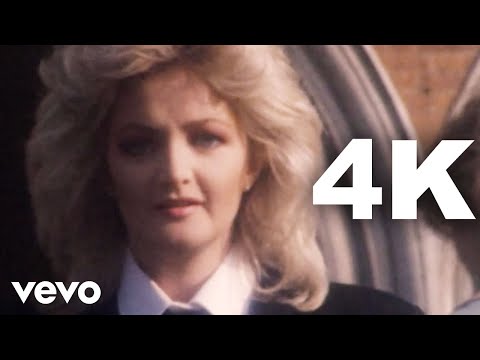
Discover the trajectory of Bonnie Tyler, owner of an unmistakable voice
Named Gaynor Hopkins, in Wales, Bonnie Tyler stood out as one of the most commercially successful British artists in the 1970s and 1980s. Owner of a husky and powerful voice, she transformed her striking timbre into her main signature and built a notable career with dramatic ballads and grandiose productions that mixed rock, pop and country influences.
The daughter of a coal miner, she was born and raised in social housing in Skewen, south Wales, about seven miles from Swansea. The family home had an outside bathroom, and she shared her childhood with three sisters and two brothers.
From an early age, he demonstrated a passion for music. He was a fan of the Beatles and his first album was A Hard Day’s Night. At the age of 13, he bought his first single, “Hippy Hippy Shake”, by the band Swinging Blue Jeans. As she reported in her autobiography Straight From the Heart, she also religiously followed the music program Top of the Pops, recording the performances on a two-track reel-to-reel recorder to listen to again and writing down by hand the lyrics to her favorite songs by artists such as Janis Joplin, Nina Simone, Tina Turner, Wilson Pickett and Otis Redding.
Before his fame, Tyler sang in local bands. In 1976, he had to undergo surgery to remove nodules on his vocal cords. During his recovery, he disregarded the doctor’s recommendation to rest and returned to singing prematurely. The effort permanently altered his voice, giving rise to the hoarse timbre that would later become his trademark.
At the time, she performed under the name Sherene Davis and was the lead singer of a soul band. She was discovered by talent scout Roger Bell, who took her to London to record demos. After a period of searching for a record label, she signed a contract with RCA, who also suggested adopting the stage name Bonnie Tyler.
His debut album, The World Starts Tonight (1977), brought him his first commercial success, “Lost in France”, and earned him a nomination in the new artist category at the Brit Awards. The following year, he reached third place in the British charts with “It’s a Heartache”, consolidating his name internationally.
After a period of less prominence, Tyler signed with Sony and sought to reinvent his career. When she watched a performance of Meat Loaf playing Bat Out of Hell on the BBC, she was impressed by the grand style of Jim Steinman’s compositions. Deciding to work with him, she asked the composer and producer for an opportunity, a partnership that would give rise, years later, to the greatest success of her career.
The creation and impact of the hit ‘Total Eclipse of the Heart’
Steinman introduced her to his song “Total Eclipse of the Heart,” which would become the debut single from her fifth studio album, “Faster Than the Speed of Night.” He borrowed one of the lines from the song “Turn around, bright eyes” from his 1969 musical, “The Dream Engine,” written while he was a student at Amherst College in Massachusetts. The composer told her that the song was from a possible musical version of “Nosferatu”.
Featuring Roy Bittan on piano and Max Weinberg on drums, members of the E Street Band, “Total Eclipse” is a moving reflection on lost love. The lyrics express the pain of absence: “Once upon a time, there was light in my life/But now there is only love in the darkness,” she sings.
The video, a classic from the early days of MTV, was recorded in a creepy old gothic asylum in Surrey. Apparently, the guard dogs did not enter the downstairs rooms, where they used to electroshock patients.