Chinese Tianwen-2 mission reveals details of Earth’s ‘second Moon’ with new images

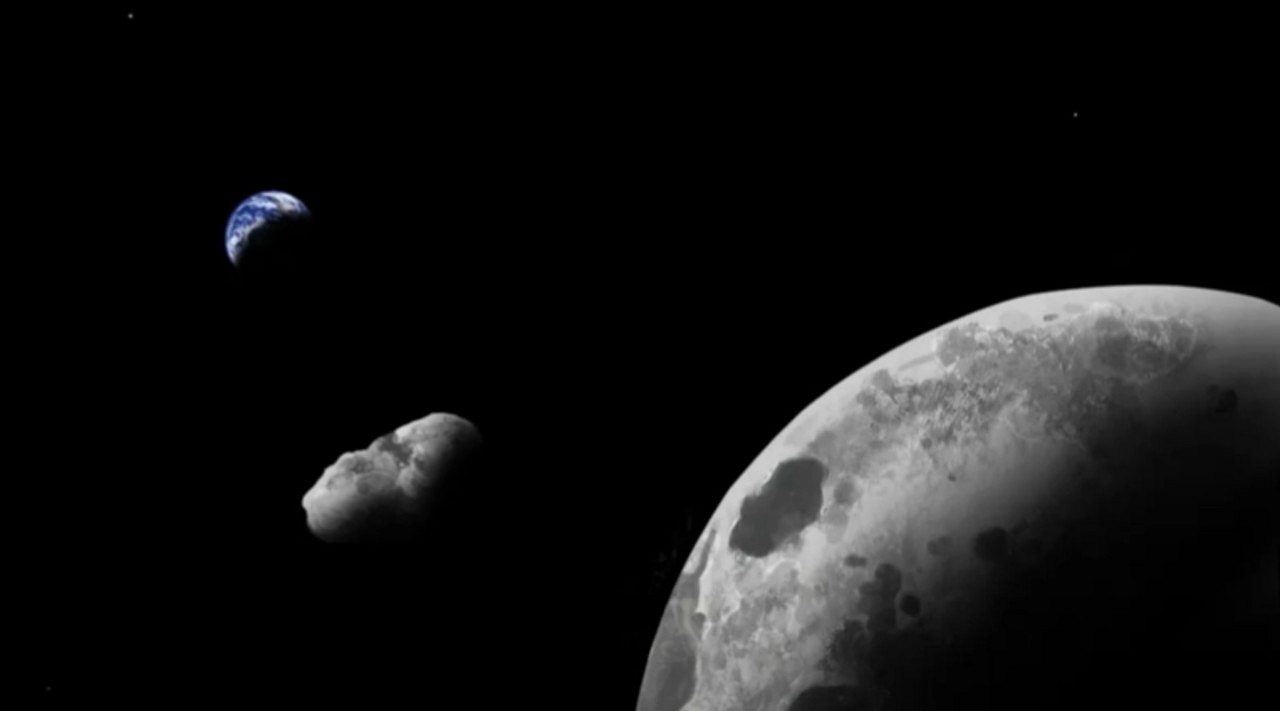
The Chinese probe Tianwen-2 recently managed to record the first close-up images of Kamoʻoalewa, a celestial object popularly known as Earth’s “second Moon”. The spacecraft made an approach to approximately 20 kilometers from the surface of this body, capturing the clearest and most detailed photographs ever obtained.
Despite its nickname, Kamoʻoalewa is not a natural satellite like Earth’s Moon, but rather a “quasi-satellite”. Its orbit around the Sun is remarkably similar to that of our planet, which allows it to remain relatively close to Earth for long periods. This object, discovered in 2016 by an observatory in Hawaii, has an estimated diameter of between 40 and 100 meters, representing a fascinating celestial companion in our cosmic neighborhood.
Launched in 2025, Tianwen-2 is China’s first mission dedicated to studying an asteroid, and its journey to Kamoʻoalewa covered about 1 billion kilometers. The expectation is that the probe will remain observing the quasi-satellite for approximately one year. After this period, it will attempt to collect samples from its surface to bring them back to Earth, a crucial effort that could help the scientific community confirm whether the object is, in fact, a lunar fragment ejected by a meteorite impact that occurred between one and ten million years ago. Confirmation of this theory would offer a unique insight into the Moon’s geological history and impact events in the inner solar system.