Asian probe reaches space rock 20 kilometers away and photographs Earth’s quasi-satellite

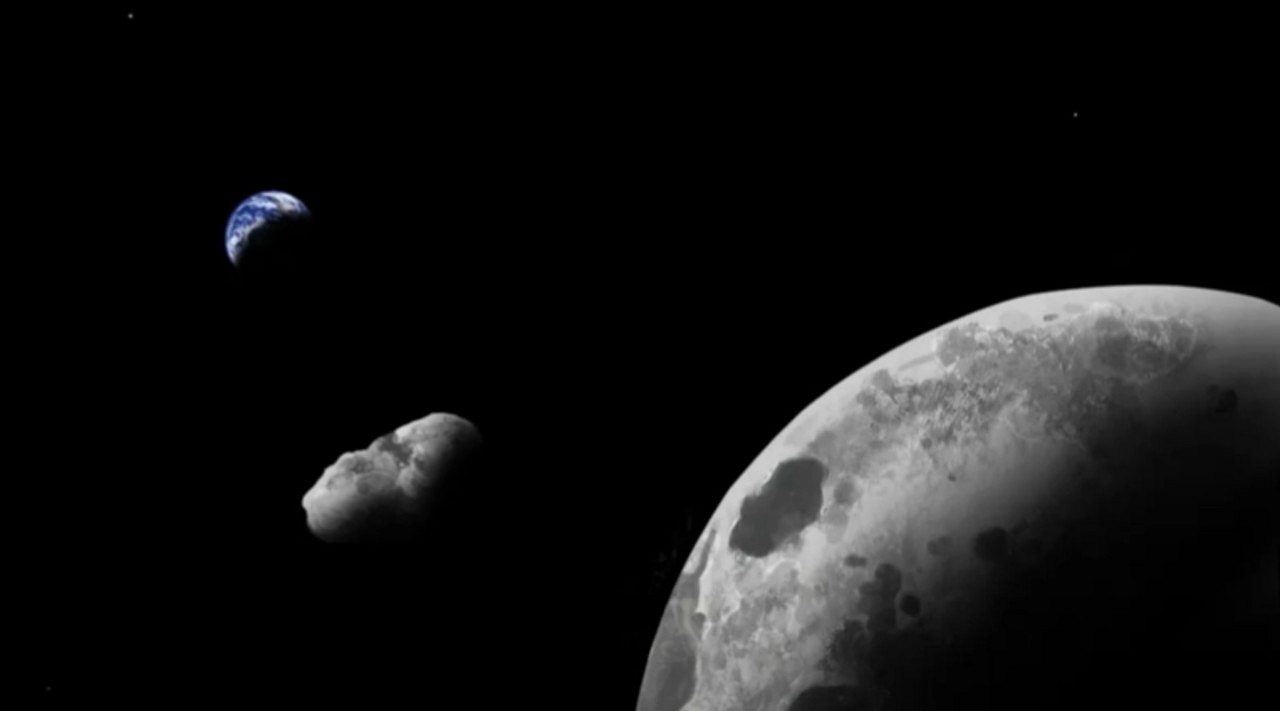
Starting a new chapter in the exploration of the cosmos, Chinese robotic equipment Tianwen-2 reached a historic milestone by approaching the asteroid Kamoʻoalewa in an unprecedented way. The space machinery navigated with precision until it reached a distance of just 20 kilometers from the rocky surface, capturing visual records with a level of detail never before achieved by astronomers. This extreme approach provides researchers with a privileged view of a celestial body that accompanies our planet on its trajectory around the Sun, paving the way for fundamental discoveries about the formation of our planetary system.
What characterizes the celestial body dubbed the new earthly companion
Although it is often given the popular title of “second Moon”, the space rock does not share the same gravitational dynamics as our traditional natural satellite. It is a quasi-satellite, a category of asteroids that orbits the central star of our system on a route practically identical to that of Earth. This specific orbital configuration creates an astronomical optical illusion, making the object appear to circle our planet, when in reality, both are traveling together through space in a kind of synchronized cosmic dance.
Identified for the first time in 2016 through the powerful telescopes of the Pan-STARRS observatory, located in Hawaii, Kamoʻoalewa has modest dimensions compared to other space giants. Experts estimate that its diameter varies between 40 and 100 meters, equivalent to the size of a professional football field. Despite its compact structure, its constant proximity to the Earth’s neighborhood makes this piece of rock a perfect target for high-level scientific investigations, allowing space agencies to test new navigation and approach technologies.
Asian space agency’s billion-dollar journey into deep space
Starting in 2025, the expedition represents a gigantic technological leap for the Asian nation’s space program, marking the first time that the country has dedicated an entire mission to the exclusive study of an asteroid. To reach its destination, the equipment had to travel an impressive distance that exceeded the 1 billion kilometer mark in the vacuum of space. This complex path required precise course correction maneuvers and the use of advanced propulsion systems to ensure the ship reached the exact point of contact with the moving rock.
The success of this rapprochement phase demonstrates the maturation of China’s aerospace engineering capabilities, which has been investing heavily in infrastructure for deep space missions. Monitoring such a small, dark object against the vast backdrop of the universe requires extremely sensitive optical sensors and autonomous navigation algorithms capable of making decisions in fractions of a second, without relying exclusively on commands sent from terrestrial control bases.
Main steps planned for collecting unprecedented rock material
The official schedule establishes that the robotic probe will spend approximately twelve months orbiting and mapping every centimeter of the quasi-satellite. During this intensive reconnaissance phase, onboard instruments will analyze the mineralogical composition, irregular topography and thermal variations of the surface. The main objective of this prolonged mapping is to identify the safest and most scientifically promising location for carrying out the riskiest maneuver of the entire endeavor: physically touching the rock.
To ensure the success of sample return, engineers structured the operation into critical and highly controlled phases:
- Full three-dimensional mapping of the surface to avoid areas with dangerous boulders that could damage the mechanical arms.
- Autonomous descent using approach lasers to calculate the exact distance to the ground in real time.
- Rapid contact with the surface, lasting just a few seconds, long enough to trigger a suction or piercing mechanism.
- Safe storage of collected material in an armored capsule designed to withstand the extreme temperatures of re-entry into the Earth’s atmosphere.
- Activation of the main thrusters to begin the long journey back to our planet with the precious scientific cargo.
Upon successful completion of these steps, the capsule containing the dust and rocky fragments will be ejected towards Earth, expected to land in desert areas previously designated by space authorities.
Scientific impacts and the theory of the fragment ejected from our natural satellite
The laboratory analysis of the material that will be brought back by the mission has the potential to solve one of the greatest mysteries in contemporary astronomy. A significant portion of the scientific community defends the hypothesis that Kamoʻoalewa is not an ordinary asteroid captured by solar gravity, but rather a genuine piece of our own Moon. According to this line of research, a violent impact of a meteorite against the lunar surface, occurring in a time window between one and ten million years ago, would have ejected debris with enough force to escape the satellite’s gravitational pull.
If chemical and isotopic tests confirm that the signature of the collected minerals exactly matches the lunar rocks returned by the Apollo missions of the last century, the discovery will rewrite the science books. This would prove that fragments from ancient collisions can stabilize in near-Earth orbits, functioning as time capsules that preserve the geological conditions of past eras. Furthermore, it would help researchers map the frequency and intensity of meteor bombardments that hit the inner solar system during our planet’s evolution.
How fragment recovery missions redefine modern astronomy
The effort to bring pieces of the cosmos directly to terrestrial laboratories represents the pinnacle of current space research. Unlike analyzes carried out by robots millions of kilometers away, having the physical sample in your hands allows the use of state-of-the-art electron microscopes, particle accelerators and mass spectrometers that would be too large or heavy to be launched in a rocket. This level of detailed scrutiny reveals the presence of volatile organic compounds and rare isotopes that tell the story of the formation of the solar system.
Previous initiatives, conducted by other international agencies on distant asteroids, have already demonstrated the immense scientific value of sample return missions. By adding Kamoʻoalewa to this select list of celestial bodies touched by humanity, the Asian mission not only cements the country as a powerhouse in interplanetary exploration, but also provides crucial pieces to the gigantic puzzle that explains how the Earth, Moon and neighboring planets formed from primordial stardust.