
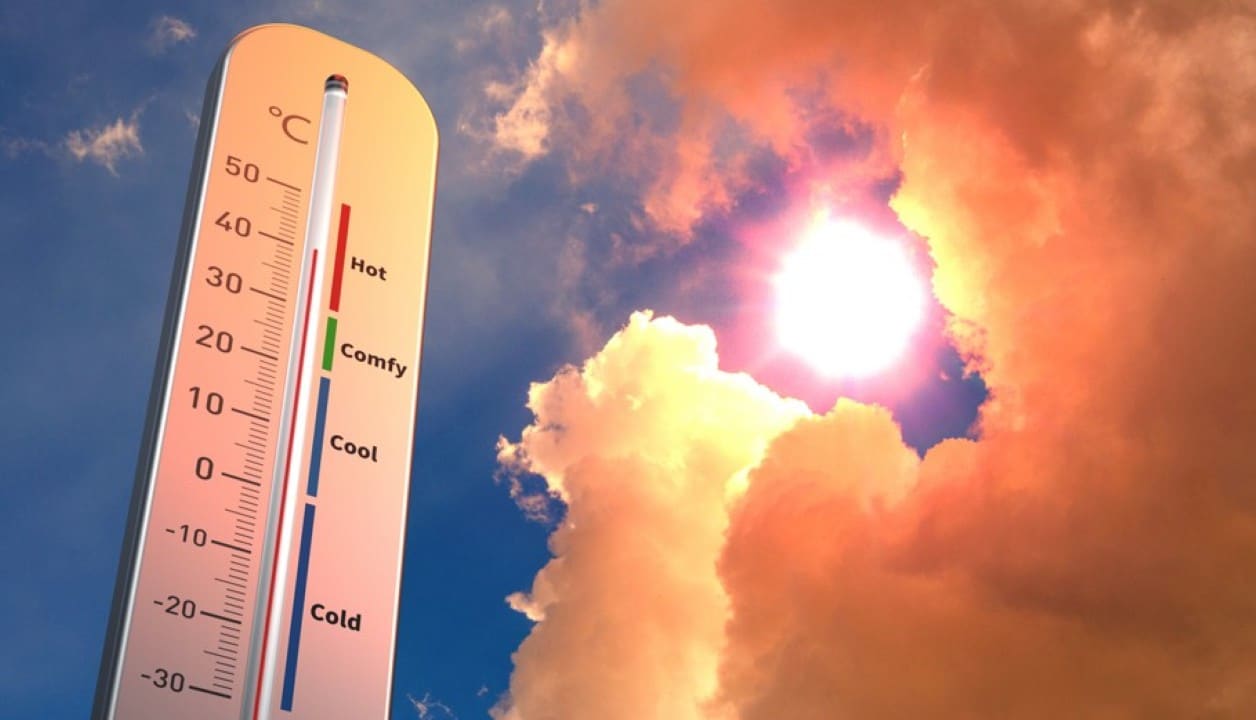
Climate experts project a challenging scenario for next summer, with the imminence of a “super El Niño” that could trigger unprecedented extreme heat waves. The expectation is that temperatures will reach unprecedented levels, defying historical standards and worrying authorities in several regions. This phenomenon, although known, manifests itself in an atypical way due to the growing influence of global warming.
Although El Niño traditionally results in milder summers in certain locations, such as Japan, the persistence of high sea surface temperatures near the Philippines has altered this dynamic. This imbalance, driven by climate change, is strengthening and expanding the Pacific high pressure system, which covers regions of Japan and other parts of the world, with the potential for even more intense heat.
What is El Niño and how does it affect the global climate
El Niño is a natural climate phenomenon that occurs in the Pacific Ocean, characterized by the anomalous warming of surface waters in the equatorial region. The Japan Meteorological Agency and other institutions explain that this event is declared when sea surface temperatures off the coast of Peru, South America, remain 0.5 degrees Celsius or more above average for at least six consecutive months.
The occurrence of El Niño is linked to the weakening of the trade winds, which normally blow from east to west over the Pacific. This change allows a large mass of warm water, which is usually concentrated near the Philippines, to move towards the coast of Peru. This movement of oceanic heat has significant repercussions on atmospheric currents and climate patterns on a global scale, impacting rainfall and temperature regimes on distant continents.
Japan faces anomalous summer despite El Niño
Historically, the El Niño phenomenon has been associated with cooler summers in some parts of Japan. This is because warming waters near Peru, by contrast, cause a cooling of the sea surface off the coast of the Philippines. Such cooling weakens ascending air currents and makes cloud formation difficult, preventing the Pacific high pressure system from extending completely over the Japanese archipelago.
Contrary to this usual trend, current forecasts point to an intensification of heat. Sea surface temperatures in the Philippines region remain high, disobeying the typical El Niño pattern. This scenario is worsened by the strengthening of the Pacific high pressure system, which is spreading over Japan, creating a “super El Niño” with the potential to bring a series of “extreme heat days”, with maximum temperatures above 40 degrees Celsius in several locations.
The implications of extreme heat waves for the population
Projections of extreme heat with temperatures exceeding 40 degrees Celsius pose a serious risk to public health and infrastructure. A sequence of days with such intense heat can overload health systems, with an increase in cases of heatstroke, dehydration and worsening of chronic diseases. The most vulnerable population, such as the elderly and children, is particularly susceptible to adverse effects.
In addition to the direct impacts on health, heat waves bring other concerns:
- High risk of blackouts and power grid failures due to the massive demand for air conditioning.
- Significant damage to agriculture, affecting harvests and food security.
- Negative impact on labor productivity and the economy in general.
- Increased risk of forest fires in areas with drier vegetation.
Global warming: the force behind the climate anomaly
The anomaly observed in this “super El Niño”, where the climate phenomenon does not result in mild summers as expected in certain regions, is directly attributed to global warming. Persistent increases in ocean temperatures around the world are altering the way natural climate events manifest themselves. Warmer waters act like an engine, providing extra energy for atmospheric and oceanic phenomena, intensifying them.
This connection between global warming and El Niño modification is a crucial warning about how climate change can distort established weather patterns. Experts highlight that the heat retained by greenhouse gases in the atmosphere and oceans is creating conditions for more frequent and severe extreme events, making even the effects of cyclical phenomena such as El Niño unpredictable.
Preparation and resilience in the face of extreme climate scenarios
Faced with the expectation of a “super El Niño” and extreme heat, preparation becomes essential for governments and citizens. It is essential that authorities develop robust contingency plans, which include the creation of cooling centers, awareness campaigns about the risks of heat and ensuring access to hydration. Urban infrastructure also needs to be adapted to withstand such conditions, from the electrical grid to the planning of green spaces.
The population, in turn, must adopt precautionary measures, such as avoiding direct exposure to the sun during peak hours, staying hydrated and monitoring the health of more vulnerable people. Community resilience will be tested by these challenging climate scenarios, reinforcing the urgency of global action to mitigate global warming and local strategies to adapt to an ever-changing climate.