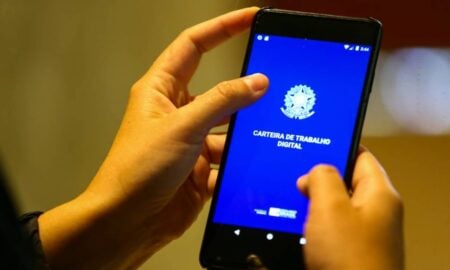
Increase in cell phone use among elderly people brings autonomy and alerts for well-being


The centrality of cell phones in the lives of many elderly people goes far beyond simple family communication, as revealed on Friday, July 12, 2026. Data from the latest National Household Sample Survey, carried out in 2025, show that the group of Brazilians aged 60 and over recorded the greatest growth in internet access. Although for many the smartphone means autonomy, learning and companionship, for others it can signal loneliness, replace face-to-face social interactions and generate physical and mental health problems. Experts highlight that the amount of time spent on the screen, in itself, does not define the quality of this interaction.
To deepen understanding of the effects of smartphones on the daily lives of elderly people, the Mix Vale portal consulted geriatrician Alessandra Tieppo, from the Brazilian Society of Geriatrics and Gerontology (SBGG); psychiatrist Thiago Henrique Roza, professor at the Federal University of Paraná (UFPR); and psychologist Walter Azevedo, specialist in Neuropsychology. The report also spoke to Mariane Pimentel, 67, and Delfina Colão, 82, to hear their experiences. The objective is to clarify when technology works to reinforce independence and when its use requires greater attention from the elderly and their families.
Significant growth in cell phone use among elderly people in Brazil
The internet is no longer an exclusive domain for young people and has become increasingly present in the routine of elderly people. Figures from the National Household Sample Survey reveal that, in 2025, 74.5% of Brazilians aged 60 or over already accessed the network. Despite being a lower percentage than other age groups, this group demonstrated the biggest increase in access compared to the previous year. At the same time, 80.3% of the elderly had a private cell phone.
This scenario indicates that the smartphone now centralizes several activities that were previously carried out in separate environments. Currently, video calls, exchanging messages, accessing social networks, banking transactions, scheduling medical appointments, using health applications and participating in family groups can be done through the same interface. The device has evolved from a simple means of communication to an essential platform for services, entertainment and social interaction.
Geriatrician Alessandra Tieppo, member of the Brazilian Society of Geriatrics and Gerontology (SBGG), explains that this progression was intensified by the pandemic. She notes that “many patients use applications to organize medications, monitor health indicators, talk to family members via video calls and seek information about illnesses.”
Even though digital inclusion has increased the autonomy of countless elderly people, the expert warns that mastery of technology is not always accompanied by the knowledge to use it safely. The difficulty in discerning scams, identifying fake news and handling applications continues to be a challenge for a considerable part of this population.
Motivations for increased screen time among older people
The time that was previously divided between television, landline telephone, visits and other daily activities is now partially filled by cell phones. A single screen currently contains conversations with family, various videos, news, cooking recipes, banking services, important reminders, message groups and a variety of entertainment options. For some, this transition provides greater autonomy, while for others, it may indicate a decrease in face-to-face interactions.
According to psychologist Walter Azevedo, a specialist in Neuropsychology, it is essential to contextualize this behavior within the aging process. With retirement, the reduction of the contact network and the reduction of external activities, many elderly people turn to smartphones as one of the main means of connecting with the world. Azevedo emphasizes that “when elderly people spend the whole day on screen, deep down they are looking for belonging.”
However, this search for connection should not be immediately interpreted as a negative aspect. Cell phones can also give elderly people a sense of independence, simplifying daily tasks, strengthening family ties and expanding access to information and services. The expert emphasizes that the warning arises when technology stops being a complement to routine and begins to replace almost all other forms of social interaction.
The psychologist reinforces that “the device gives the elderly person back an independence that their routine sometimes takes away”.
Psychiatrist Thiago Henrique Roza, professor at UFPR, shares a similar view. He considers that prolonged cell phone use does not necessarily imply the existence of dependence or disorder. According to the psychiatrist, the essential assessment is to observe the purpose of use and, above all, the consequences of this behavior in the individual’s daily life.
Different experiences, but with the cell phone present in everyday life
Mariane Pimentel, 67, and Delfina Colão, 82, have different routines, but they share the constant presence of cell phones in their daily lives. For both, the smartphone functions as a source of news, entertainment, learning and a communication channel. The variation lies in the way each person integrated this technology into their daily lives.
Mariane, who lives alone, mostly uses the device when she is at home. On Mondays, Wednesdays and Fridays, the morning is dedicated to the gym, and she only takes out her cell phone after 2pm. On other days, Mariane recognizes that her smartphone serves as her companion for much of her leisure time.
She summarizes: “I use it almost all day when I’m at home.” Previously, this time was divided between television and computer. Currently, most access to information and entertainment happens on a cell phone screen, especially Instagram.
Delfina’s routine, aged 82, presents itself differently. She usually uses her smartphone in the afternoon and after the soap opera. Much of its use is concentrated on platforms such as YouTube, Pinterest and WhatsApp. Through the internet, Delfina discovered how to improve an old hobby: learning new crochet stitches.
Delfina reveals: “The internet teaches a lot of things. What I learn most are the clothing and accessories tutorials.” She recalls that, in the past, she dedicated more time to activities outside the home or watching television. However, recent physical limitations have changed his routine, and the cell phone has taken on a new meaning. “I can’t do many things alone anymore, so all I have left is my cell phone,” she admits.
Despite the distinctions between their habits, both Mariane and Delfina associate the smartphone with their autonomy. Mariane uses it to stay informed about topics that interest her and to organize daily tasks. Delfina, on the other hand, communicates with her family, acquires new skills, makes payments and maintains social connections.
When asked about the possible breakdown of their cell phone, their reactions highlight the impact of the device on their lives. Mariane confesses: “Desperation! I would immediately run to buy another one.” Delfina adds: “I would be stressed and bored. I can’t be without a cell phone, since I pay my bills and need it to call anyone.”
Identifying when cell phone use stops being beneficial
Length of screen time alone is not a definitive indication of a problem. For the professionals consulted, the crucial thing is to analyze the impact of cell phones on practical life. If the device strengthens bonds, organizes activities, encourages learning and contributes to autonomy, it becomes an ally. However, if it replaces important commitments, causes friction or negatively affects sleep, health and social interaction, the nature of the relationship changes.
Psychiatrist Thiago Henrique Roza points out that, although the problematic use of smartphones does not appear as an official diagnosis in manuals such as the ICD-11 and DSM-5, psychiatry identifies signs that are similar to other behavioral dependencies. Among them are the loss of control, the difficulty in reducing use and the persistence of the behavior even with the emergence of negative consequences.
The psychiatrist warns: “If use begins to compromise autonomy, health, relationships or quality of life, it is a warning sign.”
These negative impacts can manifest themselves in several ways. Some elderly people report sleep problems due to prolonged cell phone use at night. Others reduce the frequency of face-to-face meetings, abandon hobbies or external activities, or use their smartphones as an escape from feelings of sadness, anxiety, grief and loneliness.
Mariane Pimentel identified one of these effects in her own routine. She describes that, sometimes, she loses track of time when using her cell phone. “Sometimes I arrive late because I get distracted by my cell phone. I’ve been doing more to ensure this doesn’t happen”, she says.
For Thiago Roza, specific occurrences are not enough to characterize a disorder. Concern arises when this situation stops being isolated and begins to persistently affect routine.
Psychologist Walter Azevedo also warns of signs that are often not noticed by the family. According to him, frequently sending “good morning” messages, chain letters and constant interactions in groups can be a way of seeking and maintaining social bonds.
He warns that “we usually think it’s great to see the elderly there, quietly on their cell phones, but there is a very fine line between what is a distraction and what has become a refuge.”
Consequences of prolonged use on the physical and mental health of the elderly
The impacts of prolonged cell phone use go beyond daily routine and can affect physical and emotional health, especially when the device is used for long periods without interruption. Geriatrician Alessandra Tieppo points out that continuous smartphone use can cause neck and lower back pain, discomfort in the wrists and hands, eye fatigue and deterioration in sleep quality.
Delfina Colão experiences these effects on her body. After spending a considerable amount of time sitting with her cell phone, she mentions feeling pain in her back. She describes: “Sometimes, I feel a lot of pain in my back from hours of sitting awkwardly and looking down.”
The geriatrician emphasizes that, in addition to inadequate posture, excess information is a critical point. Misleading news, alarmist content and continuous notifications can intensify symptoms of anxiety and stress, especially in more susceptible individuals.
In the field of mental health, the connection between cell phones and well-being often proves more intricate. Psychiatrist Thiago Roza explains that, often, the excessive use of smartphones does not constitute the central problem, but rather a reflection of other issues, such as depression, anxiety, grief or loneliness.
Factors such as retirement, widowhood, children leaving home and reduced social interaction also contribute. For Thiago Roza, these transformations can exacerbate feelings of loneliness, loss of purpose and a diminished sense of belonging.
The psychiatrist concludes: “When the cell phone complements an active social life and other pleasurable activities, it tends to bring benefits. When it starts to replace almost all forms of interaction and leisure, it can contribute to maintaining or worsening psychological suffering.”
How the smartphone can be an ally in active aging
Despite the potential risks, experts refrain from classifying the cell phone as an antagonist. By promoting autonomy, simplifying family communication, encouraging learning and helping with everyday tasks, the smartphone can promote more dynamic aging. Geriatrician Alessandra Tieppo considers this the greatest benefit of technology.
She argues that “technology should be seen as a tool to increase autonomy, social participation and quality of life. When used consciously and safely, it can significantly contribute to more active and connected aging.”
Mariane and Delfina’s experiences illustrate this potential in action. Mariane uses her cell phone to stay up to date, access relevant content and manage part of her routine. Delfina, in turn, discovered on her smartphone a way to improve her crochet skills, interact with her family, make payments and preserve her independence in tasks that previously required assistance.
For psychologist Walter Azevedo, the device also has the capacity to give elderly people back a perception of control over their lives. Resolving pending issues, searching for information and communicating without the constant need for third parties strengthens autonomy and raises self-esteem.
The expert believes that artificial intelligence tools can further expand this potential, stimulating memory, reasoning and curiosity. “Interacting with the system works almost like a gym for the brain”, he argues.
Thiago Henrique Roza presents a similar analysis. The psychiatrist states that digital tools can simplify access to information, encourage learning and temporarily reduce the feeling of loneliness, as long as they act as a support for social interactions and not as a substitute. He emphasizes: “The objective should be to use it to expand connections and promote autonomy, and not to reinforce isolation.”
Guidelines for healthy cell phone use in old age
There is no limit on hours that, in itself, determines whether cell phone use is healthy. For the experts consulted by Mix Vale, the fundamental guideline is to analyze the place that technology occupies in the lives of elderly people and encourage balance. Doctor Alessandra Tieppo suggests the following practices:
- Take periodic breaks when using the device;
- Get up and move around every 30 to 60 minutes;
- Position the cell phone at eye level;
- Refrain from using your smartphone in the period before bedtime;
- Configure brightness, contrast, and font size to minimize visual strain.
She adds that it is essential to maintain activities that do not involve the screen. Alessandra Tieppo advises: “The ideal is to prioritize face-to-face activities, physical exercise, social interaction and hobbies.”
Security in the digital environment also requires attention. According to experts, family members should educate the elderly about the dangers, privacy settings and online fraud, without ever taking away their autonomy over the use of their own cell phone. A patient and explanatory approach tends to be more efficient than prohibitions or infantilization, which can generate feelings of shame, fear and greater dependence.