
James Webb Telescope rules out risk of asteroid 2024 YR4 impacting Earth

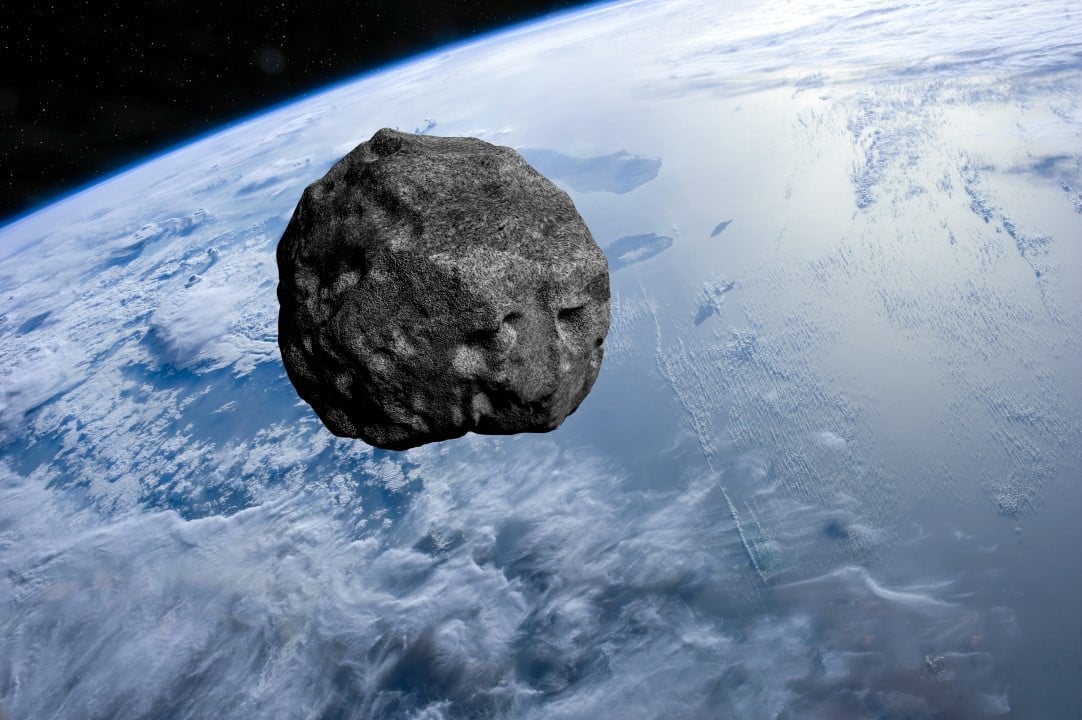
The maximum alert scenario surrounding the celestial body 2024 YR4 has come to an end after an intense international astronomical task force. The European Space Agency (ESA) confirmed on December 5 that the space rock, previously classified as the biggest cosmic threat discovered in the last two decades, no longer has any chance of colliding with our planet or Earth’s natural satellite. This rapid change in status highlights the responsiveness of current space monitoring programs, which can recalculate routes with extreme speed. The planetary defense system has proven its efficiency by mobilizing humanity’s most advanced equipment in record time to guarantee global security.
Understand the size of the initial threat and the characteristics of the space rock
Measuring approximately 60 meters in diameter, the object captured the immediate attention of the scientific community shortly after its initial detection in 2024. For purposes of historical comparison and understanding the danger, a meteor of similar dimensions was responsible for the Tunguska Event in 1908, which devastated more than two thousand square kilometers of forest in the Siberian region, felling millions of trees with the force of its shock wave. Precisely because of this destructive potential, capable of sweeping away an entire metropolitan area if it reached an inhabited area, the rock was quickly placed at the top of the list of bodies close to Earth most likely to cause severe damage.

In the first moments of orbital analysis, researchers feared a direct impact against the Earth’s surface, a hypothesis that was discarded in a matter of days thanks to the refinement of preliminary calculations. However, subsequent data generated by the European agency’s supercomputers created a new cause for concern by pointing to a 4% probability of a direct collision with the Moon. In the field of defense astronomy, where risks are usually measured in tiny fractions of a percentage, a rate of four percent is considered an absolute red alert. The lunar impact was expected to happen on December 22, 2032, which required an immediate response from space authorities to confirm or refute the trajectory.
How the world’s largest observatory helped rule out the lunar shock
The definitive elimination of the impact scenario against the natural satellite was only possible thanks to an extraordinary intervention by the James Webb Space Telescope. When the rock moved considerably away from our orbit, it lost its reflection of sunlight and became practically invisible to conventional terrestrial equipment, which suffers from atmospheric interference and light pollution. It was at this critical moment that the supertelescope’s NIRCam infrared camera came into action, managing to capture the thermal signature of the dark celestial body contrasting with the extreme cold of deep space.
The refined data collected by the observatory showed that the actual trajectory will cause the object to pass more than 20,000 kilometers away from the lunar surface. This safety margin, although it seems small when compared to the 384 thousand kilometers that separate the Earth from the Moon, is mathematically absolute and eliminates any possibility of mechanical impact. The feat represents an unprecedented technical milestone, as tracking such a small, dark and fast-moving target required complex maneuvers from equipment originally designed to see static galaxies in the far reaches of the early universe.
Joint effort brought together different agencies to recalculate the cosmic route
The success of this tracking mission did not depend on a single institution, but rather on a global real-time data sharing network. The operation required scientists to cross-reference information from different star catalogs to determine the exact position of the rock in relation to the background of space, eliminating the uncertainties that fed the 2032 collision model.
To reach this level of mathematical precision and ensure the safety of the Earth-Moon system, the task force engaged the following pillars of modern space exploration:
- ESA’s Near-Earth Objects Coordination Center, responsible for issuing first alerts and coordinating the European monitoring response.
- NASA Center for Near-Earth Object Studies, which validated the mathematical trajectory models and provided advanced computational support.
- Mission control team James Webb, who adapted the telescope’s delicate sensors to focus on a nearby, fast-moving target.
- Data from the Gaia mission’s star catalog, essential for creating the three-dimensional reference map used in definitive orbital calculations.
The use of maps generated by the Gaia mission was the technical difference that allowed astronomers to anchor the position of the asteroid with a practically zero margin of error. Without this extremely high-precision database of the Milky Way, the calculation of the future orbit would take months to complete with the same degree of reliability, keeping the scientific community and the public in a state of prolonged uncertainty about the real risks for the next decade.
Advances in global security against threats from outer space
The positive outcome of the case involving the celestial body 2024 YR4 serves as a practical and successful test for current planetary defense protocols. The European Space Agency highlighted that the ability to identify, track and reassess risks in a short period of time is humanity’s main tool against extinction events or regional catastrophes. The episode proves that massive investments in new generation observatories are delivering practical and immediate results for the protection of the planet.
Currently, space agencies maintain constant surveillance over thousands of rocks that cross our planet’s neighborhood every day. The continuous improvement of these early detection technologies ensures that scientists have years or even decades in advance to plan kinetic diversion missions, such as what was recently tested by NASA’s DART mission when it intentionally collided with an asteroid to change its path. With the increasingly detailed mapping of the solar system, modern astronomy transforms what was once a cosmic lottery into a predictable and rigorously controllable science.





