

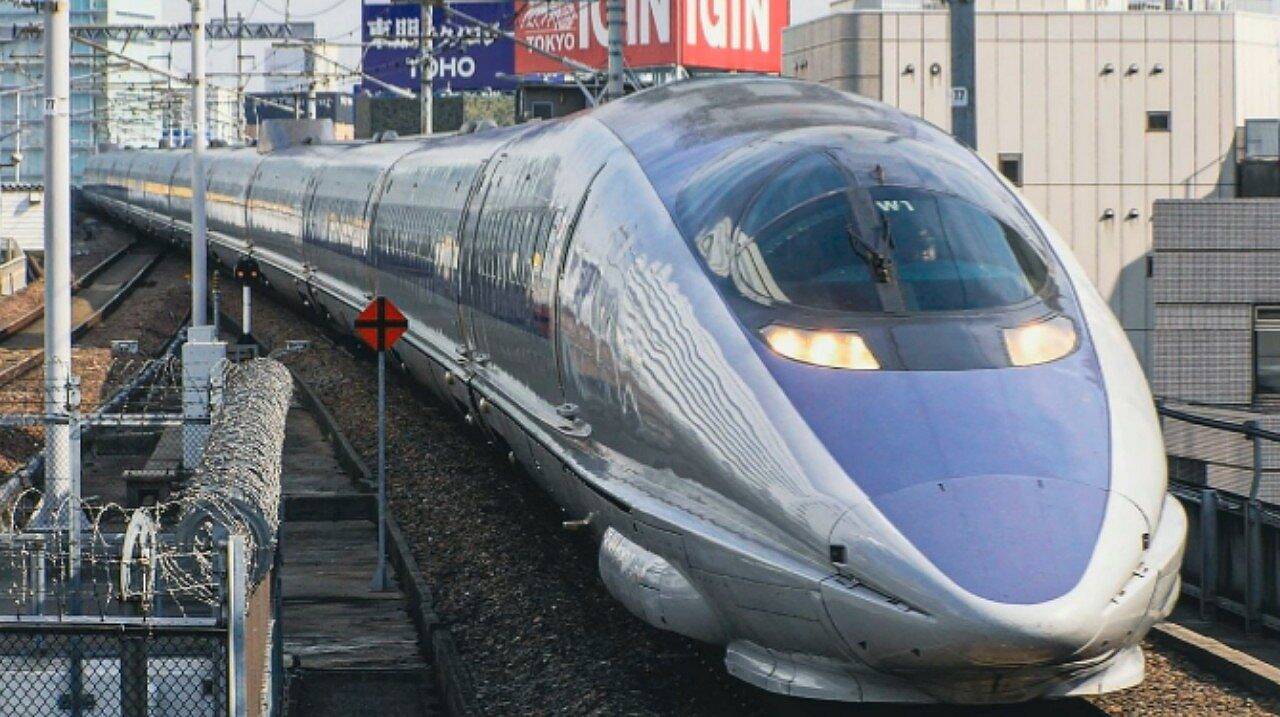
Japan is preparing to say goodbye to a milestone in the history of high-speed transport. The Shinkansen 500 series, the first train to reach 300 km/h in commercial operation, will have its service definitively deactivated on Monday, July 6, 2026. This closure marks the end of an era for the model that stood out for its speed and futuristic design, paving the way for the fastest and most efficient generations of trains that today serve the Tokaido, Sanyo and Kyushu lines.
The innovative legacy of the 500 series in Japan
Developed by JR West and launched in 1997, the 500 series quickly broke barriers by operating at 300 km/h on the Sanyo Shinkansen line between Shin-Osaka and Hakata. Its design, with a rounded body and pointed front, resembled an aircraft, making it an icon of technological innovation and railway aesthetics. The decision to deactivate the model is due to the aging of its structure.
After its withdrawal from regular “Nozomi” service, the Shinkansen 500 train continued to operate mainly as “Kodama” on the Sanyo Line. Additionally, the series gained popularity with limited-time promotional editions, in collaboration with animes such as “Neon Genesis Evangelion” and the character “Hello Kitty”, demonstrating its cultural relevance and appeal to the public.
The evolution of high speed: other Shinkansen models
The history of the Shinkansen is a constant search for speed and efficiency, with each series bringing new technologies and improvements. Discover other trains that shaped the Japanese railway system:
- Series 0: the beginning of the “Super Expresso dos Sonhos”
- Launched just before the 1964 Tokyo Olympics, the Series 0 was the first Shinkansen in the Tokaido line. With an initial speed of 210 km/h, it connected Tokyo to Shin-Osaka in four hours and became a symbol of Japan’s rapid economic growth.
- Series 100: introduction of double-deck carriages
- Presented in 1985 as a successor to the 0 Series, this model increased the maximum speed by 10 km/h, reaching 220 km/h. It was the first Shinkansen to integrate double-decker cars, offering more comfort and capacity to passengers.
- 300 series: the “Nozomi” era and time reduction
- Introduced in 1992, the 300 Series reached 270 km/h thanks to the use of aluminum alloy, which made its body lighter. Nicknamed “Nozomi”, it reduced travel time between Tokyo and Shin-Osaka to around 2 hours and 30 minutes.
- 700 Series: the “platypus” and the reduction of air resistance
- Developed in 1999, the 700 Series inherited technologies from the 300 and 500 Series. Its most distinctive feature was its uniquely shaped front carriage, designed to reduce air resistance when entering tunnels, earning it the affectionate nickname “platypus”. It reached 285 km/h.
- Series 800: debut on Kyushu Shinkansen
- Launched in 2004 with the partial opening of the Kyushu Shinkansen, the 800 Series operates at 260 km/h. Currently, this model serves the “Tsubame” route between Hakata and Kagoshima-Chuo, connecting cities in southern Japan.
- N700/N700 A and N700 S Series: Continuous improvement and faster
- The 2007 N700 Series reached 300 km/h and reduced travel time between Tokyo and Shin-Osaka to 2 hours and 25 minutes. The improved version, N700 S, launched in 2020, continues to refine technology and efficiency while maintaining the same top speed.
- N700 S8000 series: the new generation in western Kyushu
- This model, introduced in 2022, operates at 260 km/h as the “Kamome” Shinkansen on the Kyushu West Line between Takeo Onsen and Nagasaki. By connecting with the limited express train “Relay Kamome”, it reduces the travel time from Hakata to Nagasaki to just 1 hour and 20 minutes, exemplifying the constant evolution of the network.
The retirement of the 500 Series is a reminder of Japan’s relentless pursuit of excellence in rail transportation, which continues to drive the development of new technologies to connect its cities faster and more efficiently.




