

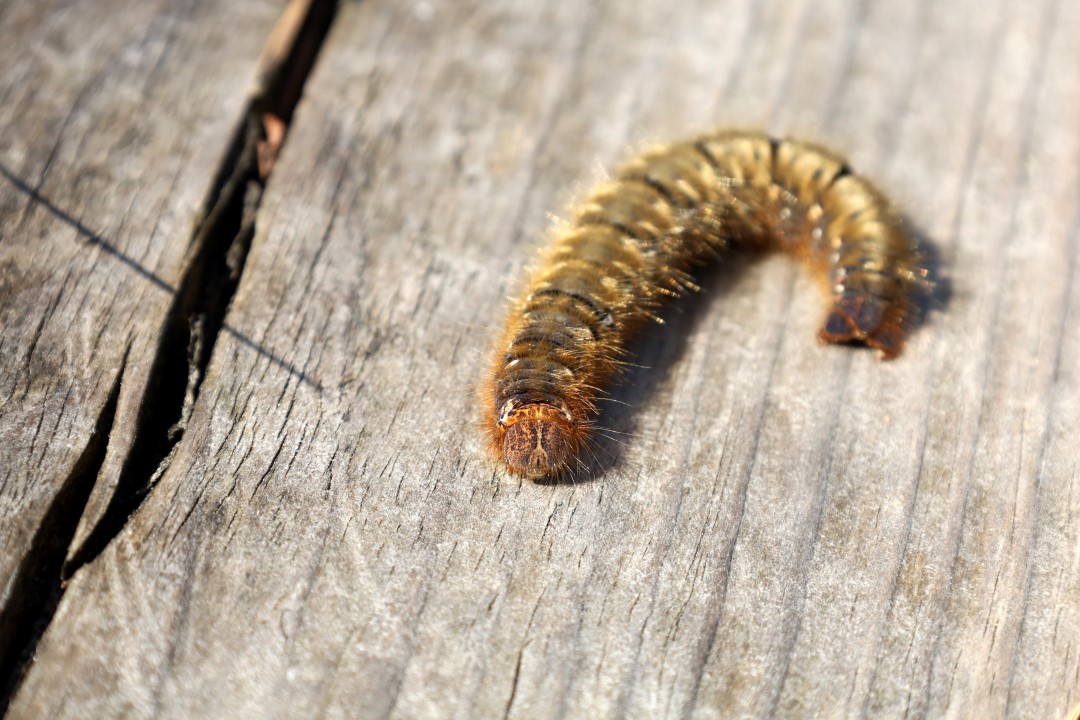
The administrative council of the county of Gotland Island, a well-known destination located in the Baltic Sea, Sweden, had to issue an emergency statement this Thursday after the discovery of a huge colony of dangerous insects. Thousands of caterpillars of the species popularly known as pine processionary were found grouped at the base of a wind turbine in the region. The thousands of hairs that cover the bodies of these larvae represent a significant and immediate risk to public health, as they contain toxins capable of triggering severe allergic reactions, episodes of extreme itching and painful rashes in humans who frequent the area.
Defense mechanism releases toxins directly into the air
The major biological problem of this species lies in its peculiar anatomy and its aggressive defense behavior against potential predators. When they feel threatened by any sudden movement, these caterpillars are able to eject their sharp hairs as if they were tiny projectiles, almost invisible to the naked eye. Each of these thin filaments contains a specific stinging protein called thaumetopoein, which acts similar to a poison when it comes into contact with biological tissues, causing acute inflammation that can persist for several days or even weeks if not treated correctly.

It is not strictly necessary to directly touch the insect’s body to suffer the clinical consequences of exposure to the toxin. Just the physical proximity to the large colonies already constitutes a real and imminent danger, since wind currents transport the light bristles through the atmosphere extremely easily. As these microscopic needles float freely through the air, they end up reaching unprotected skin, the mucous membranes of the eyes and even penetrating the respiratory system of anyone walking or exercising near the infestation.
More on this story: Thousands of poisonous caterpillars raise alarm in Gotland due to risk of itching and rashes
Dogs face lethal danger when sniffing infested areas
The environmental scenario becomes even more critical and worrying when it involves pets, especially dogs, who have a natural instinct to explore the environment with their nose close to the ground during walks. As dogs do not have the ability to perceive the visual danger of the pest and tend to smell or lick the trail left by the caterpillars in the soil, they end up inhaling or swallowing large quantities of highly toxic hair. This accidental interaction results in complex, painful and extremely fast-moving veterinary emergencies.
Once lodged inside the animal’s oral cavity, throat or respiratory tract, the bristles release the chemical substance that causes immediate tissue swelling, severe difficulty breathing and signs of intense pain. In more serious cases, the lack of rapid veterinary assistance can lead to necrosis of parts of the dog’s tongue, requiring partial amputation, or to widespread systemic complications that directly threaten the pet’s life.
Resident’s report highlights the need for alternative routes
The primary identification of the infestation focus occurred thanks to the close observation of Mattias Westerberg, a local resident who was taking a routine walk through the open area where the wind turbine is installed. He noticed the long Indian file formed by the insects on the ground, a typical behavior of this species that moves in a continuous procession to look for new food sources or find a suitable place on the ground to begin the pupal stage. Faced with the impressive volume of larvae marching together, the citizen immediately understood the seriousness of the situation for the community.
Concerned about collective well-being, Westerberg decided to change his daily routine and act as a voluntary multiplier of the government’s official alert. The resident categorically stated that he does not intend to take that specific route again anytime soon and made a personal commitment to warn all his neighbors to avoid the route compromised by the insects. This spontaneous community mobilization has been a fundamental tool in reducing the number of incidents and accidental exposures on the Swedish island.
Hygiene protocols block the progression of allergies
Public health and dermatology experts have established clear medical guidelines for anyone who suspects they have crossed paths with these venomous caterpillars during outdoor activities. The first and most important first aid measure is to wash the affected area of the human body or the pet’s coat with plenty of running water. The continuous, gentle flow of water helps mechanically drag the bristles away from the skin before they have a chance to penetrate deeper into the pores and release their full toxic load.
Learn more: Discovery in Sweden reveals that medieval adults and children buried together had no family ties
A very common mistake that considerably worsens the clinical condition of patients is the instinctive attempt to dry or clean the irritated area using terry cloth. The friction generated by towels, scarves or clothes ends up breaking the caterpillar hairs into smaller pieces and spreading the active toxin to areas of the body that were still healthy, quickly multiplying the extent of the rash and the burning sensation.
- Wash the affected area immediately with cold or room temperature water for several uninterrupted minutes.
- Remove all possibly contaminated clothing very carefully and wash separately on high heat cycles.
- Never rub irritated skin with your hands, bath sponges or dry towels under any circumstances.
- Seek emergency medical or veterinary care if symptoms such as breathing difficulties, dizziness or abnormal swelling of the face and neck appear.
European history requires constant monitoring of the pest
The insect variety currently found on Gotland Island shares several biological and behavioral characteristics with the oak processionary caterpillar, a related species that already has a long and documented history of environmental problems in other parts of Europe. In neighboring Denmark, infestations with very similar characteristics have already forced local authorities to order the temporary closure of public parks, schools and forestry leisure areas to protect the population from outbreaks of collective allergy and tree defoliation.
This direct parallel with the Danish events reinforces the urgency of a quick, coordinated and forceful response from Swedish environmental authorities. Continuous monitoring of vegetation areas and energy infrastructure, combined with awareness campaigns among the resident population and tourists, forms the main defense barrier to prevent the seasonal proliferation of these insects from turning into a large-scale public health crisis during the hottest months of the year.