

Consumers who invested in the South Korean manufacturer’s latest high-end smartphone are reporting an intriguing visual defect. Several forums and social networks have been flooded in recent weeks with complaints about a persistent reddish spot right in the center of the Galaxy S26 Ultra’s display. The volume of complaints grew quickly enough for the tech giant to recognize the flaw and mobilize its technical analysis teams.
The Asian company publicly confirmed that it was aware of the anomaly and has already begun a rigorous screening process to discover the origin of the defect. Brand representatives assured that a preliminary report will be shared with the public shortly after the end of the weekend. Until this official statement is issued, device owners continue to seek independent answers in technology communities.

Historically, color calibration problems or failures in OLED panels tend to generate great repercussions, especially in devices that exceed the thousands of reais mark. When a cell phone designed to deliver the best visual experience on the market presents factory distortions, consumer confidence suffers an immediate impact, requiring an agile and transparent response from specialized technical support.
Engineers evaluate the impact of the privacy filter on the panel
A press release revealed the behind-the-scenes investigation conducted by the company’s hardware experts. The main suspicion lies on three distinct fronts: a possible error in the structural assembly of the screen, an isolated batch of defective parts or, in the worst case scenario, an incompatibility generated by the new side view blocking feature. This security tool was widely used in the product’s marketing campaigns to attract corporate audiences.
If it is proven that directional dimming technology is causing color distortion, the manufacturer will face a complex engineering challenge. An intrinsic failure of this function would require not only the replacement of the affected devices, but also a complete redesign of the production line to prevent the defect from recurring in future batches, altering the device’s original design.
Initially, part of the community speculated that the red mark could be the result of image retention, the famous ghosting effect common in organic light-emitting diode displays. However, independent technicians who analyzed the images quickly ruled out this hypothesis, arguing that subpixel degradation takes months of continuous use at maximum brightness to occur, something impossible on a newly launched phone.
Silence about deadlines frustrates customers and coincides with new launches
The brand’s communications department has not yet set an exact date to present the definitive solution or announce a possible parts replacement program. This lack of definition has fueled heated debates on the internet, with many buyers demanding immediate exchange of equipment instead of waiting for software updates that may not resolve a physical problem.
The timing of this hardware crisis is particularly delicate for the South Korean giant’s corporate schedule. The company is in the final stages of preparation to reveal its next generation of cell phones with foldable screens later this year, a global event that attracts attention from across the telecommunications industry and defines market trends.
Rumors circulating behind the scenes in the technology sector indicate that future flexible models will hit the shelves with upwardly adjusted prices. Dealing with a structural failure in your flagship device just as you plan to charge more for new devices can create a significant obstacle to sales goals and perceived brand value.
Robust technical sheet highlights the complexity of the hardware involved
To understand the severity of a display defect, it is necessary to observe the level of sophistication of the components integrated into the chassis of this smartphone. The model represents the pinnacle of the brand’s technological development for the year 2026, combining extreme processing with a professional-level optical set and a screen that should be impeccable.
- 6.9-inch Dynamic AMOLED 2X panel delivering QHD+ resolution.
- LTPO-type display with 120 Hz adaptive refresh and 2,600 nits peak brightness.
- Qualcomm Snapdragon 8 Elite Gen 5 for Galaxy processor.
- RAM memory with 12 GB or 16 GB variants for multitasking.
- Space for internal storage of 256 GB, 512 GB or up to 1 TB.
- Front camera equipped with 12 MP sensor and f/2.2 aperture.
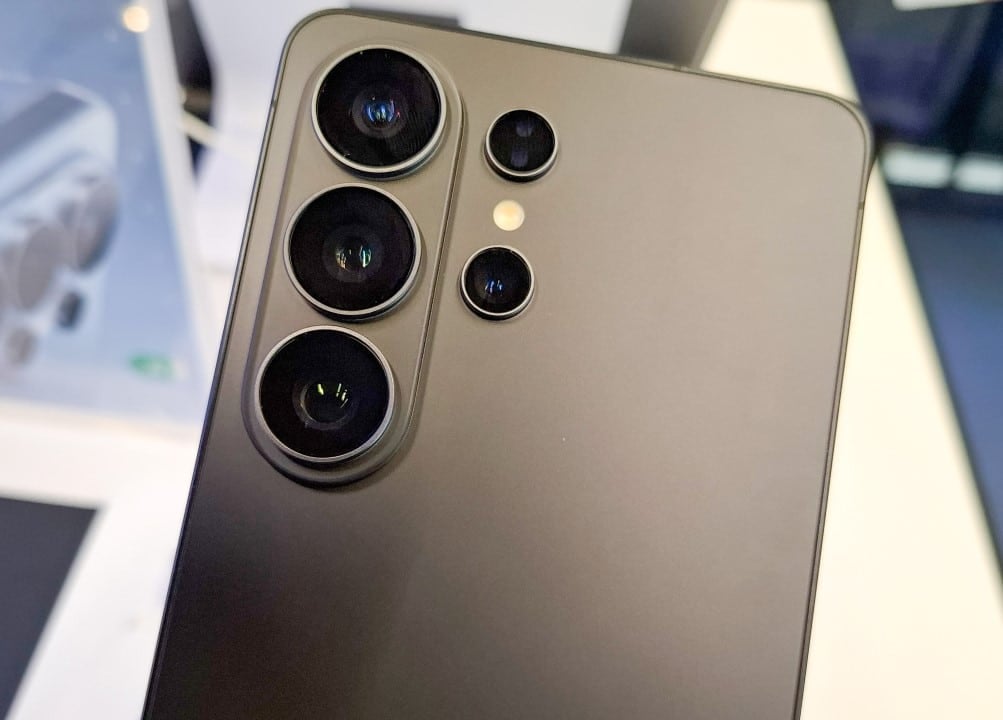
- Quad rear module: 200 MP primary sensor (f/1.9 with OIS), 50 MP ultrawide lens (f/1.9), first 50 MP telephoto (5x optical zoom, f/2.9 and OIS) and second 10 MP telephoto (3x zoom, f/2.4 and OIS).
- Support for 5G networks, Wi-Fi 7 standard, Bluetooth 6.0 and NFC approach.
- Protection against water and dust guaranteed by IP68 certification.
- 5,000 mAh power cell supporting 60W fast charging.
- One UI 8.5 interface running on the base of Android 16 operating system.
- Body measuring 78.1 by 163.6 by 7.9 millimeters, weighing 214 grams.
Guidance for consumers affected by visual anomaly
Consumer protection experts recommend that all homeowners who notice any change in color fidelity document the problem immediately. Photographing the screen displaying white or gray backgrounds helps to highlight the reddish spot, creating a solid record to activate the legal warranty with the manufacturer’s authorized technical assistance.
While the official engineering report is not published, the main guidance is to avoid homemade solutions or unofficial changes to the operating system in an attempt to mask the defect. The market expectation is that the company adopts a proactive stance, ensuring that the high financial investment required by this equipment is fully supported by excellent support.




