A recent analysis raises questions about the evolution of the cost of iPhones measured in minimum wage hours over generations. The study revisits everything from the original model to the iPhone 17, with projections for 2025, and compares the scenarios in the United States and Brazil.
To make the comparison, the researchers used a uniform methodology: they divided the full launch price of each iPhone by the minimum hourly wage in effect at the time of launch. Only official Apple prices were considered, without operator promotions or subsidies.
In the United States, the data starts with the original iPhone from 2007. In Brazil, the series only starts consistently with the iPhone 4S, in 2011, when Apple started selling directly in the country.
The first iPhone officially sold in Brazil was the 3G, in September 2008, through operators, with a price that attracted attention at the time.
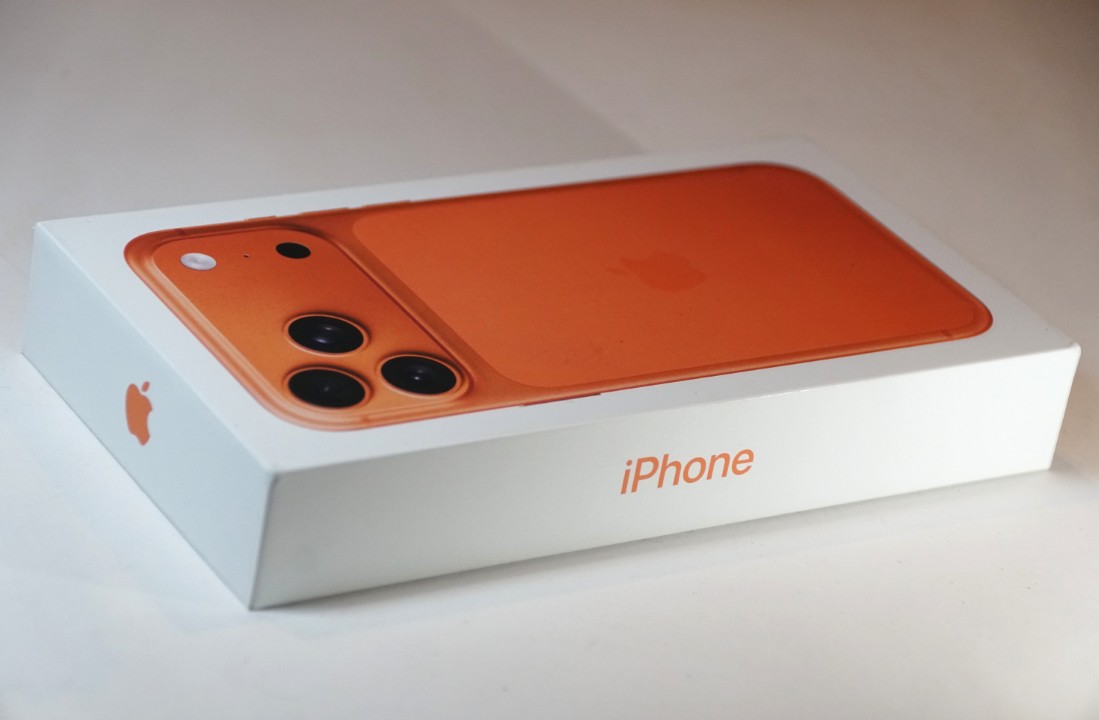
Overview of the working hours required to purchase each iPhone model
Below, the table details the launch price of each model and the number of working hours, based on the minimum wage for each period, that would be needed to purchase it:
| iPhone (year) | United States | Brazil |
|---|---|---|
| iPhone (2007) | US$599 = 116h | Not sold |
| iPhone 3G (2008) | US$599 = 102h | R$2,299* = 1,058h |
| iPhone 3GS (2009) | US$599 = 91h | R$1,699* = 698h |
| iPhone 4 (2010) | US$599 = 83h | R$1,799* = 674h |
| iPhone 4S (2011) | US$649 = 90h | R$2,599 = 911h |
| iPhone 5 (2012) | US$649 = 90h | R$2,399* = 737h |
| iPhone 5S (2013) | US$649 = 90h | R$2,799 = 789h |
| iPhone 6 (2014) | US$649 = 90h | R$3,199 = 844h |
| iPhone 6S (2015) | US$649 = 90h | R$3,999 = 969h |
| iPhone 7 (2016) | US$649 = 90h | R$3,499 = 759h |
| iPhone 8 (2017) | US$699 = 96h | R$3,999 = 815h |
| iPhone XR (2018) | US$749 = 103h | R$5,199 = 1,041h |
| iPhone 11 (2019) | US$699 = 96h | R$4,999 = 957h |
| iPhone 12 (2020) | US$799 = 110h | R$7,999 = 1,462h |
| iPhone 13 (2021) | US$799 = 110h | R$7,599 = 1,319h |
| iPhone 14 (2022) | US$799 = 110h | R$7,599 = 1,198h |
| iPhone 15 (2023) | US$799 = 110h | R$7,299 = 1,056h |
| iPhone 16 (2024) | US$799 = 110h | R$7,799 = 1,055h |
| iPhone 17 (2025) | US$799 = 110h | R$7,999 = 1,006h |
The values marked with an asterisk (*) represent the launch price of the device unlocked by operators, not Apple’s official table. This condition applies to iPhones 3G, 3GS, iPhone 4 and iPhone 5, periods in which Maçã did not yet have direct sales in Brazil.
Direct sales by Apple began with the iPhone 4S, in December 2011, but the iPhone 5 was only officially sold by the company in Brazil in June 2013, months after its global launch. Starting with the iPhone 5S, all prices in Brazil correspond to the official Apple Brazil table.
The methodology for the calculations was based on the launch price of each generation, using the entry storage model in the unlocked version, divided by the minimum hourly wage in effect at the time.
For the original 2007 iPhone, the 8GB version, which was widely sold, was considered instead of the 4GB version, which was quickly discontinued.
In the United States, the federal hourly minimum wage was US$5.15 at the launch of the original iPhone in June 2007, adjusted to US$5.85 weeks later, US$6.55 in 2008 and fixed at US$7.25 since July 2009, according to data from the US Department of Labor.
In Brazil, Apple’s official prices were used starting with the iPhone 4S in December 2011. For previous generations (3G, 3GS and iPhone 4) and the iPhone 5, the launch prices of unlocked devices available on the market at the time were considered.
The conversion of the monthly minimum wage into an hourly rate in Brazil was done by dividing by 191, corresponding to a 44-hour work week. Annual minimum wages, which ranged from R$415 in 2008 to R$1,518 in 2025, were obtained from official sources such as Planalto and IBGE.
The first iPhone, launched in 2007, is not included in the Brazil column because it was never officially sold in the country.
United States: the salary that stagnated over time
One of the most striking findings in the American data reveals a surprising constancy. The iPhone 17, scheduled for 2025, requires 110 hours of work based on the federal minimum wage, while the original iPhone in 2007 required 116 hours. This means that, in almost two decades, the work effort to acquire the device has remained practically the same.
This apparent stability does not reflect Apple’s more affordable pricing policy, but rather the freezing of the US federal minimum wage at US$7.25 since July 2009. This period is the longest without adjustments in the country’s history. Thus, since the iPhone 4 (2010), all new generations have been launched without an increase in the minimum wage to compensate for the rise in device prices. An American worker who receives the minimum wage today needs to dedicate almost three weeks of work to buy an entry-level iPhone, a time similar to that needed in 2007 and longer than in 2010.
Brazil: a trajectory of ups and downs in accessibility
In Brazil, the narrative is very different and marked by great volatility. The iPhone 3G, launched in 2008, cost R$2,299 with a minimum wage of R$415, requiring 1,058 hours of work — the equivalent of five and a half months of working hours. This was the moment of greatest impact in the arrival of the Apple smartphone in the country.
Then there was a notable reduction in the effort required. Between 2009 and 2010, driven by a rapid increase in the minimum wage, the cost in working hours fell significantly, reaching 674 hours for the iPhone 4 (2010), approximately three and a half months. This was Apple’s most “affordable” model in Brazil, when measured in working hours.
A historical factor that changed the cost dynamics was Apple’s direct sales in Brazil, which began with the iPhone 4S in December 2011, introducing higher values. This change caused the cost in hours to jump from 674 to more than 900 hours between one generation and another, partly because from then on, Apple’s official prices, which had always been premium, became the basis for calculation.
From that point onwards, the price curve rose consistently. Appliance prices increased faster than the minimum wage, and the devaluation of the real against the dollar worsened the situation. The historic peak was reached with the iPhone 12 (2020), which cost R$7,999 in a minimum wage scenario of R$1,045, resulting in 1,462 hours of work – almost eight months. The pandemic, the rise in the dollar and Apple’s positioning in the R$8,000 range severely impacted Brazilians’ purchasing power.
From the iPhone 12 to the iPhone 17, there has been a gradual relief. Prices in reais remained relatively stable – Apple even reduced the value of the iPhone 15 – while the minimum wage continued to rise. The iPhone 17, in 2025, will require 1,006 hours of work: still a considerable effort, equivalent to around five months of minimum wage, but the lowest level since the 2020 peak, returning to pre-pandemic levels.
The persistence of disparity between countries
When combining analyzes from both countries, the panorama becomes clear. In almost two decades, the Brazilian worker who receives minimum wage has had to dedicate, on average, 8 to 11 times more working hours than his American colleague to acquire the same model of iPhone. In 2020, with the iPhone 12, this difference exceeded 13 times. On the iPhone 3G, the disproportion was more than 10 times; on the iPhone 17, it still remains at around 9. Device technology has evolved, but the disparity in the proportion of financial sacrifice remains remarkably similar.
This disparity reveals an important lesson: Apple prices its products in dollars globally, but the actual impact on purchasing power varies drastically depending on the local economy. In the United States, the main problem is wage stagnation. In Brazil, the combination of a high tax burden, exchange rate variation and an already inflated starting price creates a challenging scenario. Although the device is identical, the effort to obtain it is profoundly different. The central irony of this series of reviews is that, from an hours-worked perspective, the iPhone hasn’t become “more expensive” in nearly 20 years; it simply became expensive in different ways, depending on the economic reality of each country.