

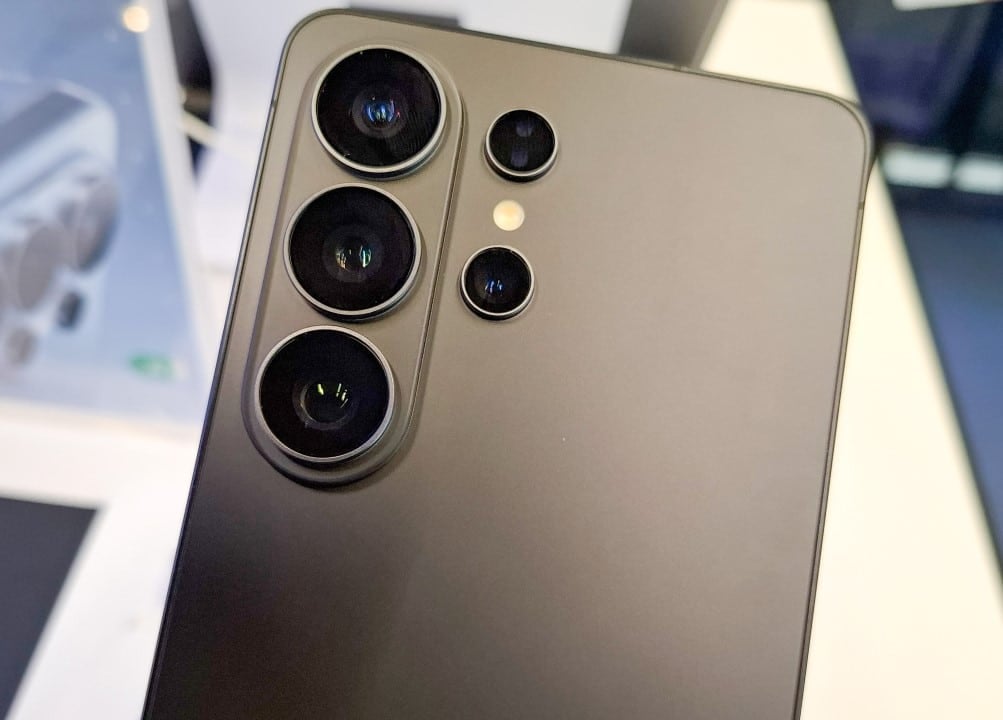
Consumers who invested in the mobile device industry’s latest high-end release are reporting a frustrating visual anomaly. Owners of the recently launched Samsung Galaxy S26 Ultra have started flooding technology forums and social media with complaints about the sudden appearance of fixed red dots on the device’s main panel. The rapid escalation in the volume of complaints forced the South Korean giant to publicly acknowledge the situation, issuing a preliminary statement confirming the start of an in-depth technical investigation to discover the root of this unexpected behavior on the display.
The Asian company’s corporate communications division stated that engineering teams already have defective units in the laboratory for rigorous testing. The immediate objective is to determine whether the manifestation of these reddish spots is due to a specific batch with failures in the physical assembly process or whether there is a conflict in the operating system code that is sending incorrect commands to the pixel matrix. Until a definitive report is published, the brand recommends that affected customers contact official support channels to register the case and begin the individual analysis process.

The complexity of OLED technology and the origin of light spots
To understand the severity of this scenario, it is essential to analyze how modern panels work at a microscopic level. Screens based on organic light-emitting diodes, like the one used in this model, rely on individual subpixels in red, green and blue colors to form images. Hardware experts point out that a subpixel stuck in red usually indicates an irregular voltage fluctuation on the display controller board or premature degradation of the encapsulated organic material. This type of electrical stress causes the light point to remain lit continuously, ignoring the shutdown commands sent by the graphics processor when dark content is displayed.
The emergence of this setback represents a significant blow to the marketing of the product, which was widely promoted precisely because of the superiority of its visual experience. When a consumer pays a considerable amount for equipment positioned at the top of the telephone market pyramid, the expectation is of impeccable calibration and extreme durability. Frustration increases because, in many reported cases, the defect does not manifest itself when the device is removed from the box, but rather after a few days or weeks of continuous use, taking the user completely by surprise and hampering media consumption.
Pressure for quick solutions and the dilemma between physical repair or upgrade
Behind the scenes in the industry, analysts believe that the manufacturer is racing against the clock to stop possible damage to the line’s reputation. If the internal investigation concludes that the problem has a purely software origin, the resolution could be distributed globally through a simple internet update package, recalibrating the voltage sent to the diodes. However, if the diagnosis points to a structural error in the manufacturing of the glass or in the internal connectors, the company will have to implement massive and costly logistics to physically replace the screens or exchange the entire devices at authorized technical assistance centers around the world.
Initial rumors circulating in developer communities suggested that a digital color filter could be causing a ghosting effect, but this hypothesis quickly lost traction. The persistence of the red dot even when restarting the operating system in safe mode reinforces the thesis that the damage can be irreversible via programming. Faced with this uncertainty, transparency in communicating the next steps will be vital to maintain the trust of the loyal fan base who tend to update their equipment with each new generation presented by the brand.
Complete technical sheet of the mobile device at the center of controversy
Despite the current obstacle involving the display of images, the hardware embedded in this project continues to be one of the most robust ever designed for the personal communication segment. The internal architecture is designed to deliver extreme performance in multitasking, artificial intelligence processing, heavy gaming and professional productivity. Below, we detail the components that form the backbone of this coveted, high-cost electronics:
- 6.9-inch touch panel with 2X AMOLED technology and very high definition QHD+ resolution.
- Adaptive refresh rate of up to 120 Hz via LTPO system, achieving an impressive peak brightness of 2,600 nits.
- Processing driven by the powerful Snapdragon 8 Elite Gen 5 chip, optimized specifically for the Galaxy line.
- RAM memory options of 12 GB or 16 GB, ensuring fluidity when switching between heavy applications.
- Internal storage with capacities ranging from 256 GB, 512 GB and a top-of-the-line version with 1 TB of space.
- 12-megapixel front camera with f/2.2 aperture for clear personal captures and video calls.
- Quad rear photo module led by a 200 MP main sensor (f/1.9 with optical stabilization).
- Auxiliary lenses including a 50 MP ultrawide, a 50 MP telephoto with 5x optical zoom and another 10 MP telephoto with 3x zoom.
- State-of-the-art connectivity with support for 5G networks, Wi-Fi 7 standard, Bluetooth 6.0 and NFC approach.
- IP68 certification that certifies the chassis’ resistance against dust ingress and submersion in fresh water.
- Long-lasting battery with 5000 mAh capacity and compatibility with 60W ultra-fast charging.
- Android 16 operating system running under the One UI 8.5 custom interface straight from the factory.
- Physical structure weighing 214 grams, with exact dimensions of 78.1 millimeters wide by 163.6 high and 7.9 thick.
All this cutting-edge engineering demonstrates the level of investment put into product development. The integration of such sophisticated components requires rigorous quality control, as any failure in a single part, such as the main display, ends up overshadowing the brilliance of the other technological innovations present in the chassis and generating immediate discontent among those who paid full price for the launch.
Essential steps to protect consumer warranty rights
Consumer protection entities and experts in digital law recommend immediate action for anyone who identifies the light anomaly. The crucial first step is to document the defect clearly. The user must photograph the cell phone screen using another device, preferably showing completely white or gray backgrounds, scenarios where the red dot stands out more clearly. This photographic record serves as indisputable proof of the hidden defect, facilitating the opening of a repair call with the manufacturer’s customer service and avoiding disputes about the existence of the problem.
Another extremely important warning concerns attempts at home repairs. It is expressly discouraged to use third-party applications that promise to unlock dead pixels through quick color flashes, as these tools are not proven effective in hardware failures and can worsen panel wear. Likewise, unauthorized procedures, such as pressing hard on the affected area or attempting to alter the operating system through unofficial means, instantly void legal warranty coverage, leaving the owner at the full loss of replacing the part.
The technology market is closely following the developments of this episode, evaluating the corporation’s ability to respond to a quality crisis in its most profitable product. The way in which technical support will deal with service logistics, the speed in approving repairs and the clarity in explanations about the origin of the failure are the factors that are at stake right now. In a segment where competition demands perfection and profit margins depend on the prestige of the brand, solving visual defects quickly and with respect for the customer is the only way to preserve the added value of the equipment.




