
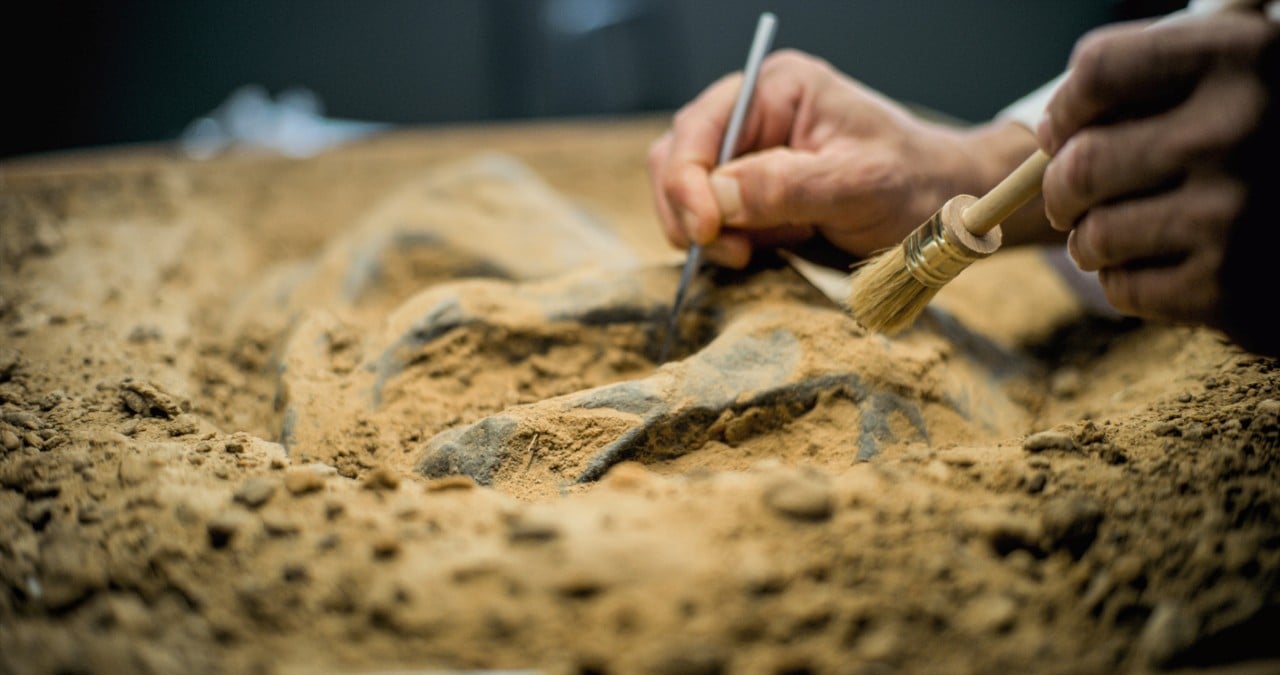
A significant archaeological discovery has been revealed at the necropolis of Sheikh Abd el-Qurna on the west bank of Luxor, where a Dutch mission has identified the tomb of an Egyptian named Paser. Preserved for approximately 3,000 years, the tomb offers a rare glimpse into the life and burial customs of the Ramessid period. The intact inscriptions on the interior walls were crucial for identifying the owner and understanding the historical context of the time.
Paser’s legacy: who was the Egyptian revealed by the tomb
The team of archaeologists from Leiden University, in the Netherlands, who works in the region, confirmed that the tomb belongs to the Ramessid period, encompassing the nineteenth and twentieth dynasties of Ancient Egypt. The dating was possible thanks to the artistic style predominant in the inscriptions and the location of the tomb. The name Paser, meticulously engraved on the walls, rescues the identity of an individual who, for millennia, remained unknown to the modern world.
This find is valuable because each name and detail adds a piece to the complex puzzle of ancient Egyptian society, allowing historians and archaeologists to trace lineages and social roles. Knowing Paser’s identity helps contextualize other elements found in the tomb, such as rituals and offerings, which can now be associated with a specific individual and their family.
Theban funerary architecture: details of an ancient tomb
The structure of Paser’s tomb follows the traditional model of Theban private burials of the New Kingdom, a period that extended from 1570 to 1069 BC. It consists of an open courtyard that leads to a main chapel, carved directly into the rock. Below ground level, additional burial chambers were excavated, reflecting common practice of the time.
Inside the courtyard, researchers found a mudbrick bench, designed to support a funerary stele. A staircase, flanked by sloping ramps, provided the main access to the tomb’s entrance. These structural elements not only reveal the complexity of funerary architecture, but also provide clues about the rituals and social hierarchy involved in Egyptian funerals.
Rituals and deities: Paser’s religious life on the walls
The tomb’s interior decorations are a treasure trove of information about Paser’s religious life and the customs of Egyptian society. Inscriptions show Paser in various scenes of worship, paying homage to multiple deities at shrines. This representation is common in New Kingdom tombs, indicating the deep connection between earthly life and spirituality.
Elsewhere in the engravings, Paser is depicted sitting next to his wife, before a table filled with offerings. This image, in addition to suggesting the couple’s social status, illustrates the belief in life after death and the importance of offerings to guarantee the well-being of the deceased in the afterlife. Every detail of the painted and carved scenes provides valuable information about the beliefs and practices of ancient Egypt.
The ongoing work of Leiden University in Luxor
The discovery of Paser’s tomb is part of a broader research project that Leiden University has been conducting in the region since 2018. The initiative is a partnership with the Egyptian Ministry of Tourism and Antiquities, focusing on the documentation and study of local necropolises. The team is currently engaged in detailed work recording the interior of the tomb.
Archaeologists hope to identify other individuals who may have been buried at the site, as well as deepen their understanding of the historical and cultural context. Continued excavations and analyzes could reveal new stories and further expand knowledge about the inhabitants of Ancient Egypt and their interactions with the sacred environment of Luxor.
Main aspects revealed in Paser’s tomb
- Owner identification:Inscriptions on the walls confirmed Paser’s name.
- Historical period:Dating from the Ramessid period (nineteenth and twentieth dynasties).
- Funeral structure:Traditional Theban model with courtyard, chapel and underground chambers.
- Religious context:Scenes of Paser worshiping deities and standing next to his wife with offerings.
- Location:Necropolis of Sheikh Abd el-Qurna, west bank of Luxor.
- Research team:Dutch archaeological mission from Leiden University in partnership with the Egyptian Ministry of Tourism and Antiquities.
Why Paser’s Tomb Matters Today: Reconstructing Human History
The discovery of an intact tomb, with the identity of its occupant preserved for three millennia, transcends merely archaeological interest. It highlights archeology’s incredible ability to rescue not just monuments, but individual and family histories, allowing a deeper connection with the past. Every inscription, every artifact, every architectural detail becomes a window into the lives of people who lived in a distant time.
This tomb in Luxor is not just a stone vestige; It is a testimony to the belief in eternity and the complexity of Egyptian culture. She reminds us that behind the great pharaohs and towering temples, there were individuals like Paser, with their own lives, beliefs and legacies, contributing to the tapestry of one of the most fascinating civilizations in history. Continuing this research is vital to fill gaps and enrich our understanding of the human trajectory.