
How the moon Titan, with rivers and methane rains, reveals a scenario identical to that on Earth

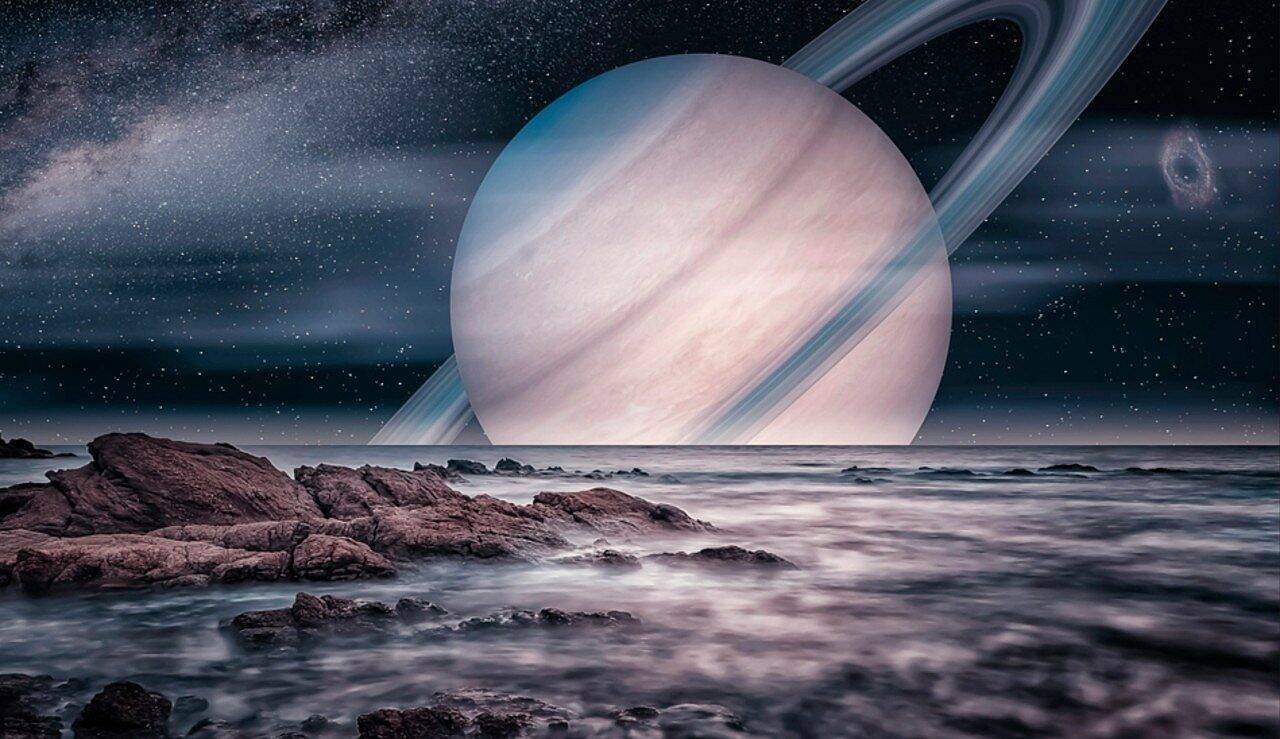
Titan, Saturn’s largest moon, intrigues scientists for its hydrological system that resembles that of Earth. Despite having rivers, lakes and rain, its chemical constitution is unique, based on the abundance of liquid methane.
Details about the liquid methane cycle operating on the moon Titan
In this moon’s dense atmosphere, methane plays a role similar to that of water on our planet. This compound moves between gaseous and liquid states, creating long-lasting clouds that release precipitation onto a surface shaped by very recognizable geological processes.
The particular atmospheric dynamics are energized by the interaction between solar radiation and hydrocarbons. This system ensures the persistence of liquid reservoirs on the surface, forming an environment that fascinates scientists investigating the variety of remote celestial bodies.
Main points revealed about the natural phenomenon on Titan
The study of natural phenomena on Titan sheds light on how geological processes manifest themselves under extreme conditions outside Earth’s orbit.
- Liquid methane is the essential component that maintains the hydrological cycle on the moon.
- The Cassini-Huygens probe played a crucial role in mapping Titan’s extensive seas.
- The remarkable visual similarity to terrestrial landscapes delights the global scientific community.
Understanding the particularities of the seas identified on Titan’s surface
Extensive reservoirs, such as the Kraken Mare, predominate in the polar areas of the moon, exhibiting depths and chemical compositions that exceed initial expectations. These liquid bodies act in an intricate way, interacting with the frozen soil that forms the satellite’s crust.
Continuous monitoring makes it possible to understand how seasonal changes impact the volume of these vast seas. The constancy of these methane lakes offers important clues about Titan’s geological evolution over time frames that exceed human observation capabilities.
Below, a video from the SETI Institute YouTube channel explores the topics covered on the topic in more detail:
The transformative influence of the Cassini mission on understanding Titan
The impact of the Cassini-Huygens probe remains fundamental to planetary science, as it was responsible for the detailed mapping of this fascinating moon. Without the data collected, the presence of a dynamic world beneath an ice cover would remain an abstract hypothesis.
The probe managed to unveil the intricate topography that characterizes the Saturnian surface.
This data profoundly changed the perception about the viability of life on ice planets.
The accuracy of the measurements made it possible to identify the composition of the soil and the form of precipitation. Through these records, we understand the relevance of space technology in expanding the limits of human knowledge about the solar system.
Below, the main revelations from the probe that redefined our understanding of this satellite are detailed:
- The identification of extensive seas made up of combinations of methane and ethane.
- Mapping the intricate network of rivers that sculpt the lunar geography.
- The detection of seasonal changes in hydrocarbon clouds present in the atmosphere.
Titan’s relevance to research into the origin of life
The chemical complexity observed on Titan’s surface configures it as a natural laboratory for the study of organic processes. The vast presence of hydrocarbons raises significant questions about the requirements for the development of biological structures in contexts other than terrestrial.
Research targeting this moon aims to determine whether prebiotic reactions are possible under such extreme conditions. The analysis of this unique chemistry contributes to establishing the limits of the existence of life, expanding our investigation of living beings in different planetary environments.
The reasons that make the exploration of this location fundamental for contemporary astrobiology are listed below:
- The vast occurrence of complex organic compounds throughout Titan’s crust.
- The interconnection between its dense atmosphere and the moon’s active geology.
- The possibility of finding sources of chemical energy below the surface.
Future prospects for space exploration on Titan
New space expeditions are in the planning phase to examine the depths of the seas and atmospheric composition with improved sensors. Current technology will enable high-precision landings, with the aim of unveiling the secrets hidden beneath the dense fog that continuously covers the celestial body.
Future research aims to collect direct samples, elucidating the processes that keep lunar geology in constant transformation. Continued exploration is crucial to deepening our understanding of how methane and other hydrocarbons shape the unique identity of this captivating natural satellite.





