George Lucas criticizes focus on Hollywood fans and reinforces importance of authorship By Janderson Luiz
3 min read
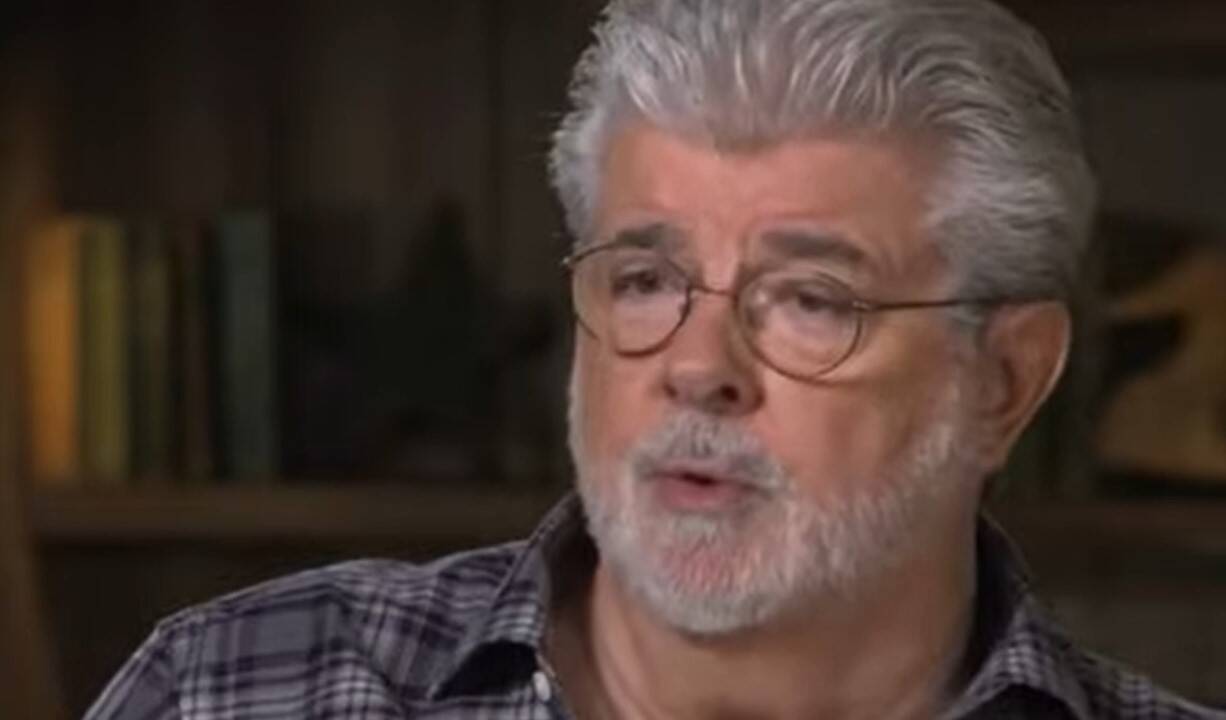 |
Renowned Star Wars creator George Lucas recently expressed his dissatisfaction with current Hollywood trends, especially the excessive use of focus groups. In an interview with A Rabbit’s Foot, Lucas, 82, stated that audiences “don’t know what they want to see” and that studios are allowing viewers to “pretty much make the movie.” This statement underscores a long-standing critique from the filmmaker about the loss of authorial vision in the industry.
Lucas, who actively stepped away from the Star Wars franchise following the sale of Lucasfilm to Disney for $4 billion in 2012, argues that studios often draw erroneous conclusions from focus group opinions. He emphasizes that a filmmaker’s passion and vision are fundamental, not the quest to please everyone at any cost.
The excessive influence of focus groups and the loss of the original vision
The central point of George Lucas’ criticism lies in the belief that dependence on focus groups and public opinion can undermine the originality and artistic integrity of a production. According to him, when the public expresses disapproval of a character, it is the filmmaker’s duty to understand why, and not simply remove or alter the element to please. This approach, in Lucas’s view, transforms the creative process into a committee, where the author’s voice is lost in search of a consensus that does not always lead to the best result.
He argues that the current obsession with fan opinion leads to an overvaluation of public expectations, to the detriment of a cohesive narrative and a singular artistic vision. This raises a crucial question about the future of creativity in large franchises, where intellectual property management often trumps innovation.
George Lucas and his history of clashes with public opinion
Lucas’s perspective on public resistance is not new and is based on his own experiences throughout his career. He recalls moments when iconic Star Wars characters were initially rejected by fans, but ended up becoming inseparable parts of the universe.
In his history, he highlights situations such as:
- Jar Jar Binks:The character from the prequel trilogy, who faced strong backlash. Lucas played down the criticism, insisting that the franchise was always aimed at children.
- R2-D2 and C-3PO:There was initial pressure for him to get rid of C-3PO in the early films, showing that even central figures can be misunderstood at first.
- Ewoks:In the third film of the original trilogy, “Return of the Jedi” (1983), the “teddy bears” were also the target of disapproval, with fans asking for a more adult tone for the saga.
These examples reinforce Lucas’s belief that audiences do not always know what they want and that persistence in creative vision is essential to the long-term success of a work.
The challenge of balancing creativity and fan satisfaction
The discussion raised by George Lucas is particularly relevant in today’s Hollywood scenario, where big budgets and established franchises depend heavily on popular acceptance. However, the filmmaker argues that making a film should involve finding someone with a story to tell and a genuine passion for it, and not simply adapting to market research.
His vision highlights the conflict between authorial artistry and commercial demands, a dilemma that continues to shape contemporary filmmaking. Lucas’s legacy, marked by innovation and the creation of a universe that transcended generations, serves as a powerful reminder of the importance of protecting the creative voice in an environment increasingly focused on immediate audience response.