
GWM Haval H9 accelerates in the dispute and approaches the leadership of the Toyota SW4 among SUVs

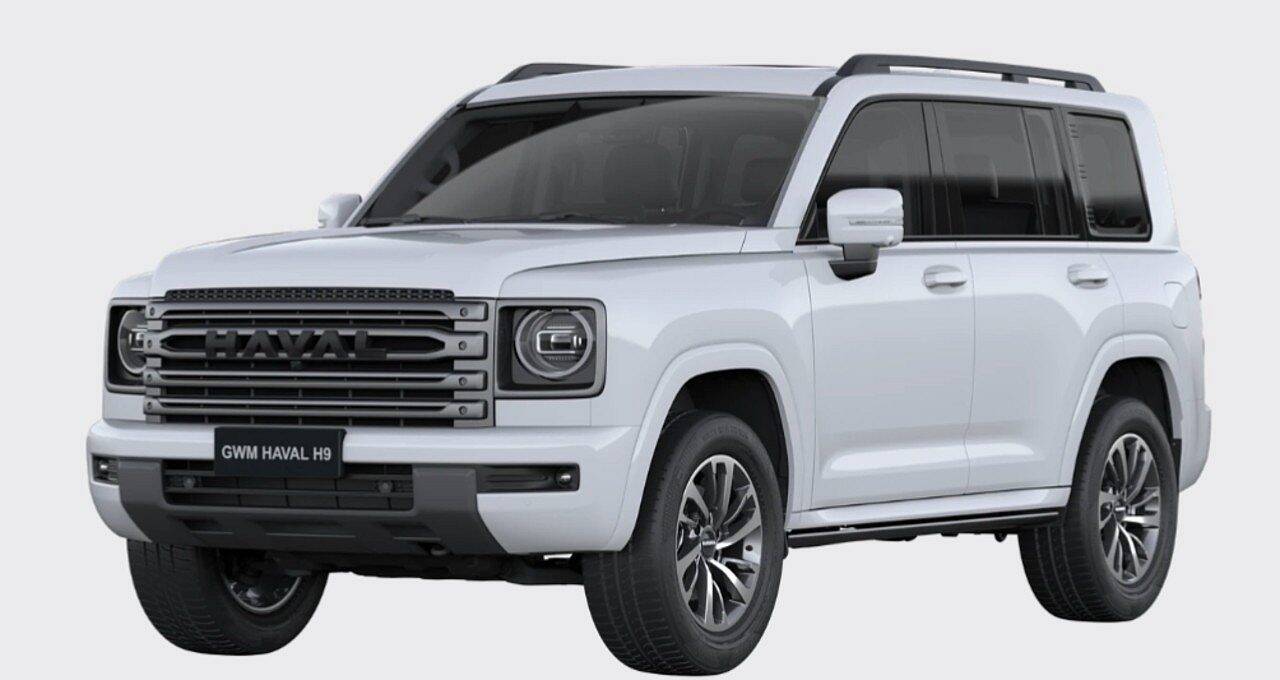
The hegemony of a market leader is not always unshakable. A recent analysis, with data until June 2026, shows that the Toyota SW4, for years, maintained a prominent position in the sports utility vehicle segment, gaining a loyal customer base with high purchasing power, but now it faces a new challenge.
The entry-level configuration of the Japanese SUV has a value that exceeds R$424 thousand, with sales significantly higher than those of the Chevrolet Trailblazer, which starts at R$422 thousand.
However, a new competitor, previously unlikely, made its discreet debut in September 2025 and has been gaining ground on the automotive scene.
At first glance, the GWM Haval H9 seemed to clash with the Chinese automaker’s product line.
GWM has invested in building an image of modernity in Brazil, with a portfolio of sophisticatedly designed hybrid and electric vehicles with rounded and attractive bodies.
In contrast, the H9 presents itself as a robust utility vehicle, with a diesel engine and a body-on-frame structure, which initially made its success an unknown.
However, the GWM Haval H9 has been challenging the SW4’s leadership in the year 2026. The Chinese model surpassed its Japanese competitor in registration volume during the months of March and May. In the first six months of the year, from January to June, the GWM registered 5,942 units sold, while the SW4 achieved 6,780 sales.
To better understand this rise, let’s analyze the main factors driving the GWM Haval H9.
Big difference in purchase prices between models
When comparing prices, the disparity of R$89,000 between the Haval H9 and the SW4 is a decisive factor. GWM’s strategy of offering only two versions with similar prices and no discounts avoids distortions in the pre-owned vehicle market.
The Haval H9 Exclusive costs R$335,000, and the Selection variant is offered for R$339,000. The extra R$4,000 for the Selection version corresponds to an aesthetic package that includes a black grille and darkened wheels, with no changes to equipment.
On the other hand, the Toyota SW4 starts at R$417,590 in the SRX Platinum version for five occupants. For this analysis, we considered the seven-seater SRX Platinum, priced at R$424,590.

This way, GWM maintenance, even though it is slightly higher, is compensated. The H9 requires maintenance every 12 thousand kilometers, while the Toyota SUV requires maintenance every 10 thousand kilometers.
Thus, until the fourth revision, the GWM totals a cost of R$9,126, reaching 48 thousand kilometers, a level similar to the 50 thousand kilometers of the fifth revision of the SW4. Both vehicles offer a ten-year warranty, subject to maintenance carried out at the dealership network.
What the vehicles offer in terms of interior equipment
The GWM’s price advantage becomes even more evident when examining the equipment list. The H9 competes on equal terms with the Toyota, and in some aspects, it can be said that it surpasses its rival.
The Chinese model features a larger multimedia screen with more intuitive software. The GWM’s front seats offer heating and massage functions, while the Toyota’s only have cooling. In the second row, only the H9 has the cooling feature.
The SW4, in turn, comes equipped with an electric trunk opening, a detail that adds comfort and convenience to users.
In terms of technology and safety, the GWM offers lane keeping assistant, while the Toyota only has an alert system.
Both SUVs have cameras with a 360-degree view, however, the Haval H9 innovates by providing a “transparency” effect, which improves the view of the surroundings.
Functions such as Auto-Hold and Stop&Go, present in the H9, make driving in congested traffic easier. Added to adaptive cruise control, the driver can follow the flow without the need to continually apply the brake pedal.
The imposing look and striking presence of the models
For body-on-frame diesel SUVs, size is a crucial attribute. Consumers who invest in these vehicles are looking for an imposing, spacious car that visually conveys this robustness.
The technical sheet reveals that the Haval H9 surpasses the SW4 in width and length, resulting in a greater weight for the Chinese model.
In visual comparison, the impression is that the GWM offers a perception of “more car” due to its size, psychologically influencing the buyer’s choice.
As for design, although it is subjective, GWM has adopted an aesthetic that appeals to this audience. The H9 differs from other models of the brand sold in Brazil, such as the Ora line or the H6.
The designers sought inspiration from vehicles such as the Land Rover Defender and the Mercedes-Benz G-Class, creating a look that mixes square lines with rounded touches, headlights and a front grille with a strong presence.
The result is an aesthetic that pleases those looking for a utility vehicle with the appearance of an authentic Jeep, even if its use is restricted to the urban environment.
This perception is also shaped by the evolutionary trajectory of SW4. In the most recent versions, Toyota has refined the Hilux-derived SUV, giving it a more sophisticated look and less focused on off-road use.
This does not imply that the SW4 has lost its off-road capability, which remains intact. However, in terms of design, the model has come closer to a luxury SUV, while the H9 invests in a robust and raw aesthetic, which attracts a specific audience.
Performance and drivability when driving SUVs
Technical data suggests that the Toyota has the edge in performance. Although the Japanese automaker does not officially reveal maximum speed and acceleration figures, it is noticeable when driving that the SW4, being lighter and more powerful, offers faster responses in traffic.
Behind the wheel of the H9, the expectation of a clumsy car due to its size and robust appearance is shattered. During tests in heavy traffic conditions in the capital of São Paulo, the GWM SUV proved to be surprisingly agile and easy to maneuver.
It is undeniable that driving a large vehicle amid lanes and motorcycles requires extra attention, but the H9 does not convey the feeling of being a difficult or intimidating car to drive on the busy avenues of São Paulo.
GWM was also successful in calibrating the suspension and steering assembly. For a large SUV with a chassis on a body, the handling is satisfactory and aligns well with its proposal.
This could be one of the pillars of the H9’s success: drivers accustomed to vehicles in this segment will find a well-executed proposal, which offers robustness for trails and ease of movement in the urban environment.
The internal environment and technological innovations offered
Upon accessing the SW4’s interior, long-time consumers may experience a sense of familiarity, but also notice the absence of major innovations. The cabin preserves a well-known and discreet approach, which, until then, did not seem to impact public preference.
With the arrival of the H9, however, consumers gain the option of an SUV with an enlarged multimedia center, digital instrument panel and a more advanced technological experience, without giving up attributes such as a diesel engine, automatic transmission and 4×4 reduced traction.
Additionally, the H9’s controls and drives, although different, do not require a complex adaptation period and do not compromise daily usability.
Sometimes, Chinese brands or automakers looking for reinvention introduce creative solutions for basic functions, which can create confusion for the user. In the Haval H9, this approach was avoided.
The experience on board the SW4 remains satisfactory, but the H9 offers a more modern and distinct experience, a difference that could attract consumers who previously would not have considered a GWM model.
The conclusion is that, faced with a significant price difference in the same segment and with a competitor that equals or surpasses the leader in multiple attributes, the sovereignty of the Toyota SW4 naturally begins to be reevaluated.





