Discovery reveals ancient bees that used mammal bones as nests 20,000 years ago
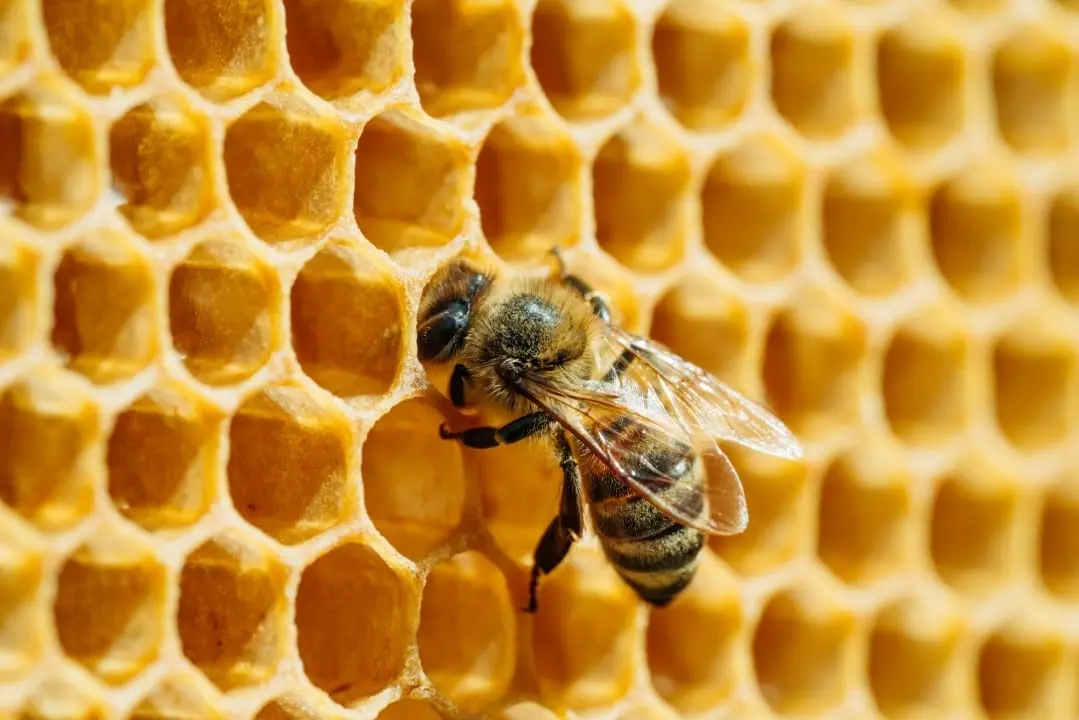
A fascinating study published on Tuesday, July 5, revealed that around 20,000 years ago, ancient bees adopted a novel nesting strategy. In a cave that served as home to owls, these insects took advantage of the empty tooth cavities of fossilized mammalian jaws to build their tiny nurseries. This discovery, detailed in Royal Society Open Science, represents the first documented evidence of bees using animal bones to lay eggs, highlighting a remarkable and previously unknown adaptability in the ecology of these species.
How ancient insects adapted and built nests inside bones
Located in the Caribbean, the island of Hispaniola, divided between Haiti and the Dominican Republic, is known for its thousands of limestone caves. Lazaro Viñola López, postdoctoral researcher at the Field Museum in Chicago and lead author of the study, commented on the abundance of these sites, stating that “in some areas, you will find a different sinkhole every 100 meters”, highlighting the geological richness of the region.
The specific cave analyzed by the researchers had already been identified as a fossil deposit of great value by Juan Almonte Milan, curator of paleobiology at the National Museum of Natural History of the Dominican Republic. Viñola López and his team conducted explorations at the site while he was completing his doctorate at the University of Florida and the Florida Museum of Natural History.
Initial access to the cave does not require a very deep descent, as reported by Viñola López. He described that, after tying a rope and rappelling down, it is possible to see the eyes of tarantulas at night. However, it is only after crossing a ten meter underground tunnel that the first fossils begin to be found.
Inside the cave, several layers of fossils were preserved, interspersed with carbonate deposits formed in remote rainy times. Although most of the remains were rodents, the team also unearthed fossils of sloths, birds, reptiles and a variety of other creatures, totaling more than 50 different species.
More on this story: Discovery in Thailand reveals new species of dinosaur with a long neck and 20 meters
The joint analysis of the fossils provided information about the cave’s long history of use. Viñola López suggested that the site was home to owls for countless generations, possibly centuries or millennia. The birds hunted, returned to the cave and regurgitated pellets, leaving behind remains of the animals they consumed. Fossils of both their prey and the owls themselves were identified, as well as turtles and crocodiles that probably fell into the cavity.
Unexpected observations in fossil tooth cavities
While examining the mammal bones deposited by owls, Viñola López noticed an anomaly during the process of cleaning the fossils. In several jaws, there were deposits with a smooth surface inside the unoccupied dental alveoli, the texture of which differed from natural sedimentation.
The scientist described the formations as a “smooth, almost concave surface”, an unusual pattern for sediment accumulation. Upon noticing this recurrence in several samples, he recognized the strangeness of the situation, reminding him of wasp nests.
This peculiarity took the researcher back to a previous experience, which occurred during a fossil excavation in Montana, back in his college days. On that occasion, another paleontologist presented him with fossilized wasp cocoons, mud structures that serve as cradles for developing larvae. The formations seen in the jaws were remarkably similar to these cocoons.
On the same topic: T. rex auction at Sotheby’s raises debate about the future of science and valuable fossils
The intriguing revelation of ancient bee nests in bones
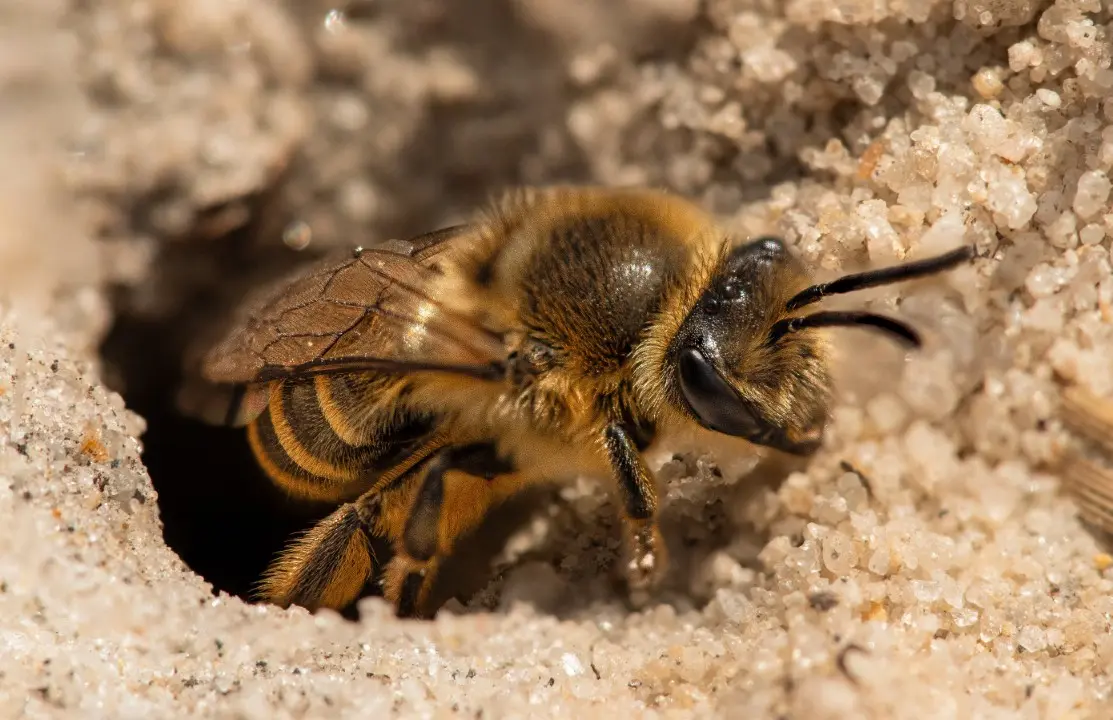
Unlike honey bees and paper wasps, which are famous for their large communal nests, most bee species behave solitary. Viñola López explained that these individualistic bees lay their eggs in small cavities and provide pollen to feed the larvae. He added that although some species create nests in wood or soil, or other empty structures, certain bees in Europe and Africa even use empty snail shells.
See Also

Singapore leads 20th global ranking of most powerful passports of 2026
T. rex skeleton fetches record price of US$50.1 million at auction in New York

Giants of the seas: the 11 biggest cruise ships of 2026 and the future of floating luxury
To further the investigation, the research team used computed tomography on fossilized bones. This method generated accurate three-dimensional images of the material compacted in tooth cavities, without causing any damage to the fossils or sediments present there.
The results of the analyzes confirmed that the structures found were consistent with clay nests built by modern-day solitary bees. In some of these nests, it was even possible to identify grains of ancient pollen, stored by mother bees to serve as food for their growing offspring.
The researchers’ hypothesis is that the bees mixed soil with saliva to build each of these tiny nests, which were smaller than a pencil eraser. The choice to nest inside the hollow bones of larger animals possibly functioned as an effective way to protect the eggs from predators such as wasps.
The new classification for discovered fossil nests
Despite the absence of fossilized bees in the nests — a fact expected due to the hot and humid conditions of the cave, unfavorable for the preservation of delicate insect bodies — scientists were unable to identify the exact species responsible for the construction. However, the nest structures themselves were unique enough to justify the creation of their own taxonomic classification.
Learn more: Researchers uncover beetles from the age of dinosaurs in discoveries in the Northeast
These fossilized nests were named Osnidum almontei, in honor of Juan Almonte Milan. He was the first to identify the cave and dedicated decades to studying the region, establishing himself as one of the most important paleontologists in Hispaniola.
Viñola López highlighted that, without the presence of bee bodies, there is the possibility that the builders of these nests belonged to a species still alive today, as the ecology of many bees on the islands is little known. He also considered that, considering the extinction of several animals whose bones were preserved in the cave, the bees responsible for the nests could also belong to a species that has already disappeared.
Why this discovery of nests in bones is a first for science
According to scientists, this event marks the first documented record of bees choosing to use animal bones as places to build their nests.
Viñola López suggests that a combination of environmental factors favored the development of this unusual behavior. The region’s limestone geology, with its scarce soil, limited underground nesting options. Simultaneously, the continuous deposition of bones by generations of owls in the cave provided a vast array of dental cavities, ideal for solitary bees to establish their homes.
The researcher emphasized that the discovery demonstrates the ability of bees to surprise, revealing their strangeness, and also highlights the need for extreme caution when analyzing fossils. He highlighted that without his prior experience in recognizing fossilized wasp nests, the atypical sediment could have simply been removed during fossil preparation. Viñola López concluded that, even when focusing on fossils of larger vertebrates, it is crucial to be aware of trace fossils, which offer valuable information about invertebrates such as insects, as knowledge about them “can reveal a lot about an entire ecosystem”, making it essential to consider this part of the historical narrative.