
Google prepares event in August 2026 with Pixel 11 series and thinner foldables

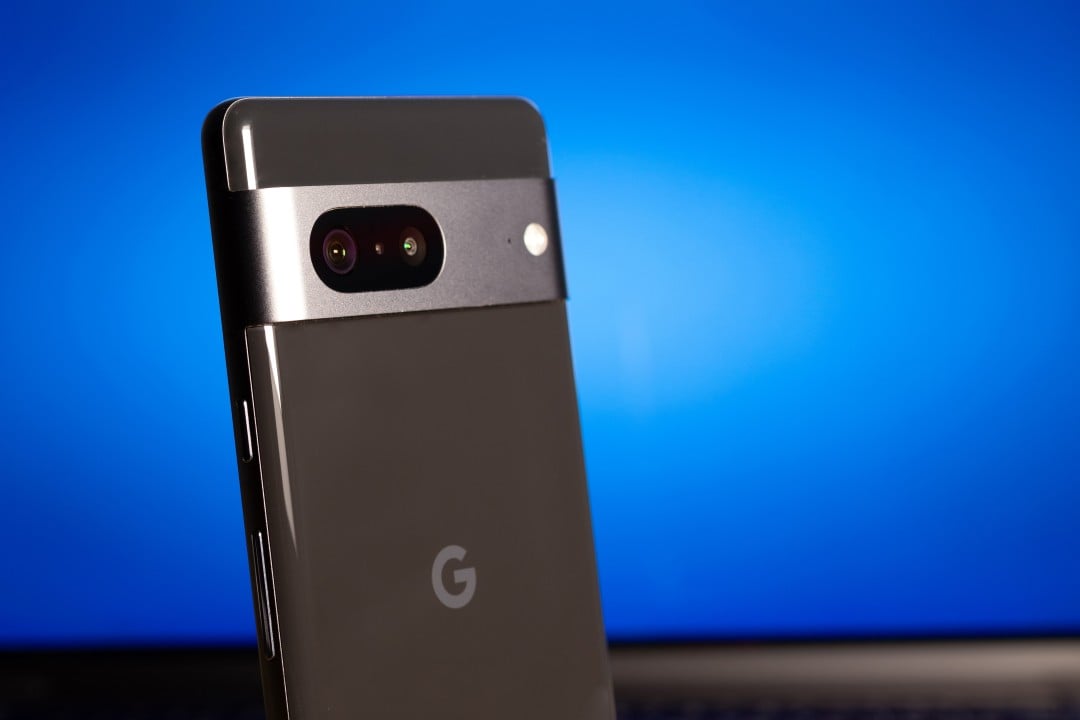
Google’s long-awaited hardware event, Made by Google, is scheduled for August 12, 2026 and will introduce the new Pixel 11 family. Main expectations include the Tensor G6 chip, advanced artificial intelligence features via Gemini and a possible upward adjustment in device prices, according to the most recent leaks about the company’s main launch this year.
The global smartphone industry is experiencing a decisive moment in the coming months. While major manufacturers prepare to launch new foldables and high-end models, the persistent memory crisis has increased costs in all market segments.
In this context, Samsung should show its new foldables on July 22, 2026. Apple, in turn, will reveal the iPhone 18 Pro and its first foldable iPhone in September, now under the command of new CEO John Ternus. It is in August, however, that Google holds its event dedicated to hardware, with the Pixel 11 series as the main highlight.
The company has already held two software-focused events at the beginning of the year, the Android Show and Google I/O 2026. For August, Sundar Pichai is expected to take the stage to announce new smartphones, a foldable model, a smartwatch and, possibly, a new generation of wireless headphones.
Confirmed date for the launch of the Pixel 11 line
The Pixel 11 series, along with other products, is scheduled to launch at the Made by Google event on August 12, 2026. The meeting will be in person in New York, starting at 6 pm ET. The live broadcast will take place via the company’s official YouTube channel, in addition to announcements on the Google news blog.
Compared to the previous year, the Pixel 10 series was announced on August 20, 2025, with sales starting on August 28. If the schedule is repeated with the Pixel 11 line, the devices should hit stores around August 20, 2026. Pre-orders, however, should open soon after the end of the launch event.
Overview of devices expected at the August Google event
| Product | Main specifications | Expected starting price | Expected availability |
|---|---|---|---|
| Pixel 11 | 6.3-inch OLED screen, Tensor G6, 50 MP camera | Approximately US$899 (256GB) | August 20 |
| Pixel 11 Pro | 6.3-inch OLED display, Tensor G6, up to 16GB RAM | Approximately $1,099 (256GB) | August 20 |
| Pixel 11 Pro XL | 6.8-inch OLED screen, Tensor G6, 5,000 mAh | Approximately $1,299 to $1,399 (256 GB) | August 20 |
| Pixel 11 Pro Folded | Dual OLED display, Tensor G6, 4,658 mAh (min.) | Approximately US$1,899 to US$1,999 | October 2026 |
| Pixel Watch 5 | 41mm + 45mm, custom Tensor chip | $399 (41mm Wi-Fi) | August 20 |
| Pixel Buds Pro 3 | N/A | N/A | N/A |
Significant updates to the base Pixel 11 model
The standard Pixel 11 model should retain the 6.3-inch OLED screen with a 120Hz refresh rate, but with improvements to the underlying panel. Reports from April 2026 indicate that the device, like the others in the line, could use Samsung’s OLED M16 panel — a new feature that would arrive before some Galaxy devices.
This screen update can deliver greater brightness and more accurate colors. The M16 OLED panel also offers better energy efficiency compared to the M14 OLED, used in the Pixel 10 and iPhone 17.
The Pixel 11 should arrive with the new Tensor G6 chip, Google’s first manufactured using a 2 nm process, possibly by TSMC, with Samsung as an alternative. Speculations indicate seven cores instead of eight, 1+4+2 cluster configuration, maximum frequency of 4.11 GHz and up to 12 GB of RAM.
There’s a chance the 128GB storage option will be eliminated, making 256GB the minimum capacity on the Pixel 11 and contributing to the higher entry price. The launch price of the Pixel 11 could reach US$899, an increase of US$100 compared to the Pixel 10.
Google may also adopt a PowerVR-based GPU, without major performance jumps, but with a more powerful TPU. The line should replace Samsung’s Exynos modem with MediaTek’s M90, seeking greater efficiency and better thermal control.
In the camera, the Pixel 11 may feature a new 50 MP main sensor, codenamed “chemosh”, instead of the Pixel 10’s 48 MP sensor. The battery should have a minimum capacity of 4,840 mAh, with the possibility of officially reaching close to 5,000 mAh.
The Pixel 11 series may also gain a new RGB lighting system on the rear panel, in the camera module, called Pixel Glow — although this information has not yet been final confirmed.
Advances expected in the Pixel 11 Pro and Pro XL models
The Pixel 11 Pro and Pixel 11 Pro
In addition to the M16 OLED panel, the three models in the Pixel 11 line may have thinner edges. The Pixel 11 Pro should not come in the Obsidian color, but in options such as Light Fog (white), Midnight Haze (black), Dune (pink) and Pine (green).
Although the chipset and modem are the same as the standard model, the base storage in the Pro should rise from 128 GB to 256 GB. RAM, on the other hand, could drop from 16 GB (on the Pixel 10 Pro) to 12 GB on the Pixel 11 Pro, possibly only in the entry-level version, a reflection of the global memory crisis. This decision would help Google contain prices.
Google may update two of the three rear cameras, with an emphasis on the main and telephoto cameras. It is not yet clear whether these will be completely new sensors or the current ones with a larger aperture.
The battery capacity should remain the same, but wired charging could increase to 45 W. The expectation is that 25 W Pixelsnap wireless charging will reach the smaller Pixel 11 Pro, a feature that last year was restricted to the Pixel 10 Pro XL.
Regarding prices, the two Pro models should cost more at launch than the Pixel 10 Pro. The increase in base storage to 256 GB justifies the higher price, but it remains to be seen whether the increase of US$100 to US$200 will be fully justified.
Pixel 11 Pro Fold details indicate more compact design
The main evolution in the Pixel 11 Pro Fold, in addition to the 2nm Tensor G6 chipset, should be in the design. The book-shaped folding should be much thinner: 10.1 mm when closed (compared to 10.8 mm) and 4.8 mm when opened (compared to 5.2 mm).
Unlike the Pixel 10 Pro Fold’s camera module, the next one may have more rounded edges and less metal around the lens. The device must be available in the colors Pine (discreet greenish-gray) and Midnight Haze (black).
Other anticipated improvements involve 100x zoom with generative AI, cinematic blur in 4K videos at 30 fps and a larger flash that could serve as a Pixel Glow notification system, although this last chance is considered small. Like the other models, the foldable will come with an M16 OLED panel, Tensor G6, 256 GB of storage and options of 12 GB or 16 GB of RAM.





