
Moon today: Understand the phase of the moon this Monday, July 20, 2026, with the complete calendar

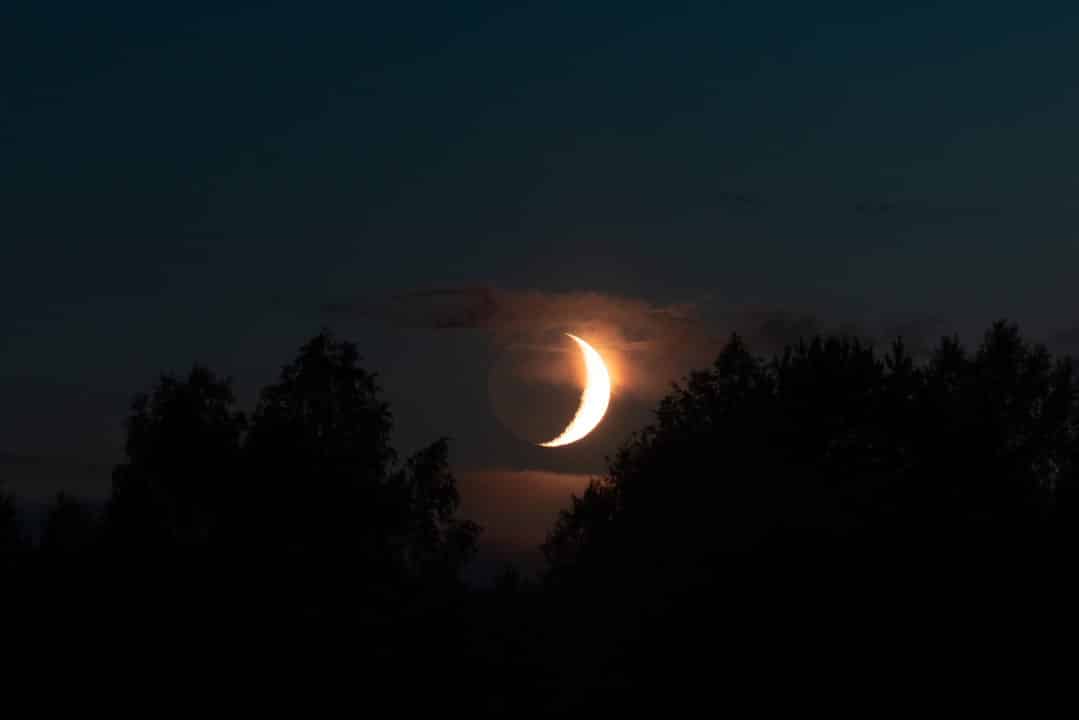
On Monday, July 20, 2026, the moon appears on its last day of the new phase, with a visibility of 44% in the sky. For those who follow celestial movements, understanding this positioning is crucial, and the lunar calendar offers a detailed view of the upcoming transformations, according to information from the National Institute of Meteorology (Inmet).
Detailed lunar calendar for the coming weeks in 2026
The lunar cycle of July 2026 began with the arrival of the waning Moon on the 7th, promptly at 4:30 pm, following Brasília time. Subsequently, the new Moon appeared on the 14th, at 6:45 am. The growing phase is scheduled for the 21st, at 8:05 am. Finally, the full Moon will light up the sky on the 29th, around 11:37 am.
This process, known as lunation, describes the average period of 29.5 days that the Moon takes to complete a cycle, starting with the new phase and ending with the waning phase.
Upcoming changes to the lunar calendar for July 2026
- Waning moon: 7th, at 4:30 pm
- New moon: 14th, at 6:45 am
- Crescent moon: 21st, at 8:05 am
- Full moon: 29th, at 11:37 am
Learn about the concept of the lunar cycle and its durations
The time interval between two consecutive new moons, called lunation or lunar cycle, has a subtly variable duration, although its average is 29.5 days. During this period, the Moon goes through its four main phases, which are new, waxing, full and waning, each lasting approximately seven days.
In addition to the primary phases, the lunar cycle encompasses the so-called interphases, which include the waxing crescent and the gibbous crescent, located between the new and full phases, and the gibbous gibbous and the waning quarter, which occur between the full and waning phases.
Characteristics of each of the main phases of the moon
During the new Moon, the natural satellite aligns itself between the Earth and the Sun. This configuration means that the illuminated lunar face remains facing the star, leaving the dark part visible to us, which prevents its observation in the night sky. This phase symbolizes the beginning of a new cycle and is associated with new beginnings and new opportunities.
After the new Moon period, the crescent phase begins, when a thin illuminated portion of the satellite begins to appear in the sky, gaining intensity each night. Initially, a delicate arc of light is perceived, which gradually expands until half of the Moon is visible, a phenomenon known as the First Quarter. This stage is a symbol of expansion, evolution and openness to new projects.
At the height of the full Moon, planet Earth is positioned between the Sun and the satellite. This arrangement ensures that the lunar face facing us receives full sunlight, making it completely visible and resplendent in the sky. This is the moment of maximum luminosity, when the star appears on the horizon precisely at sunset. The full Moon is commonly linked to plenitude, the climax of undertakings and energy at its peak.
Subsequent to the full Moon, lunar irradiation begins to progressively decline. With each twilight, a smaller portion of its illuminated surface is observed. When only half of the satellite is visible, the waning quarter occurs, which opposes the waxing quarter. The Moon continues to decrease its luminosity until it returns to the new phase, restarting the cycle. The waning phase is representative of introspection, completion and preparation for new beginnings.





