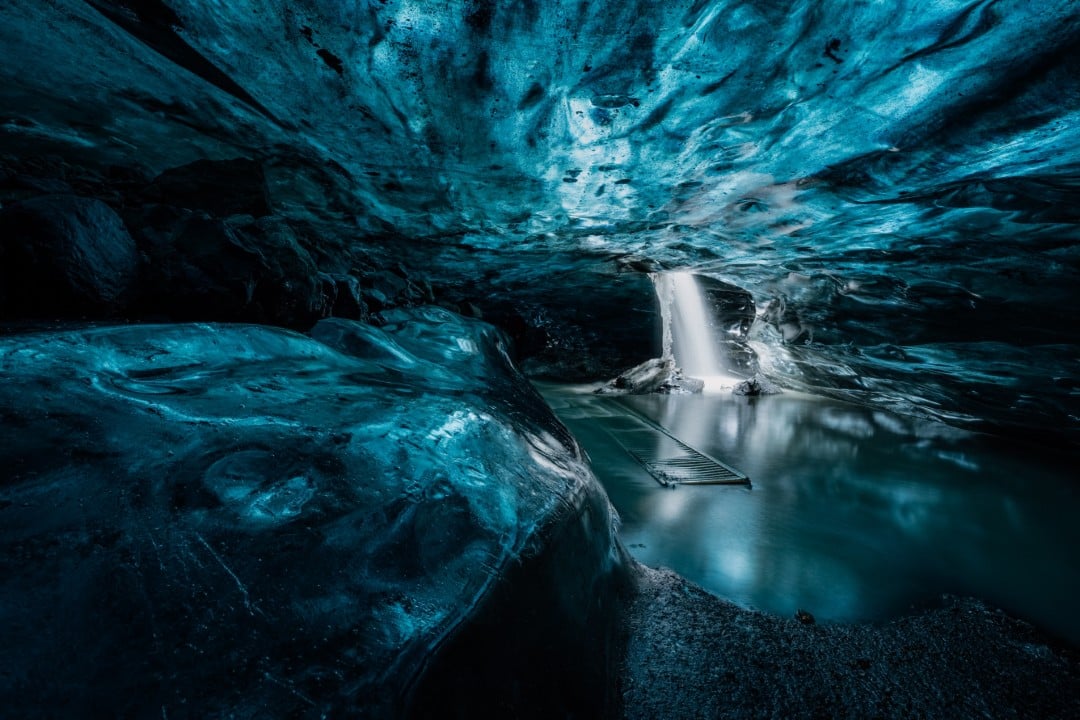
A cave in Romania, known as Movile and located 18 meters underground, remained isolated from the rest of the planet for approximately 5.5 million years. Within this unique underground environment, biologists have cataloged 48 species of living beings that depend exclusively on hydrogen sulfide to survive, having never had contact with sunlight. This peculiar ecosystem, where toxic gases are the basis for life that has evolved in total darkness for millions of years, redefines conceptions about the conditions necessary for biological existence.
Even more remarkable, some sixty feet beneath thick undergrowth near the coastal town of Mangalia, Romania, Movile Cave’s interior atmosphere would be fatal to anyone within minutes. The oxygen concentration is reduced by half compared to the external atmosphere, while carbon dioxide is a hundred times more abundant. Hydrogen sulfide, with its characteristic odor of rotten eggs, saturates the stagnant air and dissolves into warm, murky puddles. In these extreme conditions, spiders without eyes, leeches that have never seen the light and a centipede with serrated hind legs, nicknamed by researchers the “king of the cave”, thrive.
Of the 48 species identified, 33 are considered endemic, that is, they are only found in this specific location in the world. All of these organisms are descendants of ancestors that were isolated underground about 5.5 million years ago, a period when the Messinian salinity crisis caused the drying up of the Mediterranean Sea and, on the surface, the evolutionary lineages of humans and chimpanzees began to separate.
The discovery of the Movile Cave occurred completely unexpectedly in 1986, by Romanian workers. They were carrying out exploratory drilling to assess the viability of the land for building a power plant when they came across this peculiar formation.
The workers were not looking for signs of life, but rather solid rock formations. The drilling went through 18 meters of clay and limestone, reaching a cavity that had remained inactive since the end of the Miocene. When Romanian biologist Cristian Lascu descended into this chamber in 1986, he became the first vertebrate in approximately 5.5 million years to observe its interior.
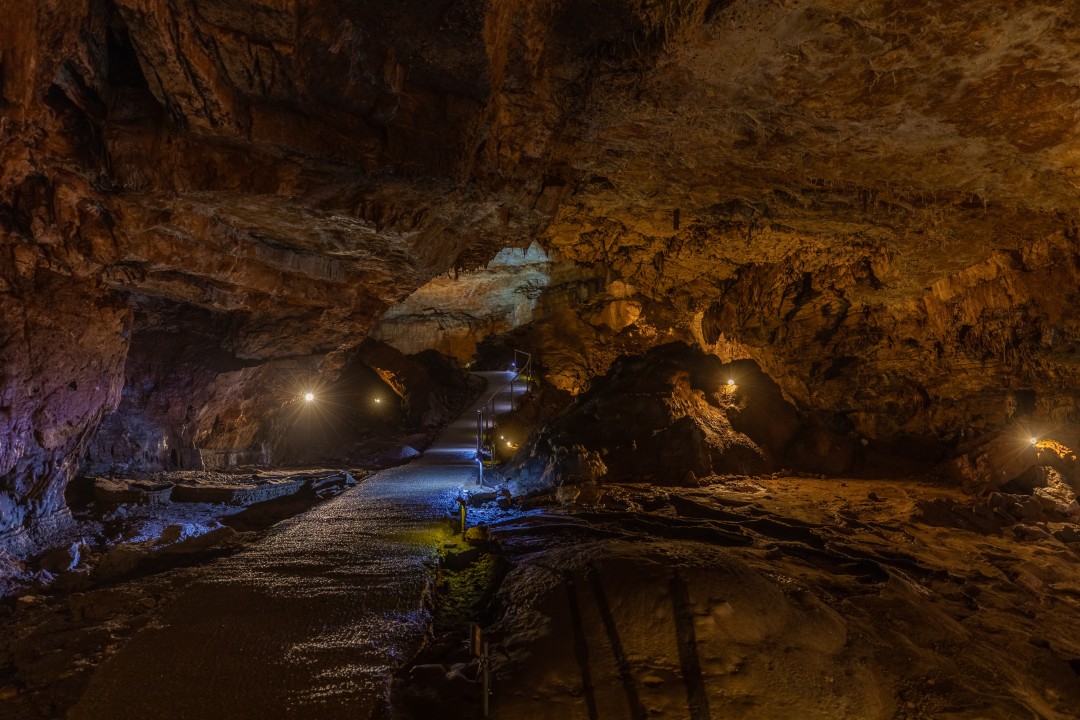
The cave structure spans about 240 meters of narrow passages. At its end, a small lake displays a surface covered in a pale, gelatinous layer of bacteria. The air pockets above the water, known as bell-shaped chambers, represent the most distinctive compartments. To reach them, a diver must submerge, pass under a rocky divide and emerge in a pocket of gas that has remained isolated from the Earth’s atmosphere throughout the period of primate evolution.
This gaseous environment is deadly, containing ammonia, methane and hydrogen sulfide at levels that can claim the life of an unprotected human being in just a few inhalations. However, the water below is home to rich and diverse fauna.
How Life Thrives in Movile’s Darkness
Almost all ecosystems on the Earth’s surface depend essentially on photosynthesis. A plant absorbs photons, breaks down a water molecule, fixes carbon and transfers the sugar produced throughout the food chain, which can culminate in a beetle, a deer or even a human being. If the Sun disappeared, most Earth’s ecosystems would collapse within a few years.
Movile, however, does not need sunlight. Its food chain begins with chemosynthetic bacteria, microorganisms that obtain energy from the oxidation of hydrogen sulfide, methane and ammonia, instead of depending on sunlight. They form a floating layer on the surface of the lake and a viscous film on the walls of the cave. Snails and nematode worms feed on this layer. Water scorpions, leeches, centipedes and eyeless spiders, in turn, are the predators of these herbivores.
Among the 48 species documented in Movile, 33 are exclusive to the cave. Practically all of them have lost their pigmentation, and most of them do not have eyes. Through a process of evolutionary adaptation, they developed exceptionally long antennae and legs, acting as sensory tools in an environment where vision is useless and touch becomes vital.
The “king of the caves,” a species of centipede described in a 2020 study, has serrated crests on its last pair of hind legs. Biologists suggest that these structures are used to trap their prey, similar to a fisherman holding a fish in the middle of a fight.
The scientific relevance of isolation for 5.5 million years
Prolonged isolation is what gives Movile Cave its invaluable scientific value. Although unique caves and fauna are not uncommon, an environment whose atmosphere and biota have remained isolated for 5.5 million years represents a natural experiment that would be impossible to replicate artificially.
Five and a half million years is a considerable amount of time, enough for entire lineages to diverge significantly. It corresponds to approximately the same period since the last common ancestor between humans and chimpanzees. During this vast time, Movile’s animals remained in darkness, feeding on bacteria and gradually adjusting their genomes to adapt to a world entirely devoid of sunlight.
A study published in 2023 described a new ostracod crustacean, *Pseudocandona movilaensis*, found in the sulfidic ecosystem of Movile. This small shelled animal is a clear example of a lineage whose ancestors evidently arrived before the cave was closed and never left the site.
How Movile’s living beings transform their own habitat
The bacteria that form the basis of the food chain in Movile not only provide sustenance for animals; they also actively participate in cave excavation. During the hydrogen sulfide oxidation process, one of the byproducts generated is sulfuric acid. This acid runs down the limestone walls, slowly dissolving them and thus expanding the cave chambers and releasing carbon dioxide from the rock.
It is for this reason that the air inside Movile contains approximately one hundred times more carbon dioxide than the atmosphere outside. The cave is literally being enlarged by the metabolism of its own inhabitants. Animals live in a space where their food source is gradually increasing.
It is now known that this sulfidic cave formation process shaped several important cave systems around the world, including sections of the Frasassi complex in Italy and Lechuguilla in New Mexico. Movile, however, was the first cave where biologists were able to observe the process in action, with an intact endemic ecosystem still fully functioning.
Human access to the cave entrance has been sealed. Only a small group of researchers are permitted to enter Movile each year, making brief visits and using specialized breathing equipment. This restriction is justified, in part, by safety, as the atmosphere can be fatal, and, in part, to avoid contamination. Skin cells, mud from boots, exhaled air and microbes scattered from the surface would be foreign invaders in a system that has had its own biochemistry intact since before the emergence of Australopithecus.
An article on groundwater invertebrates in extreme conditions, published in a journal specializing in ecology and evolution, positions Movile alongside other chemoautotrophic and toxic water systems as an essential laboratory for understanding how animals manage to survive at the limits of biochemistry. Its inhabitants tolerate concentrations of hydrogen sulfide that would poison the mitochondria of surface animals in a matter of minutes.
Astrobiology and the Movile cave: expanding the search for extraterrestrial life
NASA astrobiologists have been visiting Movile Cave for years, and the reason is evident. If life can establish a self-sustaining, multitrophic ecosystem in total darkness, using only chemical energy and sealed under 18 meters of rock, the parameters for the search for life beyond Earth expand considerably.
Europa, one of Jupiter’s moons, is covered in ice and hosts a saltwater ocean beneath a layer of ice several kilometers thick. Enceladus, which orbits Saturn, expels jets of water and organic molecules through fissures at its south pole. None of these moons receive significant sunlight from the seafloor. Both are believed to have sources of chemical energy, reactions between rocks and water that could, in principle, support something similar to a microbial mat like the one found in Movile.
Movile works as a proof of concept for this possibility. It does not represent certainty about the existence of extraterrestrial life, but it demonstrates that biology, in fact, does not depend on a star to develop. If a food web is built with hydrogen sulfide instead of photons, it is still possible for complex beings like spiders to exist.
Movile is one of many recent examples that remind us that the Earth’s surface hides more strangeness than humans generally realize. There are other notable sites, such as the vast thermal lake discovered in an Albanian cave in 2021, 127 meters deep, at the bottom of a vertical abyss. There is also the Veryovkina Gorge in the Caucasus, which drops 2,212 meters in a straight line and whose explorers report luminous hallucinations in the deepest chambers. Additionally, Vietnam’s Son Doong is such a huge pass that it’s home to its own jungle, river, and climate.
Despite being smaller than some of these other formations, fitting inside a football field, Movile’s biology is undeniably the most unique. Its ecosystem represents an evolutionary experiment in isolation that has lasted longer than any other known cave system on the planet.
Record of peculiar creatures that inhabit the darkness
The list of species, cataloged by biologists who have been studying Movile since the late 1980s, looks like it came out of a science fiction bestiary. Among them, the Nepa anophthalma stands out, a water scorpion that, over millions of years, completely lost its eyes. There is also Asellus aquaticus infernus, a subterranean form of a common surface isopod. Heleobia tubogica is a snail found exclusively in Movile, and Haemopis caeca is a blind leech. The list also includes several endemic pseudoscorpions and a variety of nematodes and rotifers whose taxonomy is still in the process of being elucidated.
The discovery of chemosynthetic life at Movile prompted biologists to revise textbook diagrams that, for decades, considered Pacific deep-sea hydrothermal vents as the only ecosystem known to function independently of sunlight. Movile added a second, radically different example: a freshwater terrestrial version, sealed within continental limestone, rather than situated on a mid-ocean ridge.
Even deep-sea hydrothermal vents receive some flow of organic material from the sunlit surface. Movile, in contrast, gets nothing. The seal that isolates it is practically complete.
The bacteria continue to oxidize the sulfide. The sulfuric acid continues to corrode the limestone. The cave chamber, in geological terms, is still in the process of expansion. The 48 species inside continue to evolve in the dark, using chemical energy, without ever encountering a plant.
Above them, on the surface, the suburbs of Mangalia expand, cars travel along the Black Sea coastal road, and the sun rises and sets in a world that the cave dwellers will never see and in which they would not survive if they somehow got there. Their world is hot, humid, sulphurous, silent and located 18 meters below our feet, operating uninterruptedly since the Messinian period.