

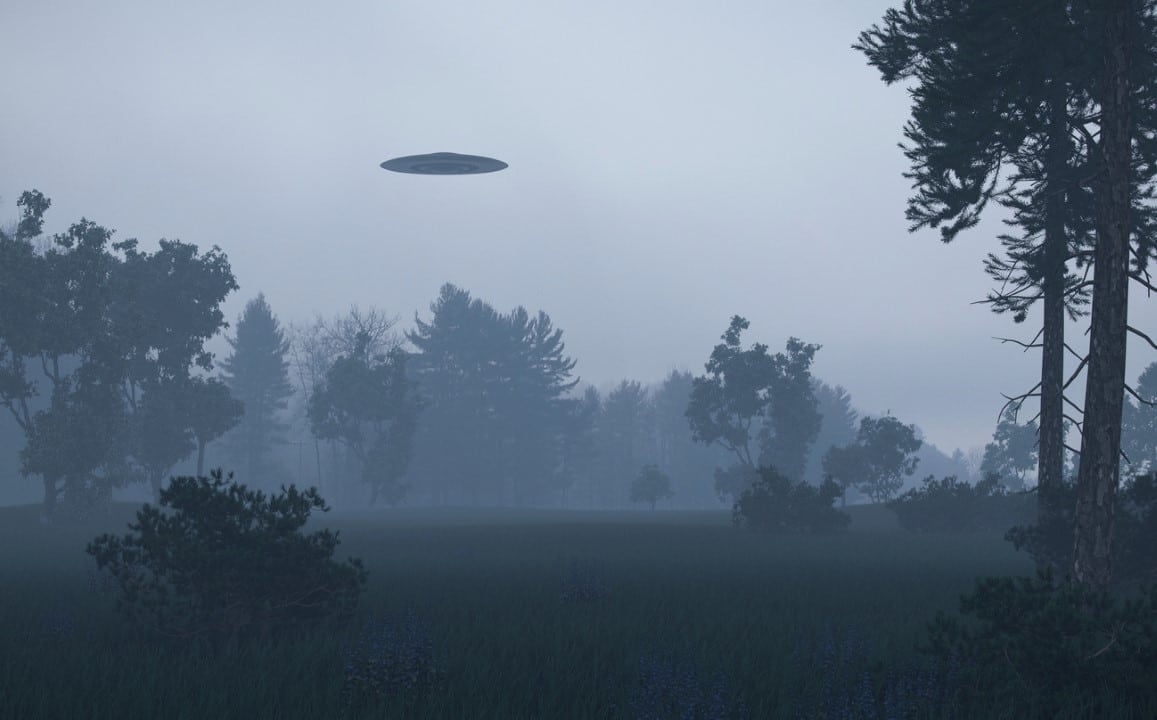
On Friday, July 11, the Pentagon made public a never-before-seen video of an Unidentified Anomalous Phenomenon (UAP), captured in 2020 by an Air Force infrared sensor. The images once again instigated the debate about possible extraterrestrial intervention or mere optical mistakes. Titled “DOW-UAP-PR045: Unresolved UAP Report, Middle East, 2020,” the file was inserted into AARO’s official UAP records collection, describing a region of contrast that appears to grow before disappearing from the screen.
This revelation comes in a context of greater transparency, after the Pentagon and the All-Domain Anomaly Resolution Office (AARO) began releasing declassified documents relating to unidentified aerial phenomena, the official term adopted by the government for what was previously called UFO. The most recently released record confirms that the Department of the Air Force made available the 58-second infrared footage taken by a United States military aircraft in 2020, although it offered no verbal or written explanation of the contents.
Details of the unreleased UAP video reveal mysteries with no conclusion
The images released, although they cause some frustration due to their ambiguity, also exert a strange fascination. The detection equipment focuses on a region of contrast, where the object gains clarity before the view is enlarged and, shortly after, the trail disappears from the frame.
AARO, in its statement, adopts an extremely cautious stance, indicating that the noticeable increase in the size of the object may be, in part, a result of the American aircraft approaching the detected point. This official approach, which avoids definitive conclusions, both captivates UAP enthusiasts and provokes skepticism. It neither validates the presence of extraterrestrial beings nor denies it, but rather refrains from feeding the common speculative narratives on the internet, which often jump to cover-up theories. The Pentagon, to the discontent of some and the prudence of others, keeps the video under the status of mystery.

Air Force infrared recording intensifies debate on social media
The origin of the footage, coming from the Air Force, gives it a significant impact. Military infrared equipment is developed to identify elements invisible to the naked eye, which justifies the rapid dissemination and high engagement of these videos in the digital environment.
The moment a monitoring sensor starts to zoom, locking and subsequently losing the target in the corner of the image, the sensation generated is dramatic, bordering on sinister. However, in fact, the recording constitutes an accurate technical record, not a film scene.
Despite its technical nature, the internet acted as expected. The clip released by the Pentagon was widely distributed on digital platforms, with many users considering it the clearest military UFO recording to date. While some described it as compelling evidence, others proposed more prosaic explanations, such as balloons, object fragments, or other terrestrial origins.
AARO’s own official repository suggests that this publication is part of a broader transparency initiative, and is not an isolated event. The AARO records website emphasizes that the National Archives has been constantly digitizing historical materials and that the agency is dedicated to declassifying and making public as much information about UAPs. This indicates that new information related to the topic should be released in the future, regardless of enthusiasts’ expectations.
Pentagon’s cautious approach to UAPs clashes with public expectations
The question about extraterrestrial life has been a constant in UFO reports for several decades, but the Pentagon’s recent stance proves to be more measured than imagined by popular culture. AARO’s analysis in the release focuses on a sensor record and distance rather than extraterrestrial elements. Such a distinction is relevant as the most recent official interpretation is not of an “unknown spacecraft” but rather of an “unresolved observation”.
The persistence of these narratives is understandable: the public longs for a government confession about something extraordinary or, alternatively, a definitive outcome to the matter. However, revelations tend to remain in limbo, a situation that generates more frustration, is more consistent with human reality and is less orderly. For those looking for irrefutable proof, this type of material does not offer the expected answer. For those seeking an objective account of what the military actually recorded, the recording represents a useful fragment of the bigger picture.




