
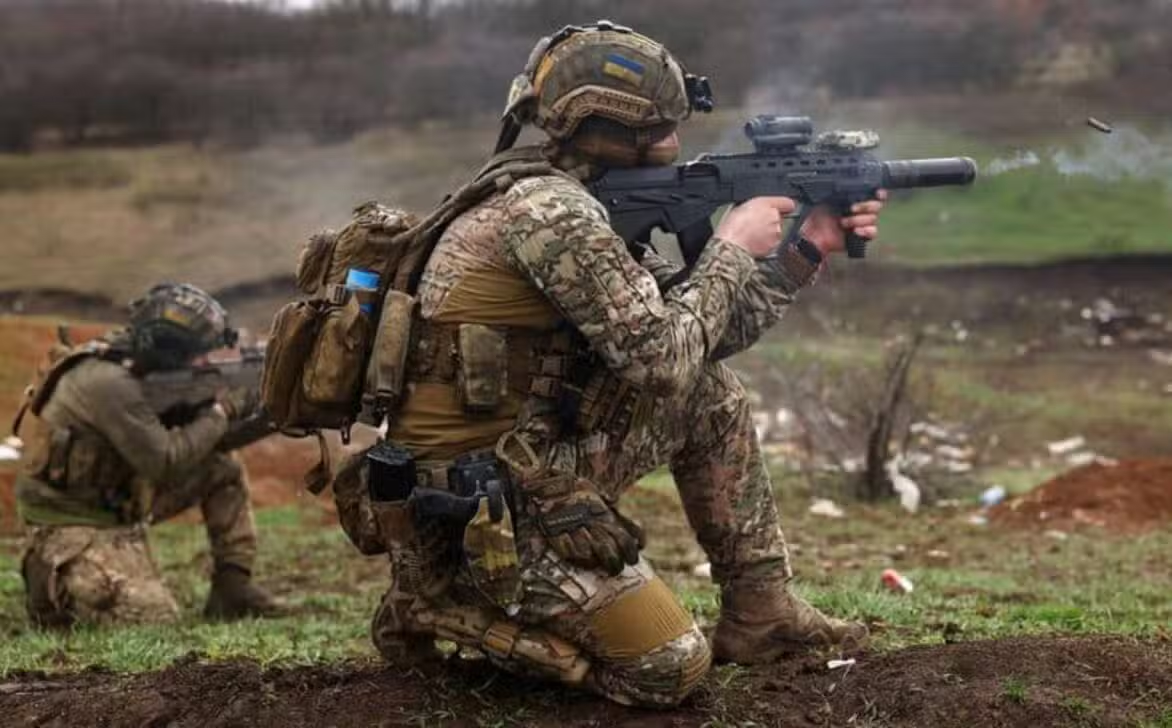
The new commander of the Armed Forces of Ukraine, General Mikhailo Drapatii, announced on Wednesday, July 22, 2026, the intention to intensify attacks against Russia in all domains. In his first official demonstration in office, the soldier highlighted the importance of advancing technology at the service of the Ukrainian military, a sign that seeks to calm the recent political tensions in the country.
Military strategies and the command of Mikhailo Drapatii
In his public statement, made through a Facebook post, Mikhailo Drapatii emphasized the directives received from President Volodimir Zelenski. The general indicated that the tasks include “continuing and intensifying offensive actions in all domains, planning new operations behind enemy lines, developing the Army and its technologies and increasing the capabilities of the Armed Forces.” This stance reflects an attempt to reaffirm the military campaign against Russia, especially at a time of internal questions about military leadership.
The dismissal that fueled the protests
Drapatii’s appointment comes amid strong popular pressure on Zelensky. Protesters took to the streets to demand the departure of his predecessor, Oleksander Sirskii, and protest against the president’s dismissal of then Defense Minister Mikhailo Fedorov. The political crisis was driven by the perception that Fedorov, known for his enthusiasm for remote warfare and the use of drones, had been passed over for Sirskii, who advocated more traditional, high-friction tactics. Drapatii, by promising technological advancement, seems to align with Fedorov’s vision, seeking to reconcile the different currents.
Political tension and the future of Volodymir Zelenski
Turbulent Ukrainian politics reveals growing polarization. Fedorov, just 35, has emerged as a rising star, championing the common soldier and a technocratic approach to the military. He joins Valeri Zalujni, another popular former commander, as a potential obstacle to Zelensky’s ambitions to remain in power. The Ukrainian head of state’s presidential term ended in May 2024, but the current martial law prevents new elections from being held, which further intensifies the internal political debate.
Demonstrations continue and demand the return of former minister
Despite the change in military command, the protesters did not show immediate satisfaction. A new protest was scheduled for next Friday, July 24, 2026, in Kiev, with the main focus on demanding the return of Mikhailo Fedorov to the Ministry of Defense, currently occupied on an interim basis by Ievhenni Khmara. Dmitri Koziatinski, one of the organizers of the events and a war veteran, reinforced in X that the demonstrations will continue if Fedorov does not return to office, signaling a direct struggle with the president.
Confrontations continue on the battlefield
Parallel to the political crisis, the exchange of attacks on the battlefield persists. In Ukraine, Russian bombings in the northern region of the country left around 100,000 people without power. The Ministry of Defense in Moscow, in turn, announced the seizure of two villages in Zaporizhia, in the south. Kiev responded with a new wave of drones, hitting a logistics distribution center for Wildberries, a Russian e-commerce giant. The Kremlin interpreted the attack as evidence that the Ukrainians were targeting civilian targets in their military campaign.