
Projections for the 2030 World Cup point to favorites and promising teams for the tournament

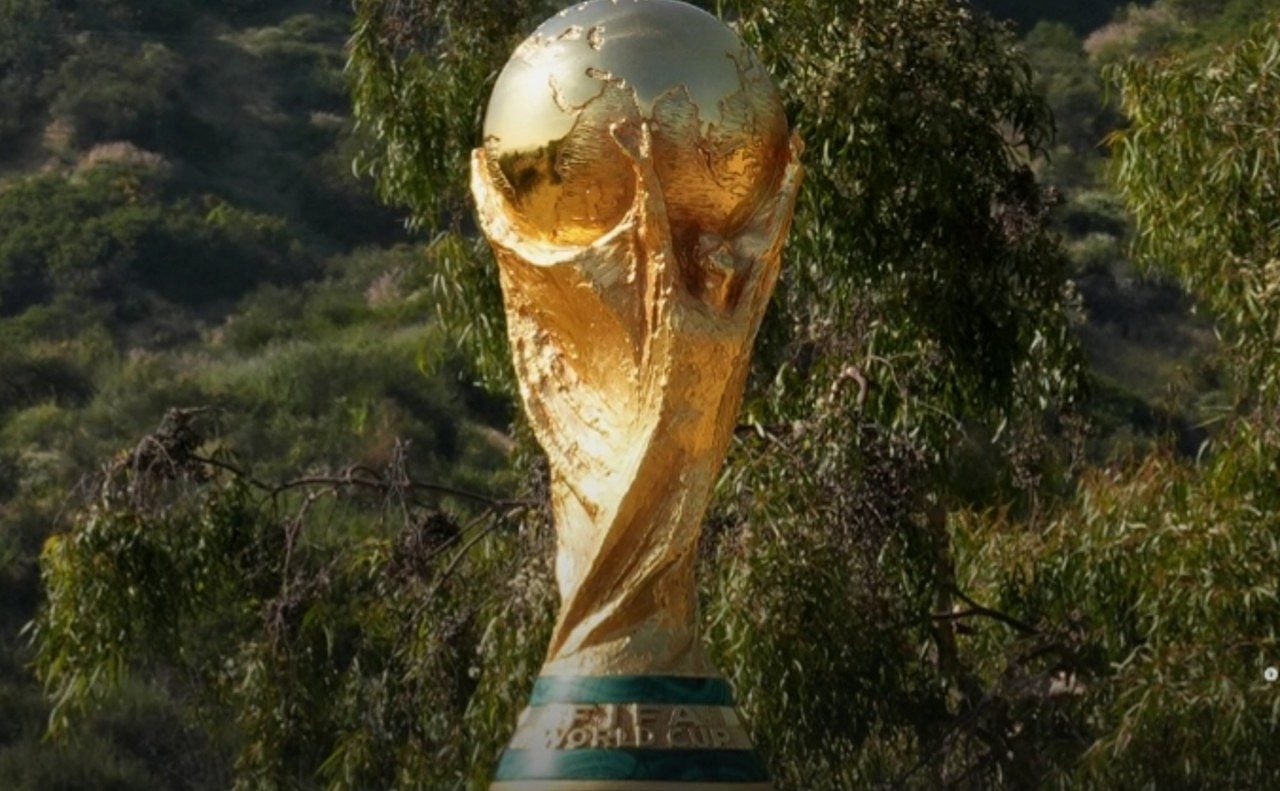
An analysis published on Wednesday, July 22, 2026, examined the men’s national teams with the strongest structures for the 2030 World Cup, which will be played four years from now. The study points out which teams have the greatest potential to fight for the trophy.
The 2026 World Cup marked the farewell of several experienced players on the international scene, such as Lionel Messi, Cristiano Ronaldo, Luka Modric, Neymar, James Rodríguez and Guillermo Ochoa, who had their last moments of prominence. For the 2030 competition, athletes aged 32 and over will face the challenge of maintaining physical shape and adapting their routines to ensure a possible call-up.
The methodology used for this survey prioritizes stability and certainty. Teams that have multiple talents in their 20s can approach the next four-year cycle with more optimism, in contrast to those that will need to replace veteran and influential figures. The following list details the ten teams considered to have the most robust foundations and real chances of reaching the quarterfinals in 2030.
The ages of the athletes mentioned were projected to June 1, 2030 and are indicated in parentheses.
Spain seeks two world championships with a solid base of young talent

The Spanish team, host of the next edition of the World Cup and the first champion to host the tournament, is seen as the favorite to try for a second title in 2030. Under the strategic leadership of Luis de la Fuente and the unity of the squad, the team shows great potential to consolidate itself as a dominant force on the international stage.
In goal, Unai Simón (32), Joan García (29) and David Raya (34) can maintain the current formation. The defense features names like Marc Pubill (26), Eric García (29), Pedro Porro (30) and Pau Cubarsí (23), forming a robust foundation. The midfield should once again feature Dani Olmo (32), Gavi (25) and Pedri (27), with Rodri (33) as a strong candidate for the starting spot in contention. In attack, Nico Williams (27) and Lamine Yamal (22) are expected to be in excellent physical condition, after showing great value last season, and Ferran Torres (30) can, once again, be an impactful option off the bench.
In addition to the athletes who secured the title, Spain has a vast reserve of talent. Dean Huijsen (25) and Cristhian Mosquera (25) appear as alternatives for Aymeric Laporte (36), while Fermín López (27), Pablo Barrios (26), Javier Guerra (27), Marc Bernal (23) and Jesús Rodríguez (24) have already been part of De la Fuente’s scheme. If Samu Aghehowa (26) or Gonzalo García (26) manage to consolidate themselves in the offensive sector, the Spanish team’s ability to score goals, already known for their possession of the ball, could become even more fearsome.
Zinedine Zidane takes charge of France and seeks reform for 2030

The French team will have a new technical direction for the next cycle, with the arrival of Zinedine Zidane, who takes over from Didier Deschamps. The change comes after a performance considered below expectations in their last three World Cup appearances. It remains to be seen what lessons Zidane will learn from the surprising semi-final elimination against Spain.
Goalkeeper Mike Maignan (34) should remain as a pillar, protected by a defense that can count on Dayot Upamecano (31), Ibrahima Konaté (31) and William Saliba (29). In midfield, Manu Koné (29) and Aurélien Tchouaméni (30) are strong options, along with names like Eduardo Camavinga (27) and Khéphren Thuram (29), who were not in the last squad. In attack, Kylian Mbappé (31) will look to increase his goal tally, supported by Michael Olise (28) and Désiré Doué (24). The challenge for France does not lie in the lack of talent, but in the ability to overcome tactical schemes like Spain’s. Despite his success with Real Madrid, Zidane is better known for his ability to manage squads than for tactical innovations.
England prepares for Euro 2028 and the 2030 World Cup with promising youngsters
The English team demonstrated remarkable recovery power, beating Mexico in a remarkable clash and reversing the score against Norway to reach the semi-finals. The difficulty in sustaining a 2-0 lead against Argentina still echoes, but the prospect is of a strong reaction both in the 2028 Euro Cup and in the next World Cup, although there is a crucial issue to be observed.
Marc Guéhi (29) shone in defense throughout the competition, while Djed Spence (29) ended the tournament in excellent form. The English midfield features a variety of talents, such as Declan Rice (31), Elliot Anderson (27), Jude Bellingham (26) and Kobbie Mainoo (25). On the flanks, Bukayo Saka (28) and Anthony Gordon (29) performed well. The main question lies in the ability of Harry Kane (36) to play 90 minutes as a starter, as the team is still looking for a replacement worthy of their goalscorer. The goalkeeper position is also open, but the quality of the squad is reinforced by athletes not called up by Thomas Tuchel, such as Lewis Hall (25), Cole Palmer (28), Adam Wharton (26), Alex Scott (26), Phil Foden (30), Rio Ngumoha (21) and Ayden Heaven (23).
Morocco projects advancement in 2030 after good recent results and continental title
Morocco, one of the countries that will host the 2030 World Cup, is experiencing a promising moment. The team has two consecutive appearances in the quarter-finals of the tournament, with a semi-final under its belt, and won the 2025 African Cup of Nations (CAN). With a newly arrived coach who managed to reinvigorate the team without compromising its solidity, the question is whether the Moroccans will be able to go even further in 2030.
The defensive line should maintain names like Achraf Hakimi (31), Chadi Riad (26), Anass Salah-Eddine (28) and Noussair Mazraoui (32). In midfield, Ayyoub Bouaddi (22) is expected to be in even better shape following his performance at the last World Cup, as is his colleague Azzedine Ounahi (30). Ismael Saibari (29) was a key player before his injury, and others like Bilal El Khannouss (26), Gessime Yassine (24) and Brahim Díaz (30) pose significant challenges to any opponent.
The Morocco team also won the most recent U20 World Cup, highlighted by strikers Othmane Maamma (24) and Yassir Zabiri (25), as well as goalkeeper Ibrahim Gomis (25). Maintaining the excellent form of goalkeeper Yassine Bounou (39), a hero in decisive matches, would make the Moroccan team a very difficult opponent.
Argentina faces the post-Messi era with new protagonists and young promises
Argentina’s run to the final highlighted Lionel Messi’s singular importance to the team, not just as an attacking engine but also as the central figure who motivated his teammates. In all his nuances, he is, in fact, an irreplaceable player.
However, Argentina demonstrated that it is not limited to a single athlete. Julián Álvarez (30) has been consolidating himself as a protagonist and should receive the support of the efficient Lautaro Martínez (32). Enzo Fernández (33), despite his recent expulsion, is projected as one of the midfield pillars in the next cycle. The defense must count on the experience of Nahuel Molina (32), Cristian Romero (32) and Lisandro Martínez (32), and goalkeeper Emiliano Martínez (37) is still expected to perform well. The team was also runner-up in the last U20 World Cup, revealing talents such as midfielder Milton Delgado (24), left-back Julio Soler (25) and goalkeeper Santino Barbi (24).
Portugal evaluates future without Cristiano Ronaldo and seeks new offensive leadership
The Portugal team was left wondering what could have been achieved with a more organic and dynamic striker in a team that, in general, played a high level of football. Cristiano Ronaldo has already confirmed that he will not participate in the 2030 World Cup, at the age of 45. The big question now is whether coach Roberto Martínez missed this generation’s main opportunity to win their first world title.
Among the world’s elite goalkeepers is Diogo Costa (30), while Gonçalo Inácio (28) and Nuno Mendes (27) establish a solid defense. António Silva (26) is looking to reignite his career, which looks to have a promising future at Bournemouth. In midfield, João Neves (25) and Vitinha (30) would be starters in most of the teams. Gonçalo Ramos (28), João Félix (30) and Francisco Conceição (27) will also be back in the offensive sector. However, with more experienced names like Bruno Fernandes (35), Bernardo Silva (35) and Rúben Dias (33), it is difficult not to get the feeling that the ideal title chance may have slipped away.
Norway surprises and maintains hope with Erling Haaland in attack for 2030
Few will dare underestimate Norway after their commendable run to the quarter-finals, with a team culture that stood out last season. Many of its important athletes are expected to be present at the 2030 World Cup, including the most prominent name.
Erling Haaland (29) appears to have thoroughly enjoyed the last World Cup and is expected to remain a constant threat to opposing defenses in the next edition. In attack, he is supported by reliable players such as Andreas Schjelderup (26), Antonio Nusa (25) and Oscar Bobb (26). Martin Ødegaard (31) hopes to overcome injuries to resume his leadership role in the team. Although rotation in defense and goal is essential, Haaland’s presence in the front line guarantees Norway competitive chances.
Ivory Coast impresses and projects good future at the 2030 World Cup
The Ivory Coast team, known as The Elephants, had a remarkable performance in the challenging Group E, with victories over Ecuador and Curaçao, before being overcome by Norway in the round of 32 stage. If Emerse Faé remains in charge, he will have a group of players with great potential, especially with part of the tournament returning to the African continent.
In goal, Yahia Fofana (29) provides security, complemented by the defensive strength of Ousmane Diomandé (26), Odilon Kossounou (29) and Wilfried Singo (29). The attack features several talented options, including Amad Diallo (27), Oumar Diakité (26), Elye Wahi (27), Yan Diomandé (23), Simon Adingra (28) and Ange-Yoan Bonny (26). The midfield sector seems to be the only weakness in the squad, especially if Franck Kessié (33) loses space due to age. However, considering their participation in the round of 16 of the World Cup and the title of the 2023 Africa Cup of Nations, Ivory Coast are a team to watch.
Germany bets on Jürgen Klopp to rebuild and return to the top in 2030
Despite the mixed results of the new coaches who debuted at the 2026 World Cup, Jürgen Klopp will have a period of four years to establish a new culture and improve the German national team system, Die Mannschaft. This outlook represents an optimistic scenario after three consecutive tournaments below expectations since the title in 2014.
The big challenge is whether Germany has the squad necessary for Klopp’s ambitions. An injury to Lennart Karl (22) before the last World Cup impacted preparations, but the Bayern midfielder would be a welcome addition. Kai Havertz (30) should contribute with decisive goals, while Florian Wirtz (27) and Jamal Musiala (27) aim to reach their best physical condition. Nathaniel Brown (26) is emerging as the ideal full-back for the coming cycles, and Joshua Kimmich (35) has already dismissed rumors of retirement before Klopp’s arrival, which is a relief given the many changes needed in defense during this transition period.
The United States shows potential and hopes to capitalize by hosting the 2030 World Cup
The situation involving Balogun ended up overshadowing what was shaping up as the United States men’s team’s most promising campaign in the World Cup. Mauricio Pochettino’s continuity in command of the team for the next cycle is still uncertain. Despite this, the Americans’ journey to the round of 16 revealed several players from a similar age group who stood out and showed great potential to become fundamental to the team.
Folarin Balogun (28) is expected to develop further as a striker after scoring three goals last season, while Malik Tillman (28) offers quality set pieces and organization in midfield. Chris Richards (30), Tyler Adams (31), Weston McKennie (31), Christian Pulisic (31) and Alex Freeman (25) should remain key players. Sebastian Berhalter (29), Gio Reyna (27) and Ricardo Pepi (27) are also expected in the squad, after their good performances at the World Cup. Although 12th place still represents a round of 16 exit, a result that has been frustrating for the USA, the experiences of hosting a major tournament could, in fact, bring positive results in four years.





