Historic auction: T. rex fossil Gus sells for US$50.1 million by anonymous buyer
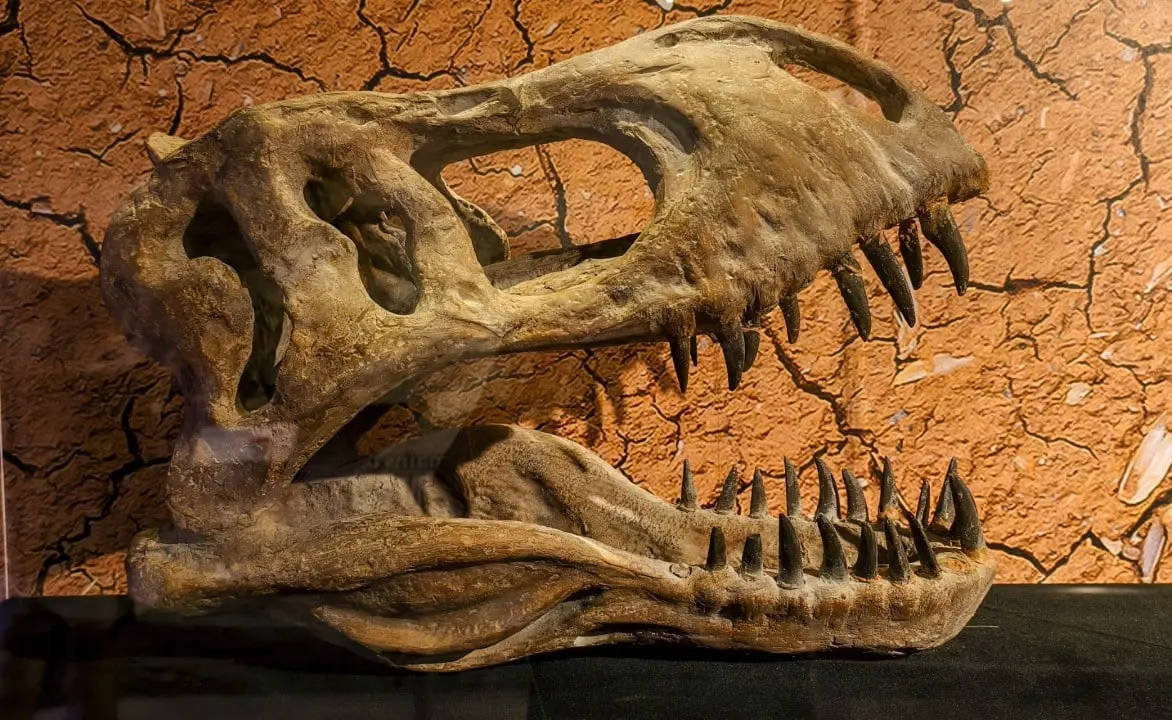
A Tyrannosaurus rex skeleton, nicknamed “Gus,” sold for a record $50.1 million at an auction held by Sotheby’s. The identity of the buyer remains confidential, which reignites the debate about the accessibility of fossils of great scientific importance to the public and research. The price achieved by “Gus” surpasses all previous dinosaur skeleton sales, setting a new benchmark in the paleontological collectibles market.
The impressive details of the “Gus” skeleton
The 67-million-year-old specimen, named “Gus”, is considered one of the largest and most complete of its species ever found. It measures approximately 3.8 meters high and 11.5 meters long when assembled, with its tail extended and its right foot slightly elevated. T. rex is about 61% complete, featuring an exceptionally preserved skull with a robust jaw full of powerful teeth.
On the same topic: T. rex auction at Sotheby’s raises debate about the future of science and valuable fossils
Among the rare parts discovered, two well-represented feet and a wishbone, popularly known as the “wishbone”, stand out. “Gus” was discovered in 2021 on a ranch in South Dakota and was named in honor of the ranch’s owner, Gary Licking, who passed away during the long excavation, restoration and assembly process that lasted about five years.
Previous records in the dinosaur fossil market
The sale of “Gus” marks a new level for fossil auctions, surpassing records set in recent years. The rise in prices for rare specimens reflects a growing interest on the part of private collectors. Sotheby’s Vice President Cassandra Hatton commented on the sale.
“Gus is not only an exceptional find, but a specimen that was excavated, documented, prepared and cared for with true excellence,” Hatton said upon completion of the sale. “The market responds when large specimens are treated right.”
See the main dinosaur sales records at auction:
See Also

Court condemns MC Ryan SP for copyright infringement on 34 songs and imposes fine

Motorola razr fold impresses by being lighter than iPhone 17 Pro Max

Singer Robbie Williams reveals autism diagnosis and finds relief in new perspective
More on this story: Record T. rex auction for US$50 million raises scientific concern
- “Gus” (Tyrannosaurus rex):US$50.1 million (2026)
- Stegosaurus:almost US$45 million (2024)
- “Stan” (Tyrannosaurus rex):almost US$32 million (2020)
The scientific community’s concern about private sales
The acquisition of scientifically important fossils by anonymous buyers generates apprehension among paleontologists and research institutions. The Society for Vertebrate Paleontology, a group of scientists, academics and students, argues that specimens like “Gus” should be publicly displayed in museums and other research institutions. This measure aims to ensure that fossils are preserved, documented and accessible for future generations of researchers and the general public.
When fossils of great scientific relevance end up in private collections, there is a risk that they will become inaccessible for in-depth studies and education. Lack of access compromises the scientific community’s ability to learn about the evolution and history of life on Earth, limiting the advancement of knowledge.
Who won “Gus” and the future of the play
The buyer, who participated in the auction by telephone and chose to remain anonymous, beat six other interested parties in a contest that lasted ten minutes. Before the sale, the fossil had an estimated price ranging between US$20 million and US$30 million. Auctioneer Phyllis Kao encouraged attendees at one point, joking, “Try for a bigger bite. It’s a T. rex, after all.”
Learn more: Fossil with embedded T. rex tooth reveals crucial details of prehistoric attack
The fate of “Gus” is now uncertain, as the buyer’s privacy does not allow us to know whether the skeleton will be exposed to the public or remain in a private collection. The expectation of the scientific community is that, regardless of the owner, measures will be taken so that the fossil continues to contribute to research and knowledge.