
SETI Institute releases image of Earth and Moon captured from Mars orbit by NASA


A series of exciting discoveries marked space exploration the week of July 13, 2026, with new information that expands understanding about the formation of planetary systems, the geology of nearby celestial bodies, and advances in future missions. Revelations include the unprecedented observation of moons forming around a distant exoplanet, as well as detailed views of volcanic and flood-sculpted landscapes on the Moon and Mars. Scientists also shared new global views of Jupiter and details about ground testing of NASA’s upcoming DAVINCI mission to Venus, highlighting the breadth and diversity of today’s space research.
The birth of a distant moon revealed on July 13, 2026
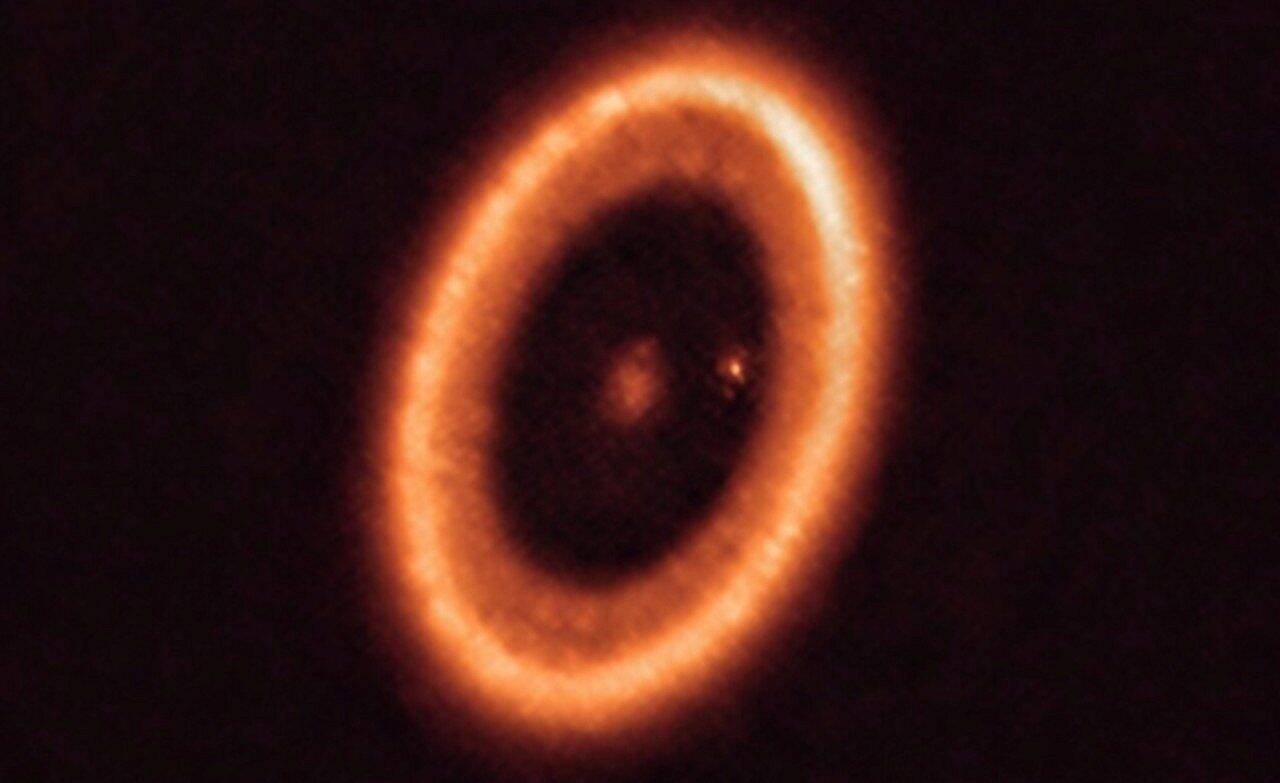
An exceptional image captured on July 13, 2026, credited to ALMA, focused researchers’ attention on a diffuse dust disk rather than the large planet-forming disk around the star PDS 70, which was already of great interest. The highlight wasn’t even the planet PDS 70c, recently formed and with a size and mass similar to Jupiter. The novelty lies in the blurred area around PDS 70c, which is interpreted as a dust disk in the process of forming moons, a phenomenon never observed before.
Mapping Jupiter with the Juno mission on July 14, 2026
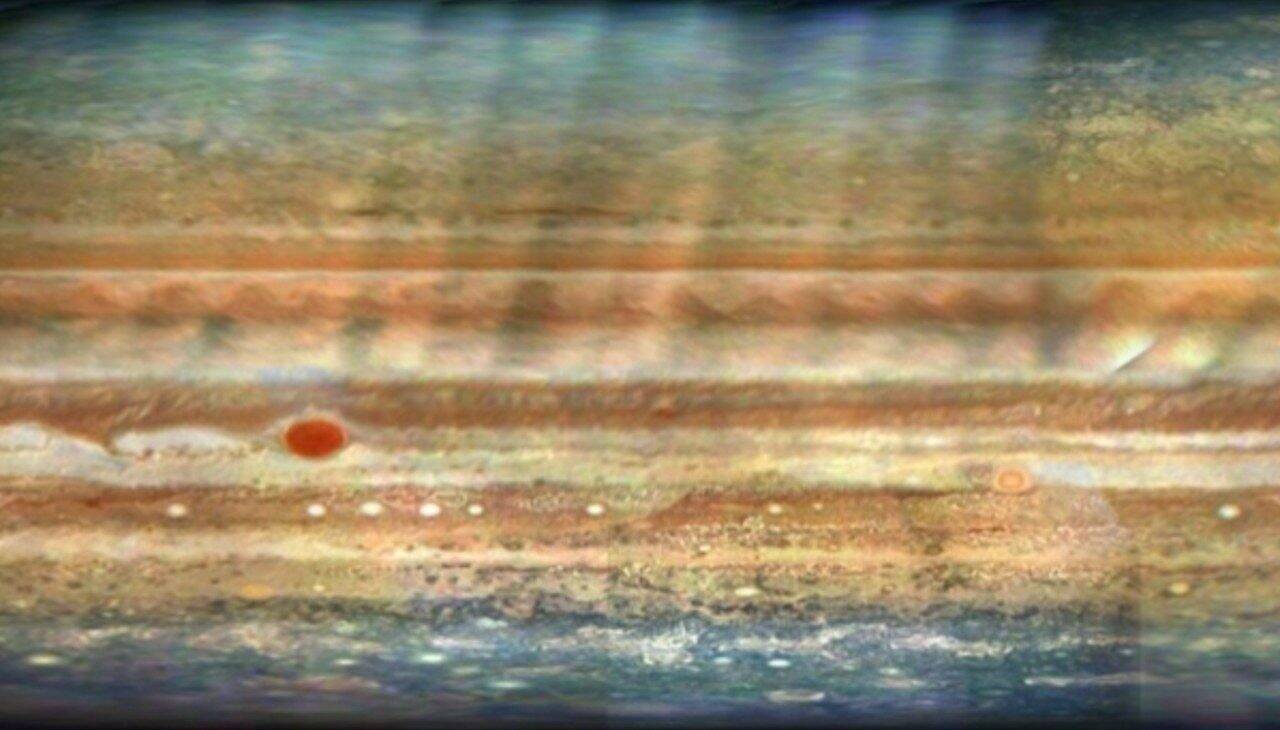
NASA’s Juno mission continues to provide groundbreaking maps of the gas giant Jupiter, as released July 14, 2026. A composite cylindrical map was generated from Juno’s ninth close pass of Jupiter. The probe, in a highly elliptical, near-polar orbit, captures high-resolution JunoCam images just hours before and after the point of closest approach, known as perijove (PJ).
Juno’s fast speed during this period requires the camera to scan a 58-degree field of view in narrow bands of red, green and blue colors. A single image is assembled from a long sequence of these stripes, captured during a rotation of the spacecraft at 2 rpm. To compensate for motion and perspective distortions, and to combine multiple images in context, it is critical to reproject them into detailed maps.
Tests for the DAVINCI mission to Venus carried out on July 15, 2026
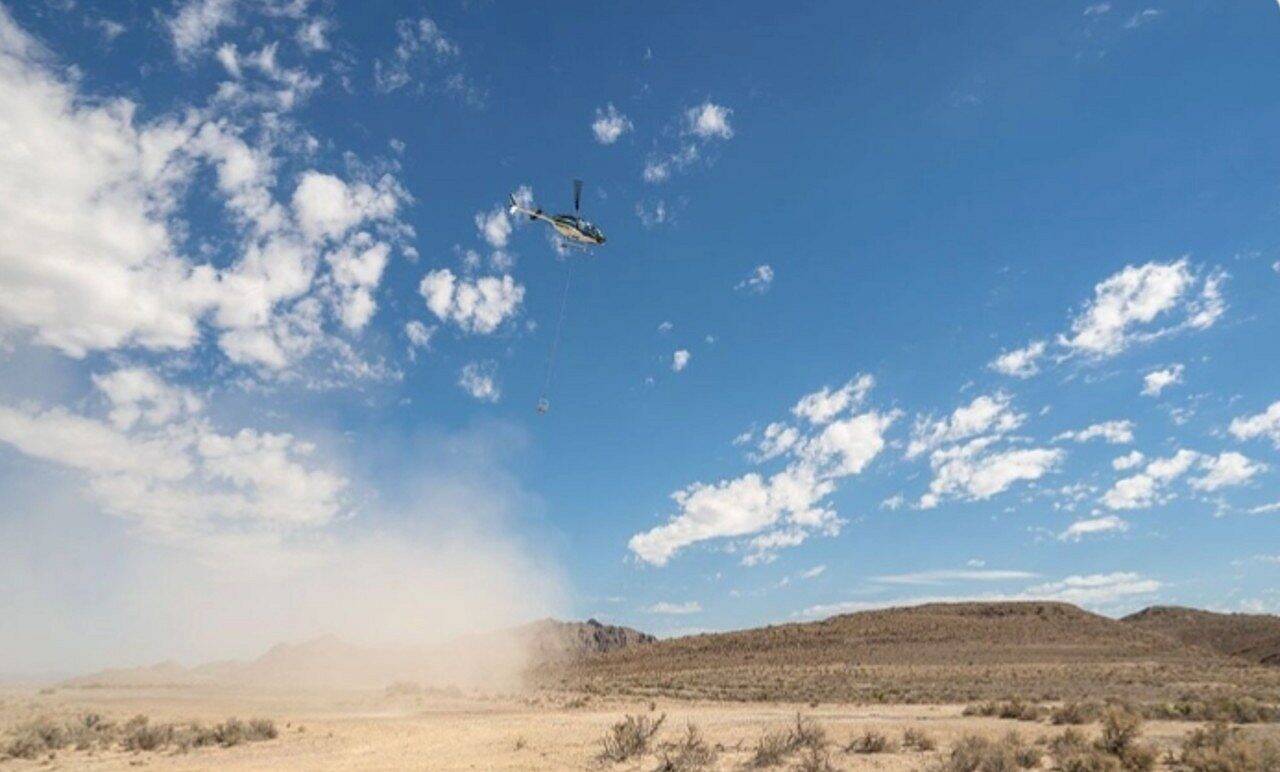
NASA is making crucial preparations for its DAVINCI (Deep Atmosphere Venus Investigation of Noble gases, Chemistry, and Imaging) mission before sending the descent probe through Venus’ dense atmosphere. On July 15, 2026, scientists are confirming the functionality of the probe’s cameras and instruments. During a 60-minute descent on Venus, the probe will capture images, measure atmospheric chemical composition and investigate the environment of a world that has not yet been explored up close in this way.
To simulate the descent and imaging process on Venus, a team of scientists and engineers from DAVINCI traveled to Crater Island, Utah, in late June. They reproduced the imaging phase of the descent through slow, near-vertical helicopter flights, departing from altitudes of up to 5,486 meters, ensuring the ability to map the landscape using only optical and infrared images collected en route.
A near-perfect lunar volcano observed on July 16, 2026
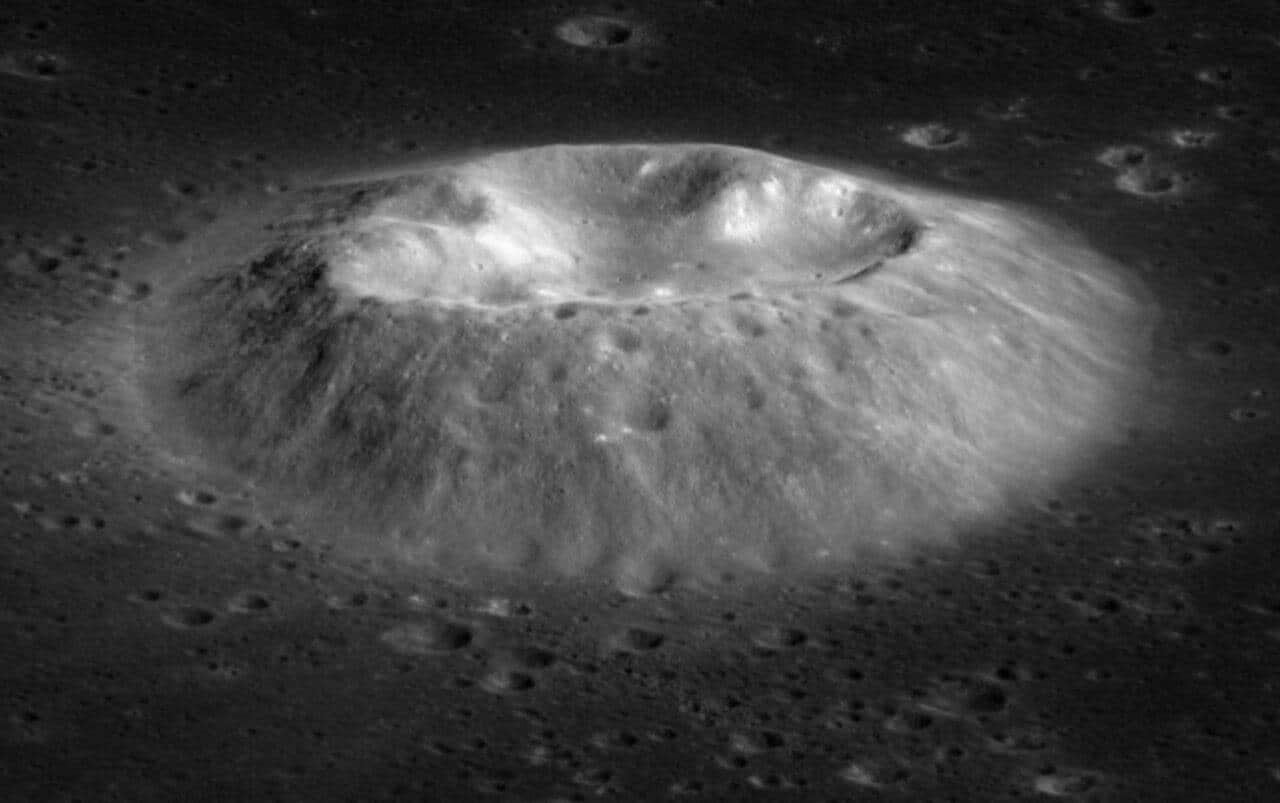
On July 16, 2026, NASA’s Lunar Reconnaissance Orbiter (LRO) completed 17 years in orbit around the Moon, with the Lunar Reconnaissance Orbiter Camera (LROC) in constant activity. This image reveals a nearly ideally shaped lunar volcano, showing evidence of ancient explosive eruptions of highly silicic magmas in the Moon’s remote past.
Although there are several areas on the Moon with traces of explosive eruptions, none compare to the morphological perfection of this particular volcano, which measures 0.6 km high and approximately 7 km wide at the base. To get this unique perspective, the spacecraft was tilted on its side so the cameras could capture the volcano’s shape more clearly, rather than a direct view from above from orbit.
Details of flood marks on Mars revealed on July 17, 2026
An observation made on July 17, 2026 by the HiRISE camera aboard NASA’s Mars Reconnaissance Orbiter highlighted a surface clearly eroded by flooding within the Kasei Valles outlet channel. This area features a series of distinct linear ridges and grooves, which are also visible in a filled impact crater.
The image, which spans about 5 kilometers, raises questions about the exact origin of these ridges and grooves, their formation mechanisms, and their relationship to nearby fan deposits. The marks provide important clues about the geological history and the action of liquid water on Mars.





