

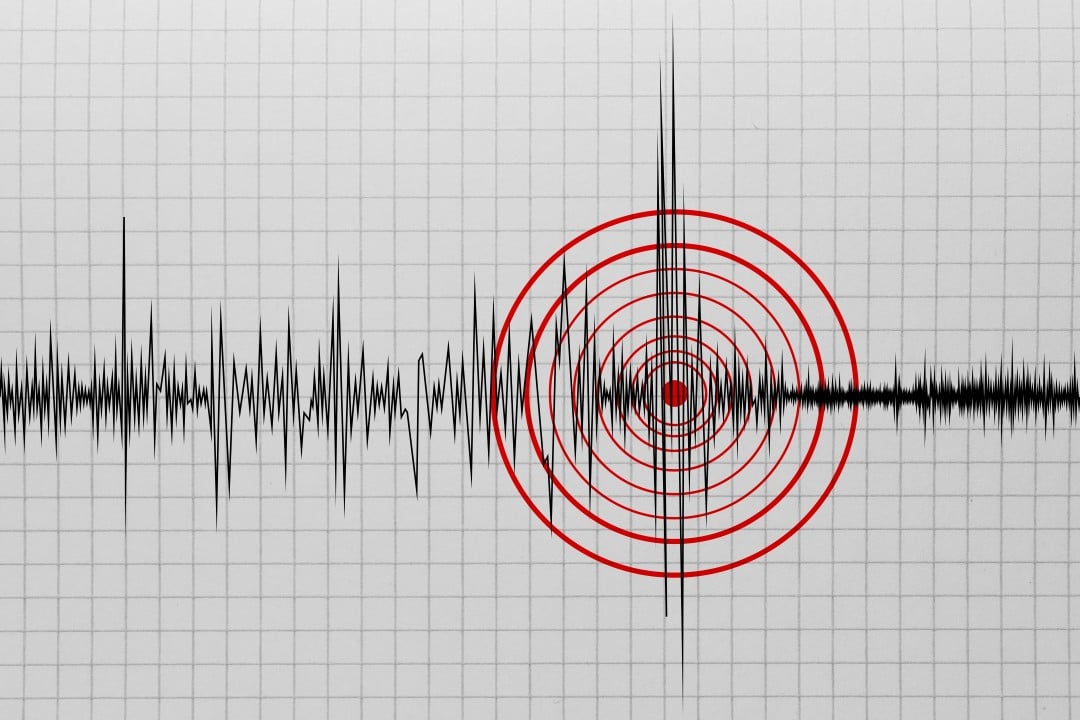
New Zealand recorded a significant earthquake of magnitude 5.8 in the North Island. The tremor, which reached a depth of ten kilometers, caused no damage or casualties, local authorities reported. This event highlighted the constant geological activity of the region, known for its location in one of the most active seismic zones on the planet.
The main details of the earthquake in the North Island
The earthquake of July 25, 2026 had its epicenter near the small village of Turangi, home to around two thousand people. Initial data indicate that the earthquake occurred at a depth of ten kilometers. The perception of the tremor in some areas was moderate, but the absence of large urban centers nearby and the resistant construction contributed to the lack of reports of damage or victims.
- Magnitude of 5.8, according to the European-Mediterranean Seismological Center (EMSC);
- Magnitude of 5.7, according to the United States Geological Survey (USGS);
- Epicenter depth of 10 kilometers;
- Location approximately 49 kilometers from Turangi, on the North Island.
Small discrepancies in the magnitude reported by different agencies are technically expected. Each has its own network of sensors and calculation algorithms, which can lead to minimal variations, but both confirm the occurrence of a considerable tremor.
New Zealand’s position on the Pacific Ring of Fire and its seismicity
New Zealand occupies a unique and challenging geographic position, being situated directly on the Pacific Ring of Fire. This gigantic horseshoe of geological activity spans approximately 40,000 kilometers and is responsible for the majority of earthquakes and volcanic eruptions across the globe. The country is at the intersection of the Pacific and Australian tectonic plates, which interact in a complex and continuous way.
The Pacific Plate dives beneath the Australian Plate off the east coast of the North Island, a process known as subduction. In the South Island, the interaction is predominantly lateral sliding. These colossal forces accumulate a vast amount of energy beneath the Earth’s surface. The abrupt release of this energy is what causes earthquakes, making seismicity an intrinsic feature of New Zealand’s geography and a constant challenge for its engineering and urban planning.
The presence of active faults throughout the territory, some visible on the surface and others hidden, is a constant reminder of this geological reality. Monitoring these faults is crucial to understand seismic risk and guide construction, ensuring that the impact of tremors is minimized, as observed in the recent event.
Significant seismic events in the country’s history and lessons learned
New Zealand’s geological history is inextricably linked to a series of earthquakes that left deep scars and taught valuable lessons. The 2011 Christchurch earthquake, measuring 6.3, was particularly devastating for the city and its people. There was loss of life and extensive destruction of buildings, infrastructure and property. Another notable event was the 1855 Wairarapa earthquake, which had an estimated magnitude of 8.2 and caused major geographic changes in the Wellington region.
These historical precedents are fundamental to understanding the country’s resilience. The 5.8 earthquake in Turangi, although strong enough to be felt, pales in comparison to the energy released by magnitude 7 or 8 events. The exponential difference on the Richter scale means that a 6.3 earthquake, for example, releases about 15 times more energy than a 5.8 one. This perspective helps explain why the recent shaking did not result in significant damage, especially considering the country’s stringent seismic construction standards developed over the decades.
The memory of these past events has propelled New Zealand to become a world leader in earthquake engineering, with buildings designed to withstand major shaking through technologies such as base isolators and seismic dampers, which allow structures to move with the ground without collapsing.
Factors that mitigated the impact of the earthquake in Turangi
Several factors contributed to the 5.8 magnitude earthquake not resulting in major damage or casualties. Firstly, the affected region, close to Turangi, has a very low population density, which drastically reduces the number of people and buildings exposed to risk. In more urbanized areas, a tremor of similar intensity could have more serious consequences.
Another crucial point is the local geology and the type of soil. In some areas, the ground can amplify seismic waves, while in others, it can attenuate them. The depth of the epicenter, although considered shallow, also plays a role, and the resilience of buildings in New Zealand is a deciding factor. Buildings are designed to “dance” with the shaking, absorbing seismic energy rather than collapsing.
Continuous monitoring of seismic activity by agencies
Agencies such as the United States Geological Survey (USGS) and the European-Mediterranean Seismological Center (EMSC) play a vital role in global monitoring of seismic activity. They operate vast networks of seismographs that detect and record tremors around the world. The ability to process this data quickly allows accurate alerts and information to be disseminated in real time.
This data is crucial for scientific research and for preparing communities in risk zones. Constant monitoring makes it possible to identify patterns, understand the behavior of tectonic plates and improve early warning systems, even if for an event like Turangi, the main conclusion was the resilience of the environment and the luck of having occurred in a sparsely inhabited area. The continued work of these agencies is essential for public safety and for building a future more prepared for seismic challenges.




