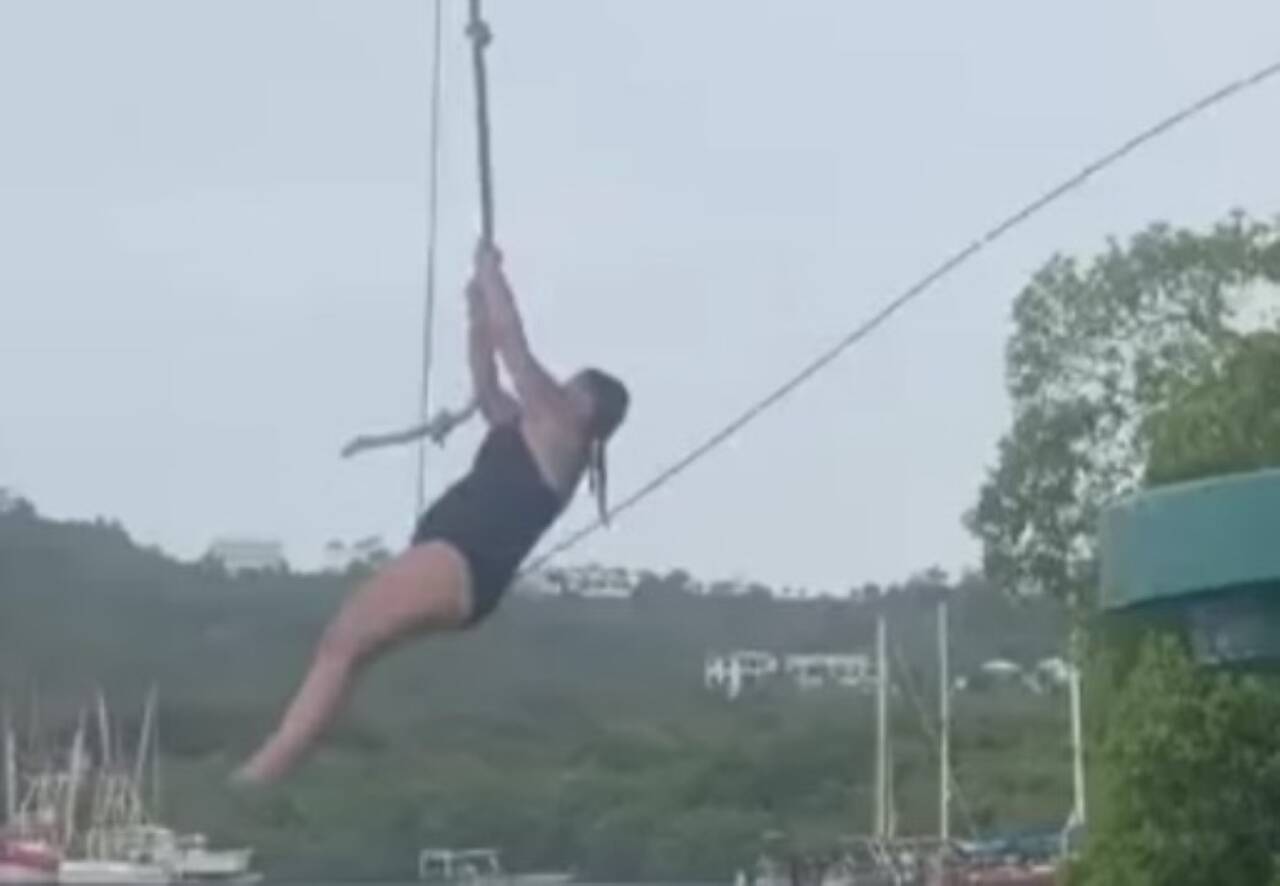
A 28-year-old tourist, identified as Kirsten Lindsey, suffered a serious genital injury while participating in a water swing in Honduras. The incident occurred during an excursion on his cruise trip, requiring an emergency air evacuation to the United States that cost around R$270,000. The woman, who is American, needed immediate medical assistance and faced a long recovery journey, with accumulated medical expenses.
Accident during tour in Honduras
The episode took place in Little French Key, on the island of Roatán, a place that was one of the stops on the Carnival Cruise Line cruise that Kirsten was taking for the first time. On the third day of the trip, she decided to participate in a water swing activity. The device is designed to propel participants into a jump that ends in the water.
During the jump, an auxiliary rope, used to pull the swing back to the platform, hit Kirsten. The tourist’s boyfriend, Blake Ford, reported that the equipment appeared to have been “wired incorrectly,” which may have contributed to the accident. Footage of the incident shows Lindsey holding a knotted rope on a raised platform before jumping.
At first, Kirsten believed the injury was superficial and managed to return to the ship on her own. However, in the following hours, his health deteriorated drastically. Blake Ford described that “the swelling became severe, the pain unbearable, and she ended up needing a wheelchair just to get back to our cabin”, highlighting the seriousness of the situation.
High costs and the difficult decision of air rescue
The tourist remained in the vessel’s medical center for around 26 hours to receive initial care. The bill for the onboard service reached approximately US$3,500, the equivalent of almost R$19,000, an amount that did not include medical fees, medications or additional procedures. The initial expense already indicated the high costs involved.
Faced with the worsening of the condition and the need for specialized treatment, the couple found themselves faced with three options. Kirsten could remain in the ship’s medical center until the end of the trip, be transferred to a hospital in Mexico and organize her own return, or contract direct air removal to the United States. Evacuation was the choice, due to the urgency and complexity of the injury.
The cost for the air evacuation was a significant challenge, totaling $50,000. This amount was divided into an advance payment of US$20,000 and the remaining US$30,000 upon arrival at the destination. To cover expenses, Blake Ford started an online fundraising campaign, seeking support to pay for his girlfriend’s rescue and treatment.
Long recovery journey with multiple surgeries
After the decision to evacuate, Kirsten was transported by ambulance to an airport in Mexico. From there, she boarded a private medical plane, which took her to Fort Lauderdale, Florida. Upon arrival, the tourist was immediately taken to HCA Florida Aventura Hospital, where she underwent the first surgery to treat the injury.
Recovery still required her to return to her home in Louisiana, a journey that was not feasible by commercial flight due to her condition. Thus, Kirsten faced an approximately 18-hour car journey to get to her home state. There, she was admitted to Christus Highland Medical Center in Shreveport to continue treatment.
The family reported that the young woman would need at least one more surgical intervention, indicating the complexity and extent of the injury. Kirsten Lindsey’s recovery journey is long and demanding, both physically and financially, with the expectation of new procedures for her full rehabilitation.
Care on independent excursions and the importance of travel insurance
Kirsten Lindsey’s case raises an important warning about the risks associated with activities and excursions not sponsored by cruise lines. Carnival Cruise Line, in a released statement, stated that the water swing activity in which the tourist was injured had not been contracted or sponsored by the company. This distinction is crucial, as it exempts the company from much of the responsibility for what happened, transferring it to the local operator or the tourist themselves.
When booking independent tours while traveling, it is essential that tourists research the reputation of operators and carefully read terms of service and contracts. Common travel insurance policies often do not cover all activities considered “adventure” or those carried out with non-approved service providers. The lack of information can leave the traveler helpless in the event of an accident.
To avoid situations like the one experienced by Kirsten, comprehensive travel insurance is essential. It is essential to check whether the policy includes coverage for international medical emergencies, repatriation or medical evacuation, and whether there is any clause on extreme sports or risky activities. The difference between basic and comprehensive insurance can mean covering tens or hundreds of thousands of reais in unexpected expenses, such as air evacuation, that few people can afford on their own.
Tips to avoid unforeseen events when traveling and outings
Planning a trip involves more than just choosing the destination and accommodation; It is crucial to prepare for possible unforeseen events. For those looking for adventure or independent activities during cruises, some precautions can make the difference between peaceful leisure and a serious problem.
Check out some important recommendations:
- Check travel insurance coverage:Confirm that your insurance covers emergency medical expenses abroad, especially for adventure activities or extreme sports.
- Research the reputation of tour operators:Before hiring any independent tour, look for reviews and history of the company or service provider.
- Read the contract and terms of service:Understand the operator’s responsibilities, safety conditions and what is included in the activity.
- Confirm operator and agency responsibilities:Find out who is legally responsible for the activity and what the contact channels are in case of emergency.
- Prioritize safety in all activities:Observe the condition of the equipment and whether the safety instructions are clear and followed by all participants.
- Maintain emergency contacts:Always have the phone number of your country’s embassy or consulate, your travel insurance and a trusted contact at hand.