
Space agency completes unprecedented analysis of interstellar comet 3I/Atlas in 2026

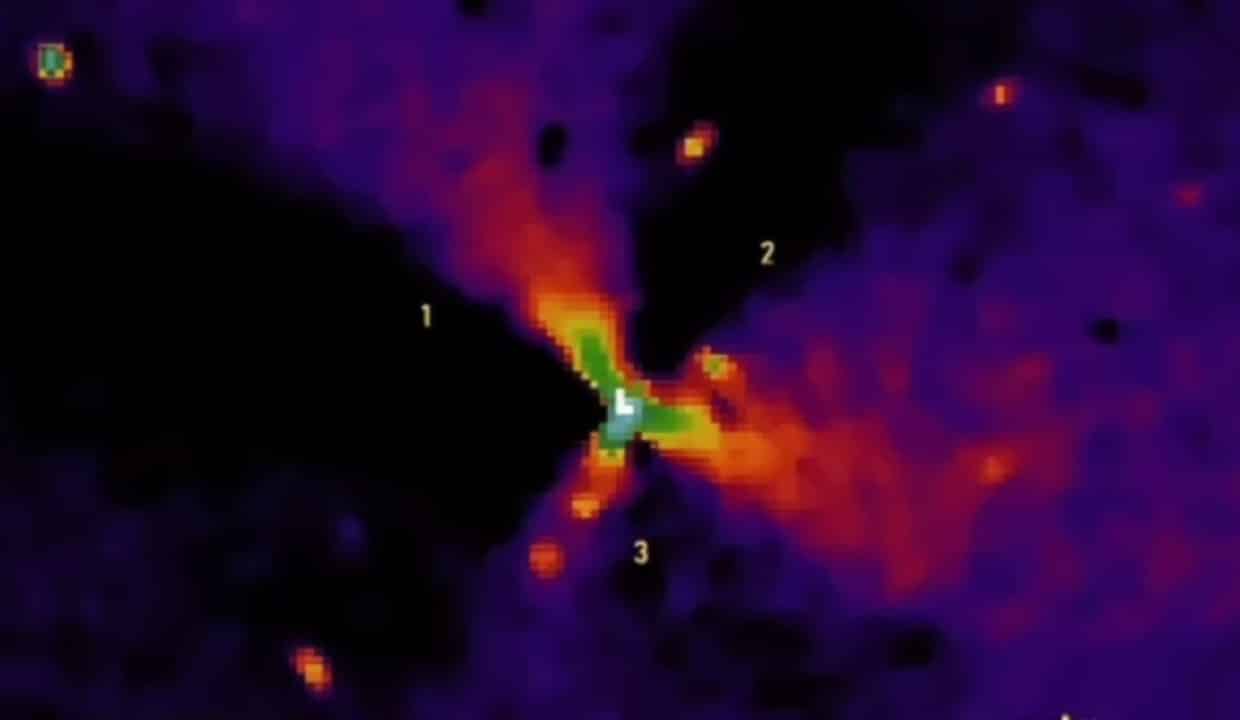
In 2026, the United States space agency completed the most extensive collection of information ever carried out on the object 3I/Atlas, a cosmic traveler that intrigues the global astronomical community. The detailed monitoring, carried out by a network of instruments both in space and on Earth, brought to light unprecedented characteristics about the chemical composition and trajectory of the rock, providing valuable clues about the formation of worlds in other stellar systems. The deep scan of this celestial body, which has traveled trillions of kilometers since it was ejected from its origin, forces researchers to rethink classical models of galactic dynamics. This is a unique chance to investigate preserved alien material, free from the collisions and radiation that normally degrade asteroids in our cosmic neighborhood.
Consequences of the passage of an object originating from outside our cosmic neighborhood
Formally recognized as the third interstellar body to cross the domains of the Solar System, 3I/Atlas was detected a few years ago, but its hidden properties were only revealed recently thanks to technological advances in state-of-the-art telescopes. The “3I” nomenclature places the rock in a very restricted club, joining the pioneer Oumuamua, identified in 2017, and 2I/Borisov, located in 2019, all of which brought samples from remote regions of the universe. Being able to trace its route with mathematical accuracy, confirming its origin at a distant point in the Milky Way, consolidated a victory for modern astrophysics and highlighted the current precision of deep space surveillance systems.
Unlike the ice blocks formed at the borders of our own system, such as the Oort Cloud — a region that projects up to 100 thousand astronomical units away from the Sun —, 3I/Atlas is not tied to the gravity of our star. The breakneck pace of its journey and the open shape of its orbit attest that the object is a wanderer untethered from any star system, which elevates its passage to a historic astronomical event. Analyzing the way this rock reacts to solar light and heat, no matter how short the period of approach, provides experts with crucial data on the resistance of these nomads when crossing zones of intense magnetic radiation during their crossings through the intergalactic vacuum.
Main hypotheses about the true place of origin of the interstellar traveler
The exact point where 3I/Atlas departed remains an intriguing puzzle, even though models generated by supercomputers and light analyzes point to a stellar nursery hundreds of light years from our planet. Scientists are working to cross-reference the chemical compounds detected in the comet’s gas trail with the profiles of stars and dust disks already cataloged by humanity. This thorough investigation makes it possible to estimate the temperature and pressure conditions of the environment that expelled the rock, creating a new window to understand the diversity of mechanisms that form planetary systems spread throughout the Milky Way.
The theory that is currently gaining more traction suggests that the celestial body was thrown into outer space after an event of extreme gravitational turbulence, possibly a shock involving a planet of colossal mass or a system of binary stars. This ejection process is seen as a common phenomenon during the initial stages of a planetary system, when the gravitational dispute between giants ends up expelling the smaller fragments into deep space. The fact that humanity is rarely able to observe an event of this type increases the relevance of each new interstellar comet discovered, functioning as material proof of the mechanical forces that shape the cosmos.
Unraveling the history of 3I/Atlas is an essential task, as it carries within it the original chemical composition of the environment where it was created. The object acts as a true time capsule sent from unknown territory, a place that current space probes would take millions of years to reach. The data collected from this rocky structure offers astronomers the necessary foundations to attest to the existence of gigantic exoplanets in other regions of the galaxy, since only worlds with absurd gravitational fields would have the energy necessary to catapult comets into the cosmic darkness.
Global telescope task force mobilized to track space object
The operation set up to capture every detail of the 3I/Atlas was led by NASA, which activated a veritable fleet of sensors capable of interpreting multiple light spectrums. The experienced Hubble telescope and the very modern James Webb telescope (JWST) took the lead in the mission, capturing very high-resolution images and decomposing the comet’s light to investigate the rock’s core. The great technological difference was the JWST’s ability to operate in the infrared range, which allowed it to traverse the dense dust cloud and recognize minerals that would go unnoticed through traditional lenses, redefining the understanding of the physical structure of the celestial body.
To complement the work of equipment in orbit, giants installed on the Earth’s surface, such as the Very Large Telescope (VLT) in the Chilean desert and the Keck Observatory on the summit of Hawaii, came into action to monitor the development of the comet’s tail in real time. The alignment of the coordinates provided by such varied instruments ensured absolute precision in calculating the trajectory and highlighted the melting process of the star as it faced the radiation from our Sun. This international collaboration proved to be the only viable strategy to extract robust scientific data from a very short-lived phenomenon.
The American space agency’s communications infrastructure, called the Deep Space Network, operated at maximum capacity to ensure that immense volumes of data traveled from satellites to computers on Earth without any failure. This highly stable network allowed researchers to process information instantly, enabling last-minute adjustments in the positioning of telescopes to record the most violent gas eruptions from the rock. The harmony between different countries and research centers has consolidated itself as an example of productivity, making it clear that joining forces is the most effective tool for deciphering the mysteries of the universe.
The intensive application of artificial intelligence and neural networks to analyze terabytes of photographs has dramatically accelerated the discovery process. These cutting-edge computing systems have been able to identify tiny fluctuations in brightness and chemical signatures that would be missed by human eyes or previous generation software. Inserting high-performance computing into the heart of astrophysics has become a watershed moment, ensuring that scientists can extract the maximum information from each particle of light recorded by the lens.
Unprecedented chemical compounds that changed the view of the scientific community
The 3I/Atlas chemical mapping exposed a complex combination of substances that deviates from the pattern found in comets that orbit our Sun. Among the main compounds identified by the sensors, the following stand out:
- Organic molecules based on long carbon chains.
- Large concentrations of water in solid state.
- Carbon dioxide preserved in extreme temperatures.
- Rocky minerals with atypical heavy metal signatures.
The factor that most surprised experts was the exact proportion of these elements. This discrepancy proves that the visitor’s system of origin operated under completely different physical and chemical laws, possibly facing extreme temperatures or an atypical concentration of heavy metals, factors that have modified the structure of the rock since its genesis.
The finding that generated the greatest impact in the laboratories was the detection of an extremely rare variation of ice, which practically does not exist on the celestial bodies in our system. This characteristic indicates that the comet was formed in an icy and remote region of its parent star, or that it was the target of a specific radioactive bombardment before being ejected. Added to this, the identification of extensive carbon chains has reignited the debate about the spread of the building blocks of life throughout the cosmos, suggesting that the fundamental chemistry for the emergence of organisms may be a common pattern, rather than a rarity, throughout the Milky Way.
Escape route from the Solar System and the chances of future observation
The trajectory followed by 3I/Atlas was calculated with a practically zero margin of error, confirming its hyperbole-shaped path and its definitive farewell to our Solar System. The moment of greatest exposure to the Sun’s heat is behind us, and now the object accelerates towards the interstellar void, becoming progressively colder and darker. Although it did not provide a spectacle visible to the naked eye, amateur astronomers equipped with robust telescopes were able to capture the glow of its tail on cloudless nights. As mathematical calculations predict its exact location a millennium from now, science has already archived the coordinates for when humanity develops equipment capable of seeing even further.
Direct impact of new discoveries on understanding planetary formation
The information extracted from 3I/Atlas is forcing academia to review concepts





