
An impressive technical achievement has just redefined the way enthusiasts interact with Rockstar Games’ absolute classics. Independent developers have created an unprecedented modification that merges the universes of Grand Theft Auto 3, Vice City and San Andreas into a single continuous exploration environment. This new feature completely eliminates the need to close one software to start another, creating a unified virtual ecosystem that defies the limitations of the time in which these works were conceived.
For decades, gamers have dreamed of being able to travel freely between the iconic metropolises of the PlayStation 2 era without interruption. The recently launched project turns this long-held desire into reality by positioning interactive portals that connect the three vast regions in an extremely fluid way. This is a milestone in the reverse engineering of old games, overcoming barriers in the RenderWare graphics engine that seemed completely insurmountable in the early 2000s.
Complex map integration occurs in real time, requiring dynamic processing that maintains the overall stability of the user experience. Fans now have the absolute freedom to explore every corner of these memorable cities without facing those frustrating loading screens that break the rhythm of the action. This innovative approach preserves the original essence of each title while drastically modernizing open-world navigation.
Dynamics of crossing and physical interaction between virtual metropolises
The portal system implemented by the creators goes far beyond a simple visual teleportation trick between different scenarios. There is an impressive physical continuity in the code, allowing the player to cross borders by walking calmly or driving heavy vehicles at high speeds. The spatial transition occurs so organically that the sudden change in atmosphere, going from rainy Liberty City straight to sunny Vice City, feels like a natural design element.
One specific technical detail that caught the community’s immediate attention is the impeccable preservation of the physics of objects through these spatial rifts. It is perfectly viable to throw heavy weapons or fire projectiles from one side of the portal and hit targets located on the neighboring map with millimeter precision. These complex mechanics demonstrate a level of polish rare in amateur modifications, requiring perfect synchronization between the collision systems of each individual adventure.
Fundamental elements that make up the unified franchise ecosystem
To understand the real magnitude of this profound change in the original code, it is necessary to observe the specific functionalities that guarantee the functioning of the system as a whole. The team responsible for the modification structured the project based on rigorous technical pillars to avoid software collapse. Below are the central characteristics that make this fusion of virtual worlds possible:
- Real-time synchronization of the three classic maps without the requirement for constant reloading of heavy textures.
- Strict maintenance of mission independence, ensuring main story progress is not corrupted.
- Preservation of the laws of physics when transferring items, ground vehicles and projectiles across dimensional barriers.
- Uninterrupted navigation that allows you to cross invisible borders using absolutely any means of transport available in the scenario.
All of these factors work together harmoniously to deliver robust gameplay that is surprisingly free of critical flaws that tend to haunt projects of this size. The independence of narrative campaigns represents a particular programming triumph, as it prevents the complex scripts of one story from interfering with the programmed events of another city. In this way, the user experiences total freedom of geographic exploration without sacrificing the integrity of the original missions that established the franchise.
Community response to the flaws in the official definitive edition
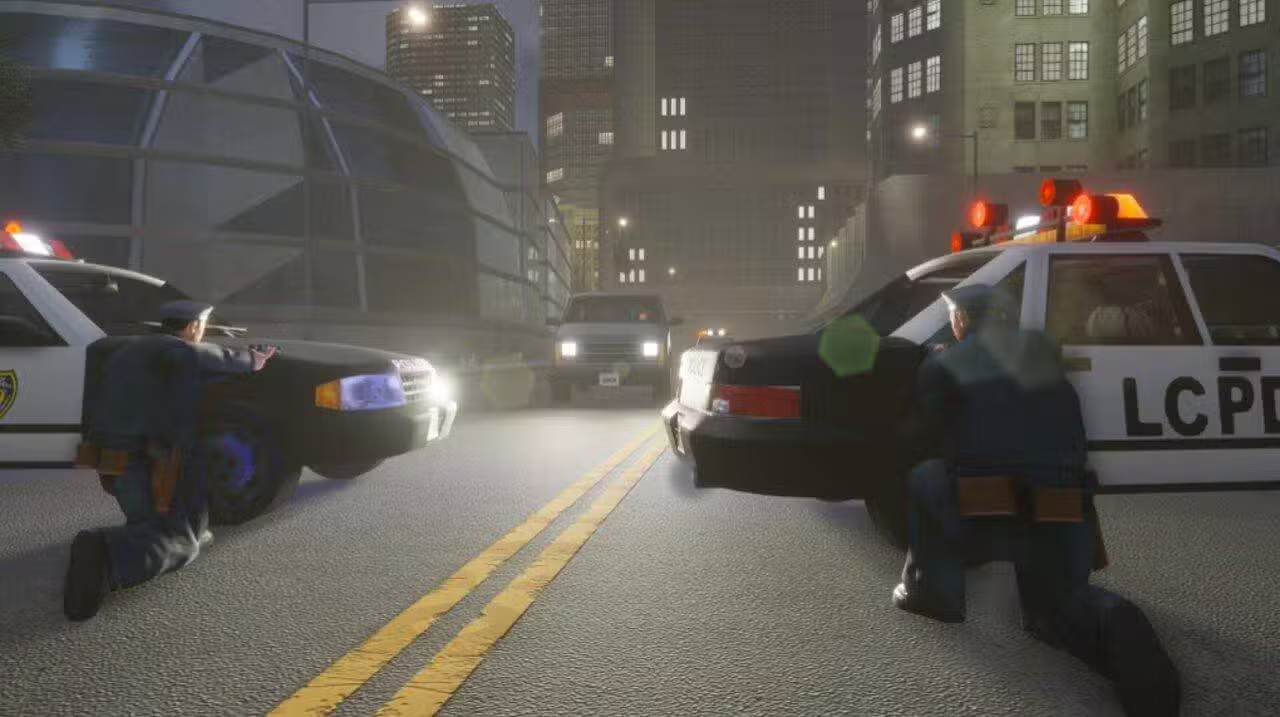
The surprise launch of this modification takes on an even more relevant aspect when compared directly to the recent initiatives of the developer who owns the brand. In 2021, the arrival of the official remastered collection was marked by harsh criticism from the public due to serious performance problems and very questionable artistic choices. Fans’ passionate and free work emerges as a direct response to this commercial disappointment, delivering exactly the kind of technical innovation that audiences expected to see in a paid product.
While the high-budget commercial product failed to capture the intact magic of the original releases, the independent project demonstrates a deep respect for the source material that defined a generation. The extreme dedication to uniting maps using the limited tools of the time highlights the raw talent present in the global community of modders. This monumental effort reinforces the thesis that the historical preservation of classic video games often rests more securely in the hands of their most loyal consumers than in corporations.
Historical relevance of the journeys of Claude, Tommy and Carl Johnson
The three legendary titles involved in this monumental merger were originally released between the years 2001 and 2004, a magical period that set the standards of the entertainment industry for decades to come. Claude’s silent and violent journey through the streets of Liberty City laid the definitive foundations of the modern three-dimensional open world. Soon after, the meteoric rise of mobster Tommy Vercetti in Vice City brought a vibrant cinematic narrative, heavily inspired by the pop culture of the eighties, which captivated millions of people around the globe.
The undisputed culmination of this golden trilogy occurred with Carl Johnson’s dramatic return to the state of San Andreas, expanding the possibilities for character customization and interaction with the environment to hitherto unprecedented levels. Revisiting these three sagas in an interconnected way serves as a vivid reminder of the massive cultural revolution brought about by these digital works of art. The behavioral and mechanical impact of these protagonists continues to echo strongly in the design of contemporary games released every year.
Continuous player engagement on the eve of a new generation
The digital entertainment industry is currently experiencing a moment of great expectation and anxiety surrounding the imminent arrival of Grand Theft Auto VI on the market. Even with the eyes of the entire world focused on the franchise’s technological future, the most dedicated fan base absolutely refuses to abandon the polygonal roots that have consolidated the brand at the top of global pop culture. The voluntary creation of complex tools to integrate games that are more than two decades old perfectly illustrates this unwavering loyalty of the community.
Grand projects of this magnitude require thousands of hours of volunteer programming, exhaustive stability testing and a genuine passion for the virtual universe created by Rockstar. The vibrant tinkering ecosystem continues to breathe new life into old code, proving daily that human creativity finds no real barriers to the technological limitations of the past. The definitive union of Liberty City, Vice City and San Andreas will remain recorded as a historic testament to the collaborative strength in the video game scene.