
Lando Norris wins 2026 Hungarian GP and puts McLaren in title fight

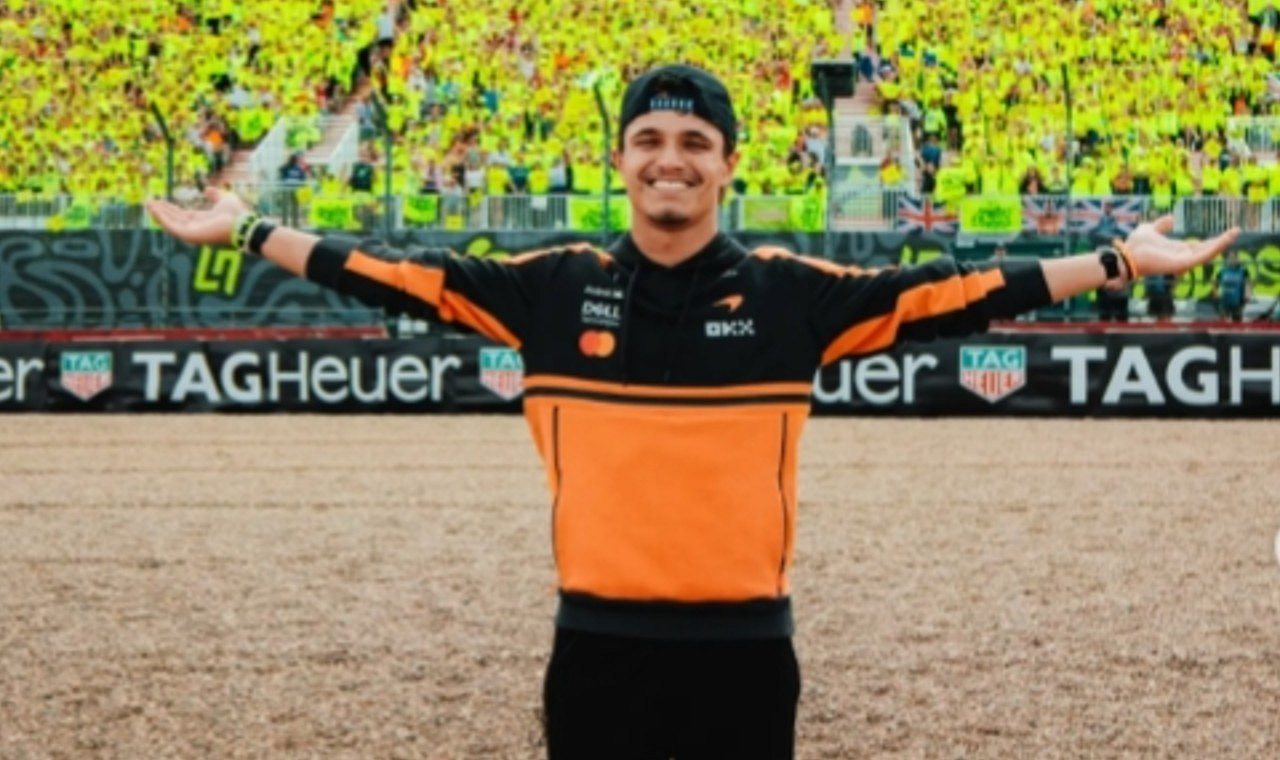
Briton Lando Norris took the highest place on the podium at the Formula 1 Hungarian Grand Prix, held on the afternoon of July 19, 2026. On a track historically known for its difficulty in overtaking, the McLaren driver showed superior pace in the final straight to overtake Mercedes’ Kimi Antonelli. The triumph marks the twelfth victory of Norris’ career and breaks the British team’s fast this season. Second place went to Dutchman Max Verstappen, from Red Bull, while Antonelli crossed the finish line in third after leading most of the 70 laps of the race.
The impact of the British team’s triumph on the Hungarian track
The positive result in Budapest represents a turning point for McLaren this year. The English team consolidates itself as the third different force to win in the championship, sharing the spotlight with Mercedes and Ferrari, which highlights the technical balance of the new regulations. Current world champion in the category, the driver of car number 4 adopted a calculating stance during the early stages of the race. The patience to save equipment allowed a fulminant attack in the decisive moments, proving that the Woking team has the stamina to trouble its rivals in the elite squad.
Tight competition for podium positions between Mercedes and Red Bull
The race had Kimi Antonelli as one of the main protagonists, holding the lead with authority for a long period. The young Italian talent withstood the pressure of veteran competitors, delivering one of his most mature displays since arriving in the main category. Mercedes had to change its tactical route in the middle of the race, abandoning the idea of making just one pit stop due to severe wear and tear on the hot asphalt. Max Verstappen used his vast experience to secure the silver medal. The three-time world champion knew how to read the race, taking advantage of other people’s mistakes and variations in pace to score vital points that keep Red Bull alive in the dispute for the constructors’ trophy.
Mechanical breaks and punishments change the dynamics of the squad
The course of the Hungarian stage featured twists and turns caused by equipment failures and sporting infractions that changed the history of the race. Race management had to deal with incidents that directly affected the favorites:
- Oscar Piastri, who was heading towards an impressive result and came to lead, suffered a breakdown in his McLaren’s gearbox, triggering the virtual safety car.
- Lewis Hamilton, now wearing Ferrari colors, exceeded the speed limit in the pit lane, receiving a five-second penalty that forced him to give way to Antonelli.
- Sergio Pérez pulled over in his Cadillac with severe damage to the suspension, highlighting the physical demands of the circuit’s curbs.
Performance of Brazil’s representative on European tracks
Gabriel Bortoleto, from São Paulo, experienced a rollercoaster of emotions aboard the Audi car, an automaker seeking to establish itself on the grid. Starting in the middle of the field, the Brazilian set an aggressive pace in the opening laps, leaving Pierre Gasly behind and moving up to twelfth position. Piastri’s break opened the way for the rookie to enter the scoring zone, ranking in ninth place. The highlight of his driving was his ability to manage the soft tires for an impressive 30 laps, a complex task considering the high temperatures and high-energy lateral corners of the track.
In the second half of the event, the lack of equipment performance took its toll. Bortoleto lost ground to Liam Lawson and Nico Hulkenberg, falling to eleventh place and leaving the points zone. In the final laps, the Brazilian fought a direct duel with Arvid Lindblad for tenth place. During this position defense, he ended up becoming a momentary obstacle for Antonelli and Hamilton, who were close behind fighting for the podium, indirectly interfering in the leaders’ dispute. Even without scoring points, the resilience demonstrated by the Audi driver reinforces his process of adapting to the level of demand of the motorsport elite.
The influence of rubber wear on the final result
Strategic chess in the pits defined who would have an advantage at the final flag. The teams had to rack their brains to find the ideal change window, varying between soft compounds, which offer immediate grip, and hard compounds, focused on durability. The drivers, including Norris, Verstappen and the unlucky Piastri, made their stops at moments calculated down to the millimeter by the engineers, trying to avoid the traffic of stragglers to maximize the time on the clean track.
Mercedes’ situation illustrates well the tactical challenge of the race. The German team had to call Antonelli for an extra stop after realizing that the rubber would not hold up until lap 70, completely changing the initial plan. Norris adopted a different and bold path, installing a set of previously used soft tires for the last leg of the race. McLaren’s bet worked perfectly, guaranteeing the necessary traction in the slow curves of Budapest for the Briton to build his advantage and secure the trophy.
What does the leaderboard look like after the Hungarian stage?
The achievement on Hungarian soil completely upsets the mathematics of the 2026 world championship. McLaren’s rise turns the fight for the title into an unpredictable dispute, ending any absolute dominance of a single manufacturer. With three different teams on the highest step of the podium so far, the public is watching one of the most even seasons in recent years, where each aerodynamic update to the cars can change the weekend’s order of strength.
Verstappen’s constancy and Antonelli’s speed show that the margin for error for the title contenders is practically nil. Even the points achieved in the intermediate field, such as Nico Hulkenberg’s advance for Audi, have double weight in the constructors’ world championship table. The final stretch of the calendar will require strategists to take calculated risks, as the technical difference between the top cars is increasingly smaller, transforming each point disputed into a true championship decision.
News confirmed for the international racing calendar
In addition to the action on the track, the behind-the-scenes of the category were shaken by the announcement of the return of the Malaysian Grand Prix to the official schedule. The Sepang circuit, famous for its long straights and unpredictable tropical storms, once again hosts the fastest cars in the world. The last edition of the event took place in 2017, when Max Verstappen emerged victorious. The reinstatement of this square responds to a long-standing request from fans for more traditional layouts and reinforces the category’s commercial expansion project in the Asian market, promising to add an extreme physical and climatic challenge for drivers in the upcoming races.





