Contagious cancer affects fish in US-Canada border lake
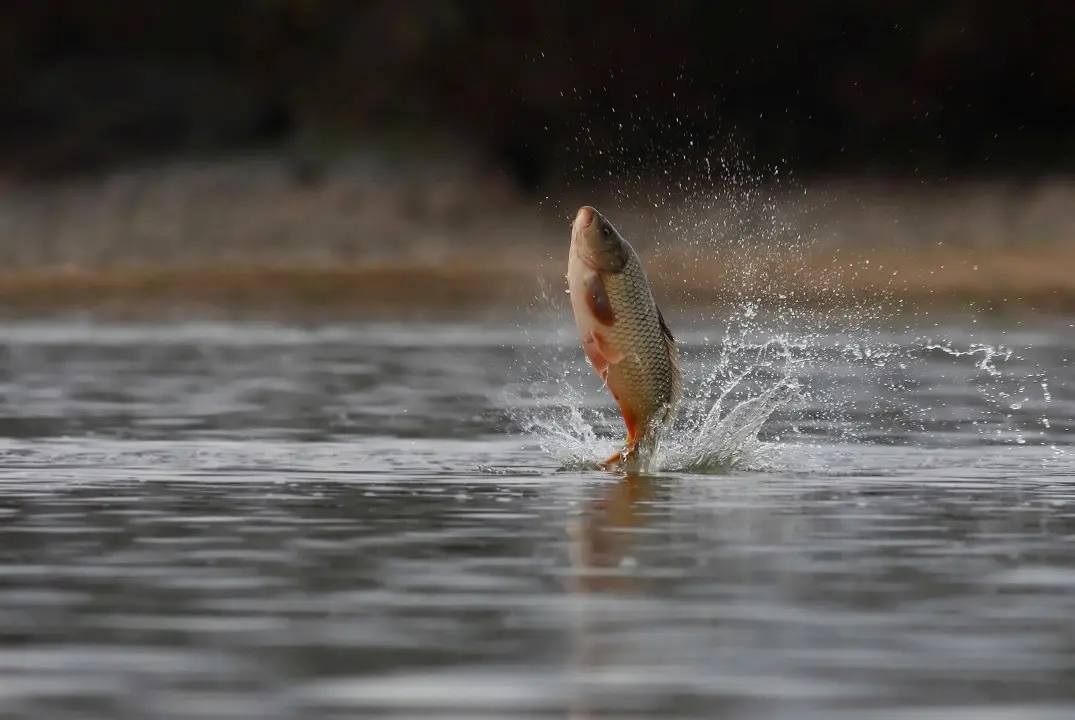
For more than ten years, an anomaly has worried a lake on the border of the United States and Canada. Lake Memphremagog, which divides Vermont and Quebec, has been home to brown bullhead catfish that, starting in 2012, began to have dark, soft lumps that fishermen noticed. Wildlife experts later confirmed that the animals were suffering from skin cancer.
Melanomas are very uncommon in catfish, however, more than 30% of fish of this species had tumors. Scientists now suspect they have unraveled the cause: a contagious variant of cancer is circulating in the body of water, they reported on July 27, 2026.
Researchers think the source of the outbreak was a single catfish, which developed a tumor and dispersed cancer cells into the water. The cells then infected other catfish, triggering what became an epidemic in the lake.
Contagious tumors have been identified in a limited number of species with seemingly no obvious connection: dogs, Tasmanian devils, and certain varieties of shellfish and molluscs. However, these findings have already generated a series of important questions in scientific circles.
Some scientists suggest that transmissible cancers constitute, in themselves, new species. There are those who even argue that certain animal species may have evolved, millions of years ago, from cancer cells.
The recent detection of the first transmissible cancer in fish encourages scientists to reevaluate the real extent of this phenomenon across the planet.
On the same topic: NASA’s Webb Telescope discovers new giant planet with innovative method
“Is this really as rare as we think, or are we just not looking for it?” asks Julie Dragon, a geneticist at the University of Vermont and one of the authors of the new research.
Dragon’s initial research objective was not to look for a contagious cancer. In 2014, she was asked by biologists from the Vermont Department of Fish and Wildlife to help investigate why brown bullhead catfish in Lake Memphremagog were getting sick.
Although ultraviolet light is a known cause of melanomas, it was unlikely that catfish, which inhabit the lake’s muddy bottom and are most active at night, would have such high levels of the disease.
The geneticist and her team examined other hypotheses, such as the impact of pollution from a nearby landfill and infections by microorganisms capable of causing cancer. However, tests revealed low levels of pollutants in the fish and no evidence of cancer-causing viruses or bacteria.
So Dragon opted for a detailed analysis of the catfish’s DNA, as well as the mutated DNA found in their tumors. Specific genetic variations can increase vulnerability to cancer in animals and humans.

The initial expectation was that each cancer cell would be genetically more similar to the host catfish. However, the results showed that all the cancer cells had a great resemblance to each other, but not to the animals that carried them.
“I said, ‘We made a mistake. This can’t be right,'” Dragon recalls. The research team redid the entire analysis and obtained the same verdict: the tumors did not originate from the infected catfish themselves.
With each new sample of fish DNA analyzed, the pattern was confirmed more clearly. So scientists began to contemplate an alarming hypothesis: catfish were being affected by a contagious form of cancer.
Since the Renaissance period, academics have raised the possibility that cancers are infectious. In 1603, Portuguese doctor Rodrigo de Castro even described tumors “exhaling a horrible vapor” that could infect new people.
The theory that cancer was “sticky” lost relevance when modern science revealed that the disease typically results from mutations in an organism’s own DNA. It wasn’t until the early 2000s that concrete evidence of transmissible cancers began to emerge.
More on this story: Rare phenomenon brings together four celestial bodies in Pisces and moves astrological predictions
Dogs are hosts to a type known as CTVT, which means canine transmissible venereal tumor in English. During mating, cancer cells can be transmitted between animals. DNA analyzes of these tumors indicate that all variants of the disease originated in a single ancestral dog, thousands of years ago.
CTVT is generally non-lethal. However, the situation is different with a contagious cancer that affects Tasmanian devils.
See Also

Electrical discharge knocks man off roof in Jaguaruana after contact with power lines

Global auction raises US$11.9 million and Brazil’s historic currency reaches record value

Former fighter Prichard Colón dies at age 33 after decade in a vegetative state
Named Tasmanian devil facial tumor, the disease takes advantage of the bites and bleeding common in fights between these marsupials. If a Tasmanian devil bites the tumor tissue of another, the cancer cells move through the animal’s body, manifesting themselves on the face.
Despite having appeared just a few decades ago, this cancer has already brought Tasmanian devils to the brink of extinction.
In 2015, on the Atlantic coasts between Canada and the United States, scientists detected soft-shelled clams and other mollusk species seriously affected by a cancer similar to leukemia. Diseased clams were found to release cancerous cells into the seawater, which were then absorbed by nearby healthy animals.
More recently, transmissible cancer has been found in shellfish in Pacific and European waters. Now, Dragon and his team believe they have discovered a new case of contagious cancer in an entirely different host.
Learn more: Astrological predictions indicate improvement for three specific signs after the week of March 16th to 22nd
Scientists are convinced that all the tumors in Lake Memphremagog originated from a single ancestral cancer cell. The way brown bullhead catfish reproduce may have facilitated the dispersion of melanoma cells, as the fish congregate in shallow waters to spawn.
“They’re all on top of each other,” explains Dragon. In these clusters, during the reproduction period, catfish may bite or scratch each other, and the resulting wounds can leave them exposed to cancer cells circulating in the water.
Michael Metzger, a researcher on contagious shellfish cancers at the Pacific Northwest Research Institute in Seattle, pointed out that this is the first instance of a transmissible cancer found in freshwater. Normally, cells survive only in saltwater environments.
“It makes us rethink how these things work,” says Metzger.
Dragon also found signs that catfish in other regions of the northeastern United States may have been affected by the same type of cancer. Some of this evidence comes from the 19th-century journals of naturalist Henry David Thoreau.
Learn more: Rare conjunction of four planets in Pisces promises auspicious period for 48 hours
Thoreau reported that he often observed catfish in spotted Massachusetts rivers. In 1858, he described a specimen in the Assabet River: “Almost half of the head, from the snout diagonally back, is covered with a kind of inky black leprosy, similar to an encrusted lichen”, he recorded.
Dragon and his team expanded the search for transmissible cancers in catfish beyond Lake Memphremagog. The researchers also ask that fishermen and biologists who find catfish with dark, protruding tumors share their reports.
It is suggested that images of the complete fish, including tumors, and data about the capture location be sent. Dragon also requests, if possible, that the whole fish be frozen so that she and her colleagues can arrange for it to be collected and examined.
“It’s hard to say whether every black spot is our tumor, but we won’t know until we test them,” says Dragon.
Peter Emerson, another author of the study and a fisheries biologist with the Vermont Department of Fish and Wildlife, advised that fishermen should not consume catfish that have tumors.
“We have no evidence that the fish are unsafe to eat. We just prefer to be cautious,” says Emerson.
Currently, little research suggests the circulation of contagious cancers among humans. However, Elizabeth Murchison, an expert in communicable cancers at the University of Cambridge, said it was possible one of them could emerge one day.
“This discovery reinforces the idea that transmissible cancers can arise anywhere, including in our own species,” he concluded.