
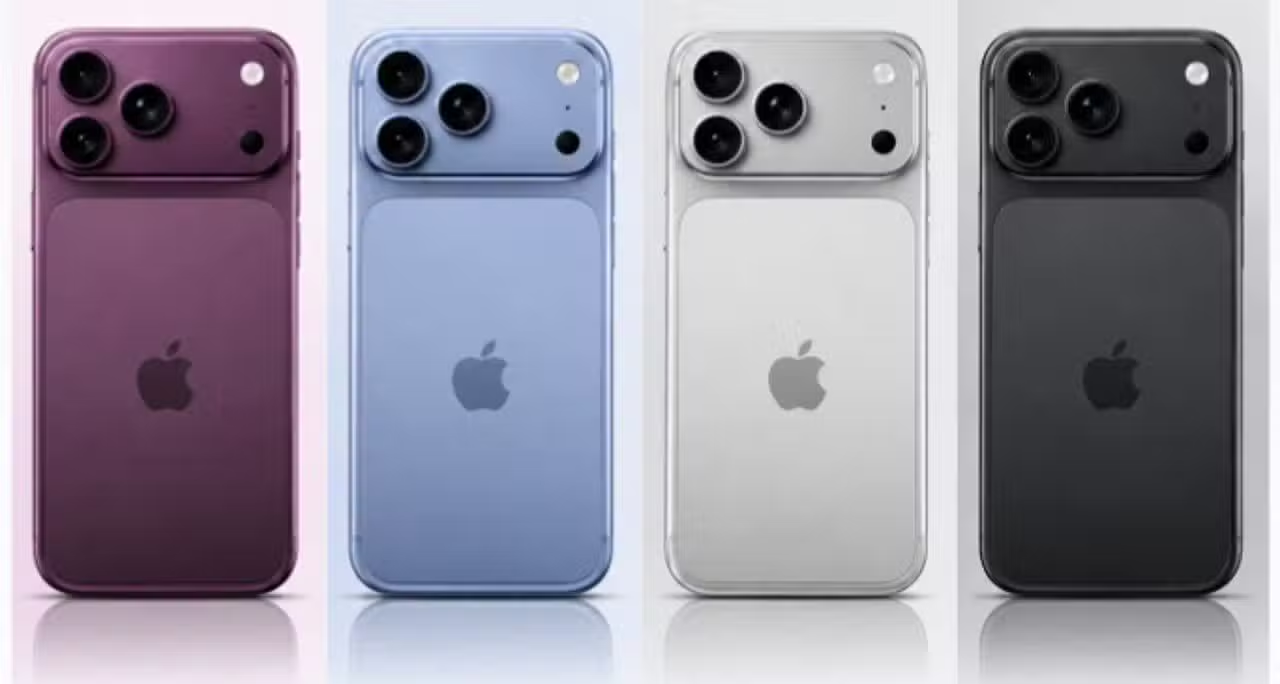
A major cyberattack resulted in the exposure of confidential industrial documents that anticipate Apple’s plans for the smartphone market in 2026. Internal diagnostic and calibration files belonging to Tata Electronics, one of the Cupertino giant’s main supply chain partners, were captured and illegally released by the ransomware group known as World Leaks. The leaked material points to a drastic change in the image capture system of the future iPhone 18 Pro Max, highlighting the implementation of an unprecedented hardware component in the history of the brand’s cell phone line. This involves the adoption of the Sony IMX905 main sensor, which will be accompanied by a physical variable aperture mechanism for the primary lens. This mechanical change promises to transform the way the device handles light input, raising the level of mobile photography offered by the iOS ecosystem. The discovery ends years of speculation about when the American manufacturer would finally embrace this specific technology.
How the new mechanical component transforms light capture on the cell phone
The main innovation detailed in the leaked engineering reports is the lens’s physical ability to switch its internal diameter fully automatically. Unlike traditional cell phone cameras today, which have a fixed aperture and rely exclusively on exposure time and ISO to brighten a scene, the variable system works in a similar way to the iris of the human eye. It dilates or contracts its tiny mechanical blades depending on the intensity of the ambient lighting. When the user is in a dark place, the mechanism opens as much as possible to absorb any beam of light available in the scene. In situations of full sun or intense artificial lighting, the aperture partially closes to prevent the photograph from being blown out, ensuring a perfect balance in exposure without generating digital noise.
Although the physical size of the Sony IMX905 sensor pixels remains unchanged at the 1.22μm mark, the flexibility of the lens compensates for this maintenance of technical specifications. Historically, variable opening technology is not completely new in the world of mobile devices, having debuted on the Android system around 2018 with Samsung’s Galaxy S9 line and recently returning to devices from Chinese brands. However, Apple’s implementation often integrates the hardware deeply with its image processors and computational photography algorithms. This combination will allow photographers to have much finer control over depth of field, creating natural background blurs in portraits and videos without relying exclusively on artificial software cropping.
Technical specifications that remain identical to the previous generation
Despite the revolution projected for the main camera, documents taken from Tata Electronics indicate a conservative approach to the rest of the rear photographic module. The company’s strategic planning focuses on optimizing production costs and maintaining the stability of components that already deliver high performance in the predecessor model, the iPhone 17 Pro Max. In this way, the auxiliary optical assembly will continue to depend on parts already consolidated in the Japanese supplier Sony’s portfolio, avoiding a complete redesign of the device’s motherboard.
- Telephoto lens: The equipment will be equipped with the Sony IMX973 sensor to guarantee long-distance optical zoom without loss of quality.
- Ultrawide lens: Capturing super wide angles for landscapes and architecture will continue to be the responsibility of the Sony IMX972 component.
- 3D Mapping: The LiDAR scanner, essential for fast focusing in the dark and augmented reality applications, maintains the Sony IMX591 model.
- Selfie camera: The front sensor will not undergo any changes in its structure, preserving the Sony IMX914 hardware for video calls and self-portraits.
The decision to recycle these four fundamental pieces demonstrates clear confidence in the longevity of the current image processing architecture. By focusing engineering efforts and research costs exclusively on the primary sensor, the manufacturer ensures that third-party application developers do not have to completely rewrite their camera code to handle multiple simultaneous hardware changes. This standardization makes it easier to create filters and editing tools for social networks.
Impact of the cyber attack and corporate silence on the case
The exposure of this sensitive data raises critical questions about information security in the complex electronics assembly chain in Asia. The World Leaks criminal group has focused its data hijacking attacks on large suppliers, knowing that industrial partners such as Tata Electronics store valuable trade secrets from global technology giants. The leak of the lens calibration blocks not only spoils the surprise of the official announcement, but also provides competitors with a clear and detailed map of the direction the market leader is taking for the next few years in the luxury segment.
As is standard procedure in situations involving breaches of confidentiality and hacker attacks, the company’s headquarters in California chose not to issue any official statement about the security incident. The company’s strict confidentiality policy prohibits any employee or executive from commenting on internet rumors or confirming the development of products that are still in the laboratory testing phase. This strategic silence serves to protect sales of models that are currently in stores, preventing consumers from delaying their purchases while waiting for new photographic technology.
Launch schedule and consumer market expectations
The telecommunications industry’s traditional calendar indicates that the iPhone 18 Pro Max will only see the light of day in September 2026, during the annual autumn event in the northern hemisphere. Until the board takes the stage in the main auditorium to officially detail the capabilities of the new variable aperture system, the financial market and enthusiasts will continue to dissect every line of code and leaked manufacturing document. The promise of superior night photography and professional-grade optical control puts additional pressure on rival brands, who now have a set deadline to improve their own sensors before the new generation of phones hits global shelves.