Return of the Fiat Uno in 2026 bets on hybrid engine and aggressive price to dominate the market


One of the most traditional names on Brazilian streets is preparing its triumphant return for the 2026 season, assuming the global identity of Fiat Grande Panda. With manufacturing confirmed for the Betim industrial complex, in Minas Gerais, the vehicle has the ambitious goal of costing less than R$40,000, offering a yield of up to 18.5 km/l in its electrified variant. The launch will simultaneously retire the Argo and Mobi lines, restructuring the basis of the Italian manufacturer’s portfolio in the country. Historically responsible for selling more than four million copies since the 1980s, the compact targets drivers looking for a cheap and resistant means of daily transport. This commercial maneuver attempts to shield the automaker against fuel inflation and the scarcity of really cheap options at dealerships.
Visually, the hatch draws from its European counterpart, but receives severe structural modifications to face the reality of the national asphalt. The minimalist aesthetic, which always dictated the rhythm of the original project, now shares space with LED optical sets and a more fluid profile against the wind. Assembly on mining soil ensures that the set of shock absorbers receives the necessary reinforcement to withstand ditches and holes without compromising the integrity of the cabin.
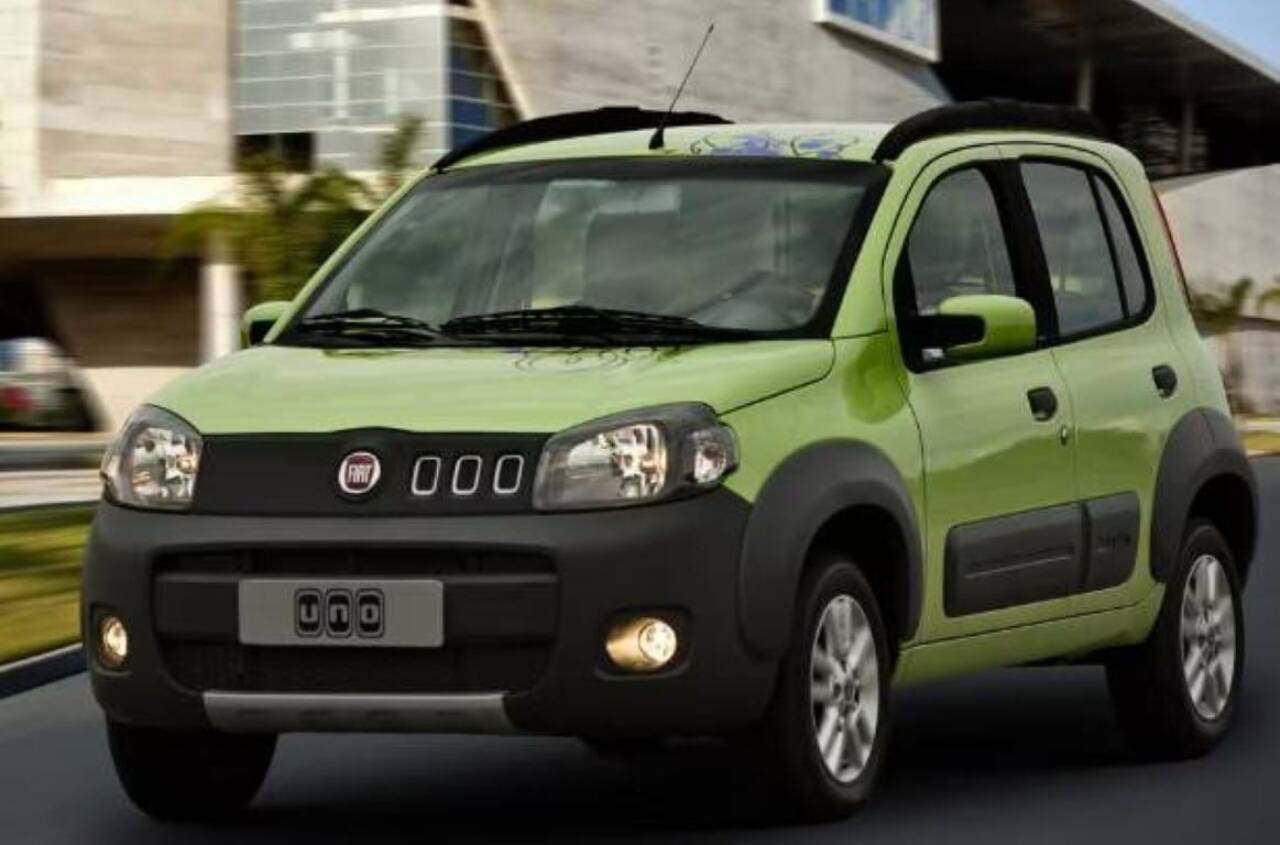
The core attributes of the future release include:
- Aggressive value table, designed for the R$40,000 range.
- Fuel efficiency reaching 18.5 km/l in the electrified system.
- 1.0 propellant from the Firefly family, available with both combustion and electrical assistance.
- Bodywork with functional features based on Old Continent trends.
The historical weight and strategy behind the new baptism
Present in Brazilians’ garages since mid-1984, the original compact built an unshakable legacy, especially after inaugurating the era of 1.0 cars with the iconic Mille in 1990. Until it was definitively discontinued a few years ago, the model accumulated more than 4.3 million registrations thanks to its simple and cheap mechanics. The 2026 edition attempts to capture exactly that aura of confidence, updating the package for 21st century demands. Rescuing such a strong baptism works as a powerful commercial shield for the manufacturer, creating an emotional barrier that Asian automakers newly arrived in the country still struggle to build.
Corporate planning places the newly developed hatchback on the lowest rung of the offering table, decreeing the end of the cycle for the Argo, which had excellent sales performance recently, and the veteran Mobi. Concentrating the assembly line in the Minas Gerais automotive hub, recognized as one of the largest complexes in South America, guarantees a fast supply chain and lowers the final cost of spare parts in the workshops.
Mechanical settings focused on daily savings
Next year’s catalog will feature two propulsion options, both using the already renowned 1.0 Firefly three-cylinder block. The entry-level configuration, aimed at fleet owners and strictly urban use, generates 75 horsepower managed by a traditional manual gearbox. On the other hand, the big star of the range will be the mild hybrid variant, which couples a small electric generator to the combustion engine and uses a CVT automatic transmission to maximize performance.
Spending little on fuel became the project’s main promise, something vital considering the constant fluctuations in the price of gasoline. Preliminary assessments indicate that the electrified system can record averages of 15 km/l in heavy traffic and a surprising 18.5 km/l at cruising speeds on highways, beating direct rivals. The feature that temporarily turns off the engine during short stops will come standard on all units, helping to save fuel during traffic jams.
Visual identity mixes references from the past and the future
The final bodywork displays an interesting fusion between the style adopted in Europe and the futuristic features of the Centoventi prototype, revealed in past international shows. An imposing front grille pairs with diode-illuminated headlights, giving the vehicle a more refined appearance, which preserves the iconic “square with rounded edges” shape of the first generation. The external design was designed to cut through the wind with ease, while the cabin houses an interactive digital screen on the dashboard, ready to mirror modern cell phones without difficulty.
The use of the living area focuses on the busy routine, providing intelligent niches to store objects and seats designed to avoid tiring the driver in traffic. The calibration of the springs and shock absorbers received special attention from local engineering to withstand the daily grind, creating a competitive advantage in terms of robustness when compared to future launches from Volkswagen and compacts from Hyundai.
Factory expansion and tactics to dominate sales
The industrial complex located in the metropolitan region of Belo Horizonte will serve as a global base to supply the South American market. To meet the projected volume, the Stellantis group confirmed the opening of 1,200 direct jobs at the manufacturing unit. The use of the STLA Smart architecture, a direct evolution of the base already used in recent Citroën models, is the industrial secret that allows parts to be shared with other cars in the group and drastically reduce manufacturing costs.
The commercial department is preparing a massive advertising offensive, involving physical demonstrations in stores and the release of fleets for public experimentation. The capillarity of the brand’s dealership network, which reaches practically all Brazilian municipalities, works as an unbeatable selling point, reassuring buyers who live far from large urban centers.
Protection and connectivity equipment package
Far from being a stripped-down car, the launch complies with legal requirements with inflatable frontal protection bags and an anti-lock brake system with electronic force distribution. Those who choose the engine with electric assistance will also have sensors that monitor the pressure of each tire in real time, a feature that prevents accidents and avoids excessive fuel consumption caused by flat tires.
The onboard technological arsenal includes:
- Touch-sensitive central monitor for media control.
- Full integration with Apple and Google operating systems.
- Electric assistance in the steering box, facilitating maneuvers.
- Intelligent engine automatic shutdown mechanism during stops.
- Steering column with height adjustment for the driver.
Even in the cheapest configurations, the automaker promises to avoid the impoverished appearance, using well-assembled plastics and fabrics resistant to severe use. The arrangement of controls on the panel prioritizes the driver’s ergonomics, while the distance between the axles guarantees decent accommodation for up to five passengers on short trips.
Fierce competition for consumers with lower purchasing power
The access vehicle niche in Brazil is going through a constant war, currently dominated by hatchbacks from Chevrolet and Hyundai, in addition to the imminent arrival of new compact utility vehicles from Volkswagen. The promise of a price tag below R$40,000 sounds aggressive compared to the more than R$70,000 charged for the brand’s current entry-level hatchback, but it represents the final move to monopolize the sector. The electrified variant will require a larger outlay at the dealership, but the savings at the gas pump promise to balance the accounts quickly.
The manufacturer’s financial arm already structures easy credit plans, requiring little money at the time of purchase and diluting the balance into installments that fit into the worker’s pocket. The history of excellent resale value, a hallmark of the compact’s past incarnations, serves as a guarantee that the customer will not lose money when changing garages.
Official arrival calendar at dealerships
The introduction of the vehicle into national retail will follow the following steps:
- January 2026: Opening of the reservation system at authorized resellers.
- March 2026: Arrival of demonstration vehicles for test drives.
- April 2026: Transfer of the first keys to final buyers.
- Second half of 2026: Expansion of the catalog, possibly including a turbocharged engine.
The machinery in Minas Gerais is already operating at a preparatory pace, with test units running camouflaged along the highways since the middle of the previous year. Printing and final assembly on a large scale begin in the first months of the year, creating a robust stock to avoid queues at launch.
Promise of unbreakable mechanics and cheap revisions
Having a car that doesn’t break down and costs little to fix is the backbone of the Italian brand’s reputation in the country. Sharing the three-cylinder engine with sports utility vehicles and hatchbacks already established on the streets means that any mechanic will know how to solve any problems, in addition to guaranteeing shelves full of cheap spare parts.
Anyone who has owned the square versions of the past knows that the car could handle dirt roads and bumpy asphalt without complaining. The new suspension design has been extensively tested to replicate this legendary strength, saving the owner from spending fortunes replacing bushings and trays prematurely.
The emotional impact and demands on drivers
Resurrecting such a beloved name directly affects the emotional memories of thousands of drivers who learned to drive or had their first car in the classic model. Debates in digital communities highlight the anxiety for a product that combines technology and a fair price, although the most demanding customers are already putting pressure on the automaker to include side air bags as standard, something that is still uncertain in the cheaper versions.