

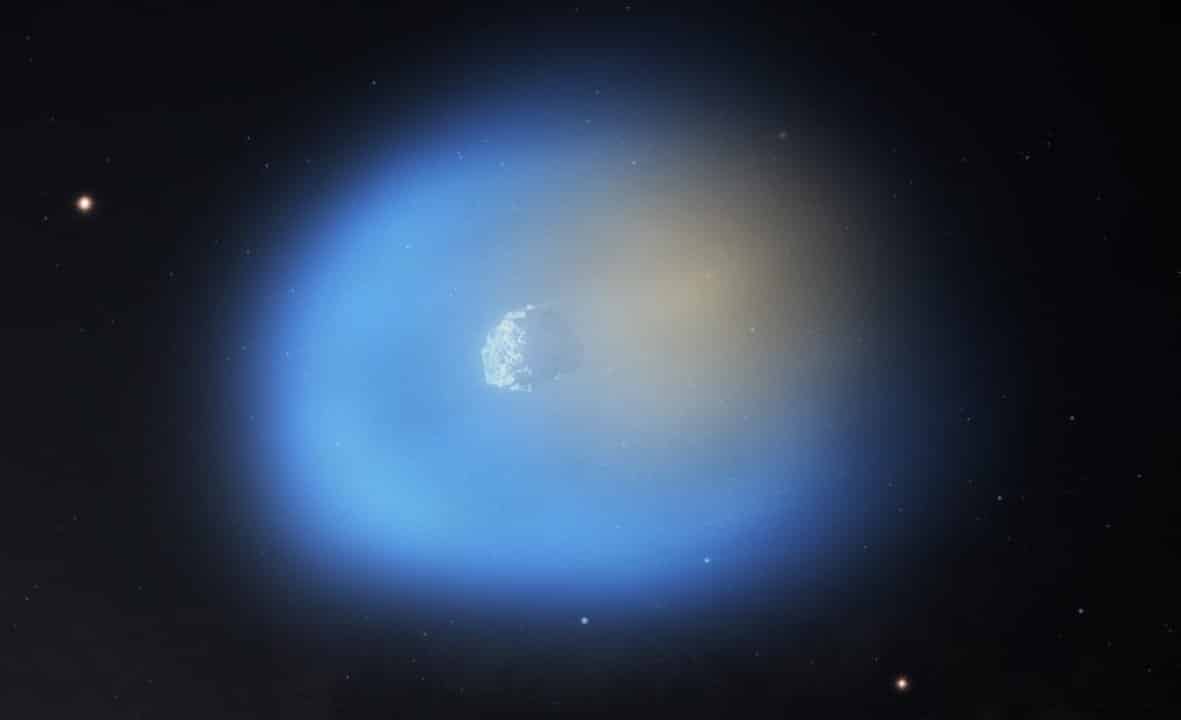
Comet 3I/ATLAS, a celestial object originating outside our solar system, is currently traveling at an impressive speed of around 209,000 kilometers per hour. This mark makes it the fastest comet ever recorded, according to scientists from the American Space Agency (NASA). The discovery of this interstellar object offers a unique opportunity for astronomical research, allowing the study of materials and conditions in other distant star systems.
What makes comet 3I/ATLAS so special?
The uniqueness of comet 3I/ATLAS lies mainly in its origin and its unprecedented speed. Unlike the comets we know, which orbit our Sun and come mainly from the Kuiper Belt or the Oort Cloud, 3I/ATLAS is an interstellar traveler. This means it was born around another star and was ejected from its original star system, wandering through deep space before crossing our solar system. The detection of objects like this is rare and provides scientists with a direct window into the composition of other universes in the making. Its trajectory and composition can reveal important clues about the diversity of materials that exist in the cosmos.
Comet’s record speed surprises astronomers
Reaching the mark of 209 thousand kilometers per hour places comet 3I/ATLAS in a category of its own among observed celestial objects. To give you an idea, this speed is significantly greater than most comets that orbit our Sun, which generally move at tens of thousands of kilometers per hour. This dizzying acceleration allows the comet to cross great distances in relatively short periods, making its observation and monitoring a challenge and a priority for astronomers. The team at NASA’s Goddard Space Flight Center has been closely monitoring the movement and characteristics of this object, seeking to understand the mechanisms that propel it to such speed and how its structure remains intact. The extreme speed also influences the way the comet interacts with solar radiation and the stellar wind.
Uncovering secrets of other star systems
The study of interstellar comets like 3I/ATLAS goes far beyond simply measuring speed. They are, in essence, time capsules and messengers from other worlds. Its chemical composition may contain elements and molecules that were formed under conditions very different from those found in our solar system. By analyzing the light reflected and emitted by the comet, scientists can identify the presence of ice, dust and gases that may have been the building blocks of planets in distant star systems. This comparative analysis is essential to refine our models about planetary formation and the ubiquity of water and organic compounds in the universe. Each new interstellar visitor contributes to a growing catalog of data that helps us understand cosmic architecture.
Visitors from deep space: a growing phenomenon
Although they seem to be rare events, the detection of interstellar objects has become more frequent with the advancement of telescope technology. Comet 3I/ATLAS is not the first of its kind to be observed. Previously, two other objects gained prominence due to their extrasolar origin:
- 1I/Oumuamua (2017):It was the first confirmed interstellar object, known for its elongated shape and its absence of a cometary coma (cloud of gas and dust). Its nature is still debated, being classified either as an asteroid or as a comet.
- 2I/Borisov (2019):Considered the first unequivocal interstellar comet to be detected, presenting a well-defined tail and a composition similar to that of comets in our solar system, but with some particularities that indicate its different origin.
Observing these objects, including 3I/ATLAS, provides valuable data for understanding the distribution and dynamics of celestial bodies traveling between stars. Each discovery adds a piece to the puzzle of the formation and evolution of planetary systems beyond our own.
NASA’s contribution to tracking celestial objects
The American Space Agency (NASA), through its Goddard Space Flight Center, leads efforts to identify, track and study these cosmic visitors. The center’s experts use a global network of telescopes and advanced technologies to monitor the trajectories of comets and asteroids, both those that orbit our Sun and those that come from outside. They are responsible for interpreting the data collected, generating predictive models and disseminating discoveries that expand our knowledge about the universe. The ability to predict the trajectory and properties of these objects allows other missions and observatories to prepare to collect as much information as possible during their brief passage through our cosmic neighborhood. NASA’s ongoing work ensures that phenomena like comet 3I/ATLAS do not go unnoticed, turning them into valuable scientific opportunities.




