
Amazon has Zoox autonomous taxis approved for commercial use in the United States

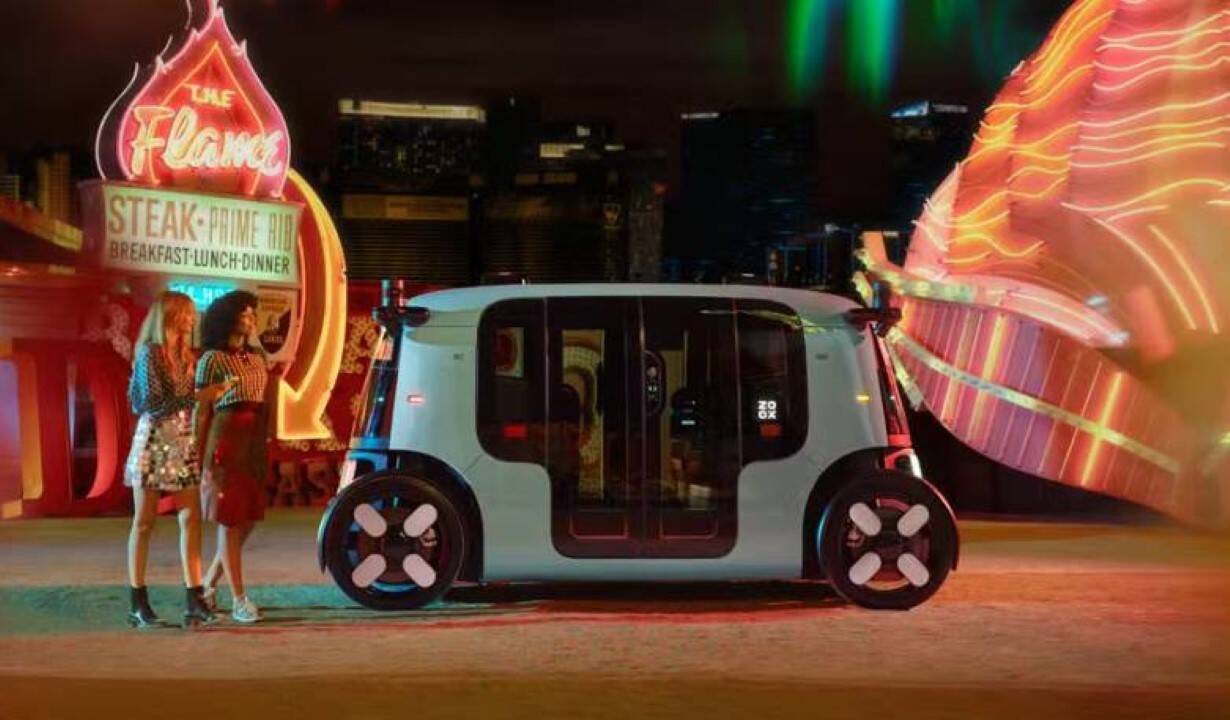
A new era for autonomous transportation is about to begin in the United States. Zoox, an Amazon subsidiary, obtained federal clearance to begin commercial operations of its innovative robotaxis. The highlight of these vehicles is the absence of a steering wheel and pedals, designed from the outset to operate without any human intervention, a significant milestone for the industry.
Approval was granted by the National Highway Traffic Safety Administration (NHTSA) on July 30, 2026, allowing the company to begin charging for trips. The first city to receive the service will be Las Vegas, with plans to expand to other markets as state requirements are met.
Vehicles without a steering wheel receive the green light to operate commercially
NHTSA’s decision is fundamental, as it represents the first time that a vehicle designed entirely to operate autonomously — without the need for a human driver, steering wheel or pedals — has received authorization for commercial exploitation. Until now, most companies in the sector used adaptations to conventional cars to implement their autonomous driving systems. This new scenario drives innovation and challenges established vehicle safety standards.
Zoox stated that federal approval allows it to charge for the service, marking a concrete step forward in monetizing the technology. The business model foresees a gradual expansion, adapting to the specific regulations of each American state, ensuring a controlled and safe introduction into the market.
What changes for the autonomous driving market in the United States
The clearance granted to Zoox is a watershed for the autonomous vehicle industry. Historically, tests and limited operations were carried out with cars that still had manual controls for possible intervention. The fact that a vehicle entirely designed for autonomy receives this federal approval validates a new design and safety paradigm. This could accelerate the development of other similar technologies and foster competition for truly innovative transportation solutions.
For consumers, the arrival of fully autonomous taxis without the need for a human driver represents the promise of greater convenience and, possibly, reduced costs in the long term as the technology becomes more widespread and efficient. Cities, in turn, can envision a future with less congestion and more integrated transport systems, although regulatory and infrastructure challenges are still considerable.
Safety Assessment by the American Transit Authority
NHTSA conducted rigorous analysis to ensure that Zoox’s autonomous driving system provides a level of safety equivalent to that required for conventional vehicles. Jonathan Morrison, administrator of the agency, detailed to Reuters that the authorization allows the operation of up to 2,500 vehicles per year, over the next two years, under constant surveillance. He assured that Zoox’s safety systems exceed, in many respects, the performance requirements of traditional vehicles.
“We can clearly state that the systems installed in Zoox exceed equivalent performance requirements for a compliant vehicle,” said Morrison. The agency, however, imposed additional conditions to monitor the operation of robotaxis:
- Regularly report all accident occurrences.
- Report any unexpected stops on public roads.
- Authorization may be suspended if significant security issues are identified.
Zoox faces competition from Waymo and Tesla with unique model
The autonomous vehicle market is highly competitive, with major players such as Waymo (from Alphabet, Google’s parent company) and Tesla, which also invest in fully autonomous driving technologies. However, the Zoox model differentiates itself by being a compact electric cabin, with two rows of seats facing each other, optimized for transporting passengers in urban environments. This design-from-scratch approach allows for deeper integration of autonomous systems without the limitations of retrofitting a traditional car.
While Tesla focuses on adding autonomous capabilities to personal passenger vehicles, and Waymo explores adapting existing cars, Zoox is betting on a solution entirely dedicated to robotaxi service. This strategic distinction uniquely positions the company in the future mobility landscape.
Zoox’s next steps after federal clearance
With approval in hand, Zoox is now preparing to gradually expand its business operations. The initial focus in Las Vegas will serve as a pilot project to refine the service and collect performance data in a real-world environment. The authorization to introduce 2,500 vehicles annually over the next two years demonstrates regulatory confidence in the company’s technology and growth potential.
Zoox will continue working to meet state requirements in other markets, paving the way for a broader presence in the United States. The success of this initial phase will be crucial in shaping public and regulatory perception about the safety and viability of autonomous vehicles without steering wheels and pedals on a large scale.





