
NASA prepares launch of Roman telescope to uncover dark energy

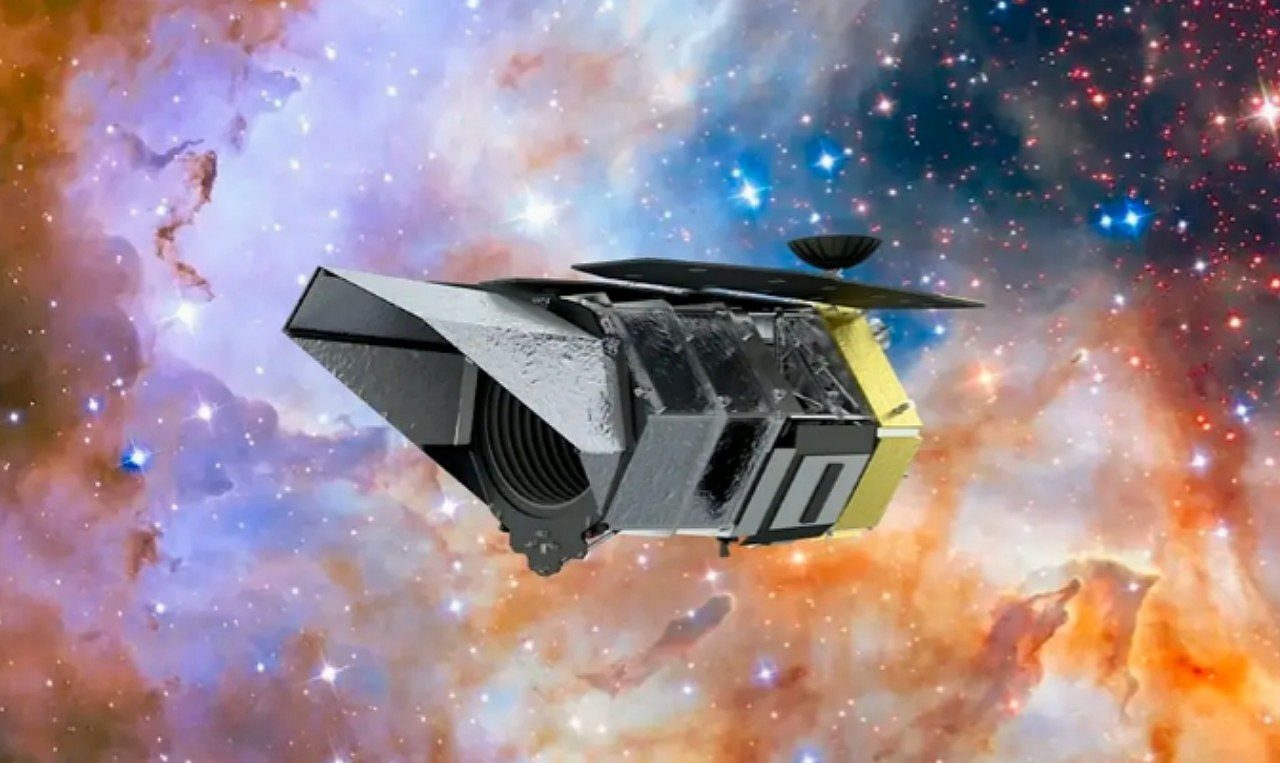
The United States space agency is making strides toward a crucial milestone in its timeline of scientific discovery, finalizing preparations for its newest deep observation equipment. Named after one of the most important scientists of the modern era, the Nancy Grace Roman telescope is scheduled to launch into space at the end of August. This high-tech machinery transcends the category of a simple satellite, becoming a vital instrument for solving the greatest mysteries of contemporary physics. The experts involved in construction ensure that the structure withstands the harsh environment of the space vacuum, providing humanity with a clear view, free from the distortions of the Earth’s atmosphere. The global community eagerly awaits the device’s ability to map the cosmos on an unprecedented scale, combining impeccable optical precision with never-before-recorded scanning speed.
Panoramic capability transforms the way you photograph the deep universe
To understand the true impact of this undertaking, it is necessary to analyze the technical specifications that place this artifact far ahead of its historical predecessors. While the legendary Hubble telescope changed our understanding of the cosmos by focusing on tiny, detailed slices of the night sky, the new bet adopts a completely panoramic perspective. The main instrument, equipped with a 2.4 meter diameter primary mirror similar to that of its predecessor, can cover a field of view one hundred times larger, without losing absolutely anything in resolution or sharpness. In practice, a single image captured by its lenses will encompass an immensity of galaxies that previous missions would take months or even years of continuous work to record.
This impressive tracking agility turns the observatory into a true large-scale research powerhouse. Astronomers will have the opportunity to catalog billions of stars and galactic formations in record time, creating a three-dimensional map of the universe with unprecedented statistical richness. Such operational efficiency dramatically shortens researchers’ waits for vital information, boosting the pace of academic discoveries in laboratories across the planet. Furthermore, advanced infrared light capture will make it possible to pierce dense clouds of cosmic dust, revealing stellar nurseries and complex structures that have always remained invisible to the eyes of traditional optical telescopes.
Investigation into the invisible force that accelerates the separation of galaxies
One of the mission’s priority targets involves the hidden force that makes up approximately 68% of the entire density of the universe and that has confounded theorists for generations. Dark energy works like a kind of inverted gravity, repelling galaxies from each other at an increasingly frantic pace. The newly developed machinery will measure the light emitted by distant stellar explosions and analyze the distribution of matter on colossal scales to try to unravel the essence of this phenomenon. By monitoring the formation of cosmic structures over billions of years, scientists plan to discover whether this mysterious force has remained constant or whether it has changed since the Big Bang event.
The rigorous mapping of the positioning of galaxies will act as a true cosmic ruler, making it possible to accurately measure the expansion rate in different eras of the history of the universe. Far from any interference from Earth’s atmosphere, the latest generation sensors will record wavelengths stretched by the dilation of space, delivering a volume of data capable of rewriting the foundations of physics. Understanding dark energy will not only serve to explain the past of our universe, but will also provide definitive clues about its final destiny, indicating whether the cosmos will continue to inflate eternally or whether, at some point, it will collapse in on itself.
Advanced detection technologies boost the search for habitable planets
Far beyond investigating the macroscopic architecture of space, the mission plays a crucial role in locating celestial bodies that orbit distant stars. The hunt for exoplanets will gain greater weight with the very high precision instruments attached to the main structure. The central goal is to identify planetary systems that have similarities with our solar system, focusing especially on rocky worlds located in the habitable zone of their host stars. To achieve this remarkable feat, the observatory will apply extremely refined detection techniques, easily overcoming the barriers faced by telescopes installed on Earth.
- Monitoring by gravitational microlensing, a method that uses the distortion of light generated by the gravity of a star to reveal the presence of planets around it.
- Employment of a state-of-the-art coronagraph, specifically designed to block the blinding glare of central stars and allow direct viewing of dimmer planets.
- Large-scale analysis of planetary transits, which consists of recording the minimum drops in luminosity that occur when a celestial body crosses in front of its sun.
The combination of these sophisticated methods will transform the observatory into one of the greatest planet hunters in the entire history of astronomy. The expectation is that thousands of new worlds will be cataloged within the first few years of operation, providing a detailed census of the frequency with which Earth-sized planets appear in the Milky Way. This information is absolutely essential to guide future space missions focused exclusively on identifying biosignatures and searching for any signs of extraterrestrial life.
Journey of the pioneering scientist who shaped the future of space astronomy
The choice of baptism for the mission carries an invaluable historical weight for the entire international scientific community. Nancy Grace Roman overcame numerous obstacles at a time when the female presence in the exact sciences was systematically discouraged. She broke paradigms by becoming the first woman to hold a high-ranking executive position at the American space agency, taking over as head of the astronomy department. His cutting-edge vision was the determining factor in convincing the government and academics of the urgency of placing telescopes above the Earth’s atmosphere, forever altering the way humanity investigates outer space.
Affectionately recognized behind the scenes as the mother of Hubble, she led the initial planning efforts that resulted in the launch of the most famous observatory of all time. The current honor works not only to celebrate her brilliant technical achievements, but mainly to inspire new generations of female researchers to enter the fields of science, technology, engineering and mathematics. The legacy of her perseverance will now orbit our planet, carrying her name on a machine built to expand the frontiers of human knowledge, exactly as she envisioned decades ago, when space exploration was still taking its first steps.
The final preparation stages require extreme rigor from the engineering teams allocated to the project. Each part undergoes exhaustive vibration, thermal vacuum, and electromagnetic interference testing to simulate the unforgiving environment of outer space. The integration of the primary mirrors with the light-harvesting sensors represents the culmination of years of ongoing research and technological development. When the rocket finally leaves the launch pad at the end of August, it will carry with it the hopes of thousands of researchers. The data generated by this mission will feed doctoral theses, independent studies and international partnerships for many decades, consolidating a new and promising era of astronomical discoveries.





