Tesla’s electric truck generates savings of more than US$400,000 for transport companies

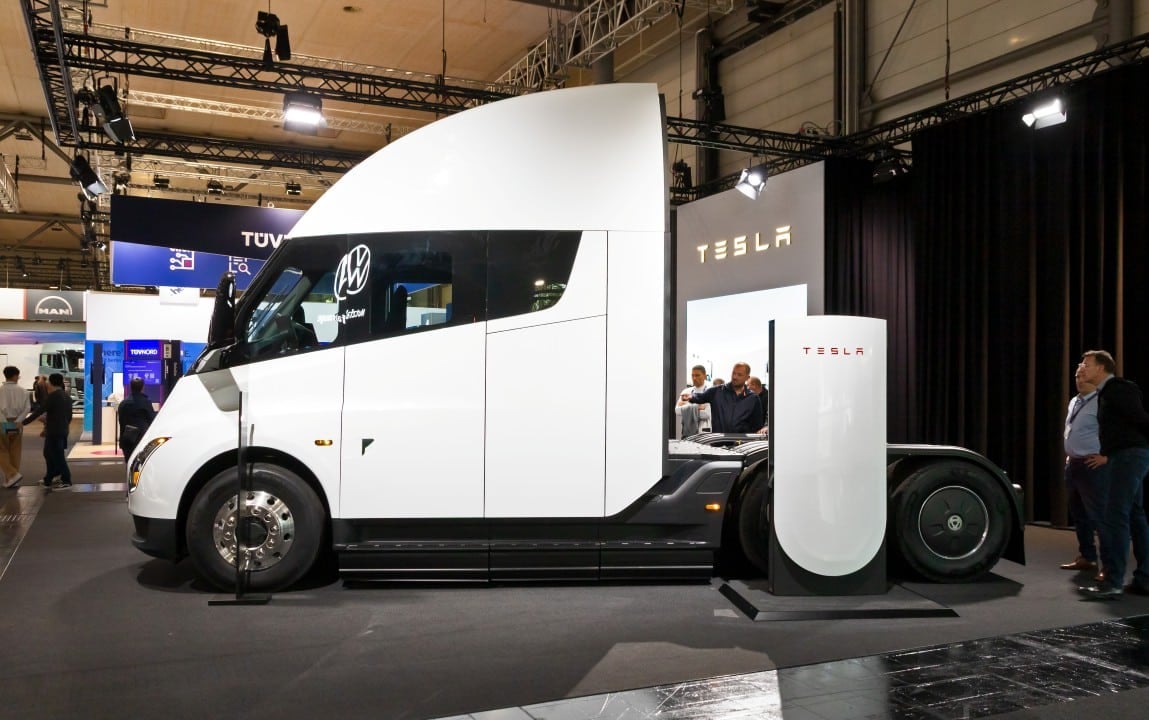
Large-scale manufacturing of the Tesla Semi is already a reality on the market, with the variant capable of traveling 800 kilometers per charge priced at US$290,000. By putting the total cost of ownership (TCO) at the tip of the pencil and comparing the sustainable model with a heavy Class 8 diesel vehicle, fleet managers identify a financial retention that varies from US$ 147 thousand to US$ 404 thousand over a window of five to ten years, depending directly on fluctuations in pumps and energy rates.
Considering the current economic panorama, where a gallon of fossil fuel hits the US$5.35 mark and commercial electricity costs around US$0.12 per kilowatt-hour, the balance tips aggressively towards the electrified alternative. This financial advantage is consolidated as the truck accumulates mileage, quickly diluting the higher acquisition price charged by Elon Musk’s automaker.

Financial projections show superiority of the electric motor on highways
To establish a realistic parallel, analysts pitted a Tesla Semi Long Range, plus a US$60,000 charging infrastructure (totaling US$350,000 in initial investment), against a traditional Freightliner Cascadia costing US$165,000, which currently dominates North American roads. The simulation considers an annual run of 160 thousand kilometers, requiring 1.7 kWh per kilometer in the electric model, while the combustion competitor delivers an average of 8.0 miles per gallon, an efficiency standard for modern heavy vehicles.
Taking into account the cost of energy at US$ 0.12 per kWh and the oil derivative at US$ 5.35 per gallon, the balance after half a decade of continuous operation shows the following results:
- Tesla Semi operation: US$486 thousand (equivalent to US$0.97 per mile driven)
- Combustion truck operation: US$633,000 (about US$1.27 per mile driven)
- Capital retention: US$147 thousand (a 23% reduction in expenses)
When extending this projection to an entire decade, the financial gap reaches an impressive US$404,000, as the Tesla model would require US$795,000 to operate, compared to US$1.199 million for its polluting rival. This gap in the graphs occurs because the maintenance and supply of the electrical set remains substantially cheaper than the continuous burning of fossil fuels throughout the entire useful life of the equipment.
Daily spending on supplies and workshops dictate the pace of profit
The weight of diesel in transport companies’ cash flow is overwhelming. Paying US$ 5.35 per gallon and driving 8.0 miles with that amount, the expense is US$ 0.67 for each mile advanced on the asphalt. In contrast, the Tesla Semi, consuming 1.7 kWh per mile at a rate of US$0.12, requires a mere US$0.20 to cover the same distance, which represents less than a third of the expense generated by the thermal engine.
Visits to the mechanic workshop further expand this positive margin. As the electric truck does not require a traditional engine block, complex gearbox and gas treatment systems (such as DEF fluid), its maintenance costs drop to around US$0.06 per mile. The diesel equivalent consumes US$0.18 per mile just in repairs, creating an extra US$12,000 loss per year for those who drive 160,000 kilometers, as the sustainable model ignores oil changes, replacement of injection nozzles and exhaust filters.
Variation in the price of electricity can change the economic scenario
An in-depth sensitivity analysis shows that the final bill is extremely dependent on the amount charged by energy concessionaires. Simulations carried out at different tariff levels indicate the following panorama:
- Tariff at US$ 0.08 per kWh: savings of US$ 181 thousand in five years and US$ 472 thousand in a decade
- Tariff at US$ 0.12 per kWh: savings of US$ 147 thousand in five years and US$ 404 thousand in a decade
- Tariff at US$ 0.20 per kWh: savings of US$ 79 thousand in five years and US$ 268 thousand in a decade
- Tariff at US$ 0.25 per kWh: savings of US$ 37 thousand in five years and US$ 183 thousand in a decade
- Tariff at US$0.30 per kWh: initial loss of US$6,000 in five years, reversed into a profit of US$98,000 in ten years
- Tariff at US$0.40 per kWh or more: diesel truck becomes the cheapest option in any term
The limit of financial viability is around US$ 0.30 per kWh for five-year cycles and US$ 0.35 per kWh for plans lasting a decade. Crossing this red line, the Tesla Semi’s attractiveness plummets. High demand rates in commercial hubs can easily push the cost per kilowatt above $0.25 in certain regions, even though the overwhelming majority of fleets are able to take advantage of reduced nightly rates by charging vehicles in their own garages.
Oil fluctuation contrasts with the predictability of electricity bills
The value of diesel has seen a frightening 40% jump since the first months of 2026, driven by global geopolitical tensions. The average at American gas stations was close to US$5.81 per gallon, a level that has haunted the sector since the records recorded during the start of the conflict in Eastern Europe in 2022. In states with heavier taxation, such as California, drivers already find pumps charging more than US$7.50.
This seesaw in prices destroys any attempt at long-term financial planning. When the spreadsheets used the old projection of US$3.50 per gallon, the advantage of the electric vehicle was slight. However, with reality hitting US$5.35, the savings over the five-year period skyrockets to the quoted US$147,000. On the other hand, electricity tariffs offer enviable stability, immune to jumps of 40% in a matter of weeks due to international crises. For logistics directors who need to close multi-year budgets, this predictability has a huge impact on decision-making.
Added to this, the recent 25% surcharges imposed by Section 232 on components and heavy vehicles have made the acquisition of a brand new combustion truck more expensive, which now costs no less than US$238,000, including federal taxes. With this inflation in the traditional market, the price difference on the window between the Tesla Semi and its competitor fell drastically from US$125,000 to just US$52,000, considerably accelerating the return on investment.
Garage charging solutions make fleet transition easier
The financial simulation includes an expense of US$60,000 to structure the recharge, a value that matches the new Basecharger offered by the automaker. This is a 125 kW piece of equipment focused on logistics yards, sold at US$40,000 (package with two totems), with the balance remaining for installation labor. This tower can inject 60% of the battery in an interval of four hours, ideal time for vehicles that spend the night at the base.
If the carrier operates at a frenetic pace and needs agility, the Megacharger system requires an investment of US$ 188 thousand for two stations, but delivers a brutal power of 1.2 megawatts, recovering 60% of the autonomy in just 30 minutes. This more aggressive initial outlay makes sense for companies that work multiple daily shifts, keeping the truck running for as long as possible to spread costs.
At the same time, the technology company is advancing in the construction of its own network with 66 Megacharger points spread across the main freight transport routes, a vital infrastructure to enable interstate travel. However, experts warn that the amount charged at these public stations should fluctuate a lot, potentially breaking the US$0.50 per kWh barrier depending on the time and region, which would inevitably make freight more expensive on long-distance journeys.