
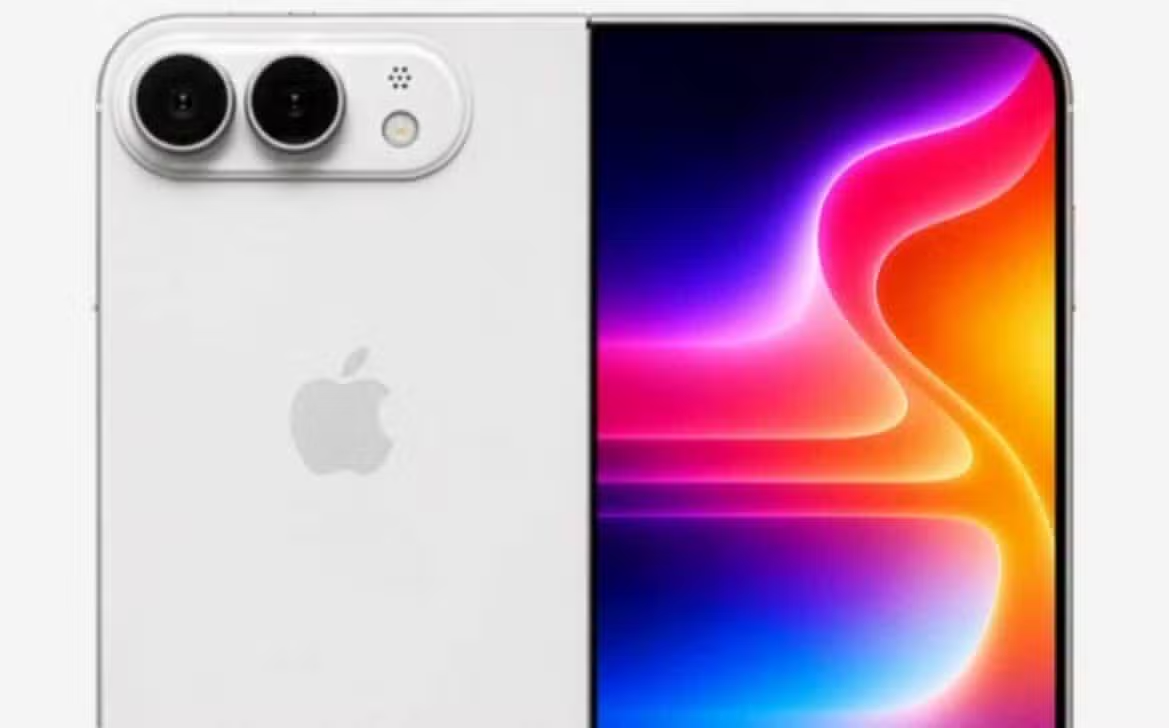
Recent details released on July 19, 2026 indicate that the North American manufacturer plans to equip its unprecedented flexible smartphone, provisionally called iPhone Ultra, with temperature control technology superior to that designed for the future iPhone 18 family. This strategic change aims to ensure that the device maintains an accelerated processing rate during complex tasks, avoiding sudden drops in performance throughout continuous use.
Sources linked to Asian assembly lines indicate that the technology giant has increased orders for an unprecedented vapor chamber format, custom-designed for the articulated chassis. The central purpose of this hardware component is to allow the future A20 Pro chip to reach maximum operating frequencies, bypassing thermal bottlenecks that normally force the operating system to slow down.
Preliminary data was shared by well-known analyst Fixed Focus Digital, who has a history of success in the mobile device market. As there are no public documentary records issued by the company to date, experts recommend analyzing these projections with caution, awaiting a definitive positioning of the brand.
Temperature control strategy on the new flexible smartphone
The adoption of advanced cooling mechanisms gained momentum recently, when the company introduced a vapor chamber based on deionized water in the iPhone 17 Pro, following a trend already consolidated by competitors in the Android ecosystem. Within this closed circuit, the fluid captures the thermal energy generated by the motherboard, turns into gas, travels to colder ends of the housing and condenses again, restarting the flow.
This uninterrupted cycle of heat exchange acts as a shield against overheating, spreading high temperatures throughout the metal structure of the equipment. For the design of the foldable model, engineers must apply an even more sophisticated variant of this mechanism, ensuring that the full raw potential of the A20 Pro processor is extracted without compromising the integrity of the internal parts.
Superior performance in graphically demanding tasks
Although the silicon is identical to that used in traditional versions of the same generation, the improved thermal architecture will deliver much greater long-term stability of use. In the consumer’s routine, this efficiency gain will be evident when running games with ultra-realistic graphics, rendering videos in very high resolution, processing complex artificial intelligence commands and switching between multiple applications simultaneously.
The extremely thin profile of the chassis appears as the main obstacle to internal heat dissipation. Recent leaks suggest that the device will measure an impressive 4.8 millimeters when unfolded and around 9.6 millimeters when closed, establishing a physical volume considerably smaller than the proportions expected for the future iPhone 18 Pro Max.
Impacts of ultra-slim design on internal components
Interestingly, the implementation of this high-performance vapor chamber is not just to enable the reduced thickness. The long-awaited iPhone Air, which should hit the market with a 5.6 millimeter profile, will not receive such complex thermal engineering, indicating that the focus of the Ultra variant is really to dominate the very high performance segment.
The articulated shape of the chassis may force the manufacturer to sacrifice technologies that have been recognized by users over the years. The lack of internal space, divided by the central hinge and double batteries, raises the possibility of removing the Face ID facial recognition sensor and the optical approximation photographic lens.
Launch prospects and changes to the brand’s catalog
To balance these possible hardware losses, Apple’s management is betting on delivering unprecedented computing power combined with a completely new user experience. There are also strong indications that this same extreme cooling technology will be reused in the special edition smartphone that will celebrate the line’s two decades of existence.
To date, the Cupertino corporation has maintained absolute silence regarding the official nomenclature, technical specifications or even the active development of this project. Consequently, all details involving heat dissipation engineering and product design remain in rumor territory, depending on an official presentation event to be validated.
Main technical characteristics speculated for Apple’s foldable cell phone
- Internal panel: 7.58-inch Samsung OLED flexible display, designed to hide the center crease.
- External display: 5.35-inch secondary screen, also supplied by Samsung.
- Processing unit: latest generation Apple A20 Pro proprietary chip.
- Working memory: 12 GB of RAM in advanced LPDDR5X standard.
- Energy capacity: 4,883 mAh module, correcting previous projections that predicted up to 5,800 mAh.
- Biometric security: return of the Touch ID fingerprint reader, positioned on the side button.
- Housing material: forged titanium alloy main frame.
- Physical profile (unfolded): extremely thin thickness of just 4.5 millimeters.
- Total measurements (folded): exact proportions of 120.6 x 83.8 x 9.6 millimeters.