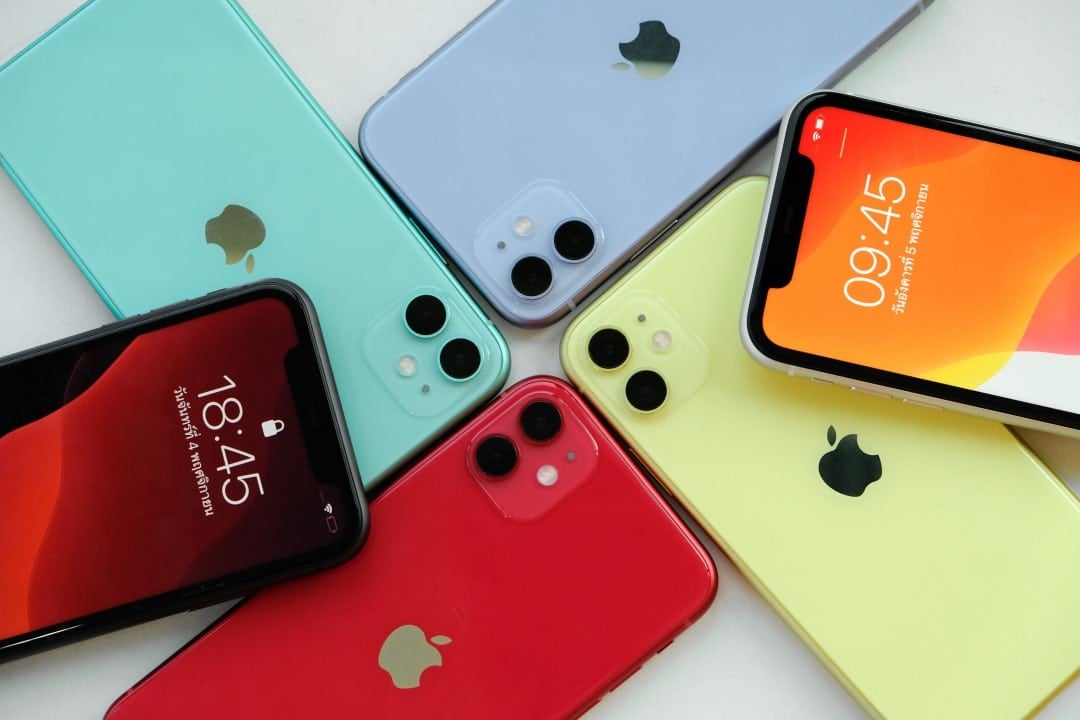
Apple confirmed on June 8, 2026, during the Worldwide Developers Conference (WWDC), that the iPhone 11, launched in 2019, will be compatible with iOS 27. This decision extends the software update cycle for the device for another year, potentially boosting its presence in the used cell phone market, where the model is still highly sought after by consumers.
Despite receiving the latest system, the smartphone faces significant challenges that make it a less ideal choice in 2026, mainly due to its hardware limitations. Among the obstacles are the basic configuration of 64 GB of storage and the A13 Bionic chip, components that show signs of aging in the face of the demands of modern applications and resources.
Capacity and performance of the iPhone 11 in question for 2026
One of the clearest indicators of the iPhone 11’s age can be seen in performance tests. On the AnTuTu platform, which evaluates several Apple devices, the 2019 model occupies the last position among 50 devices, with 974,047 points. This score contrasts sharply with the results of the current leader, the iPhone 17 Pro Max, which surpasses the iPhone 11 by more than 1.3 million points, underlining the company’s technological evolution over the years.
Hardware restrictions also affect the device’s ability to handle Artificial Intelligence (AI). Equipped with the A13 Bionic chip, the iPhone 11 does not support Apple Intelligence, the new set of AI features developed by the manufacturer for its latest devices. This means that even with iOS 27, the smartphone will not have access to features that will become increasingly central to the user experience in the coming years.
Other characteristics that contribute to device obsolescence include connectivity and display technology. Unlike more current models, such as the iPhone 17, the iPhone 11 is not compatible with 5G networks, being limited to 4G. Furthermore, its 6.1-inch IPS LCD panel, with a resolution of 1,792 x 828 pixels and a maximum brightness of 625 nits, falls short of the advances seen in the high-resolution and higher-brightness OLED screens of the brand’s recent launches.
The effects of time also manifest themselves in battery life and the camera system. The 3,110 mAh battery is managed by a processor manufactured using 7 nanometer (nm) lithography, which is less efficient compared to modern 4 and 3 nm chips. While the 12MP cameras can still produce good images for everyday use, they don’t reach the level of the more advanced sensors Apple has implemented in recent years.
In summary, although compatibility with iOS 27 offers an extension of the iPhone 11’s useful life, the device has a set of important limitations that make it a difficult recommendation for anyone looking for a smartphone for long-term use in 2026.