
Discover the official procedures for the announcement of extraterrestrial life


The debate regarding the existence of beings on other planets gained unprecedented strength in 2026. This movement occurred shortly after former North American president Barack Obama issued scathing opinions on the topic, coupled with the declassification of United States government reports detailing sightings of unidentified aerial phenomena. Until the end of July 2026, the issue continues to dominate global agendas.
In parallel to these revelations, an expert with a history of working with the CIA and other intelligence divisions assured that the American government holds data on at least four different alien species. To further fuel the scenario, multiple visual records of anomalous objects hit the networks, with emphasis on an episode of great repercussion that occurred in Brazilian territory.
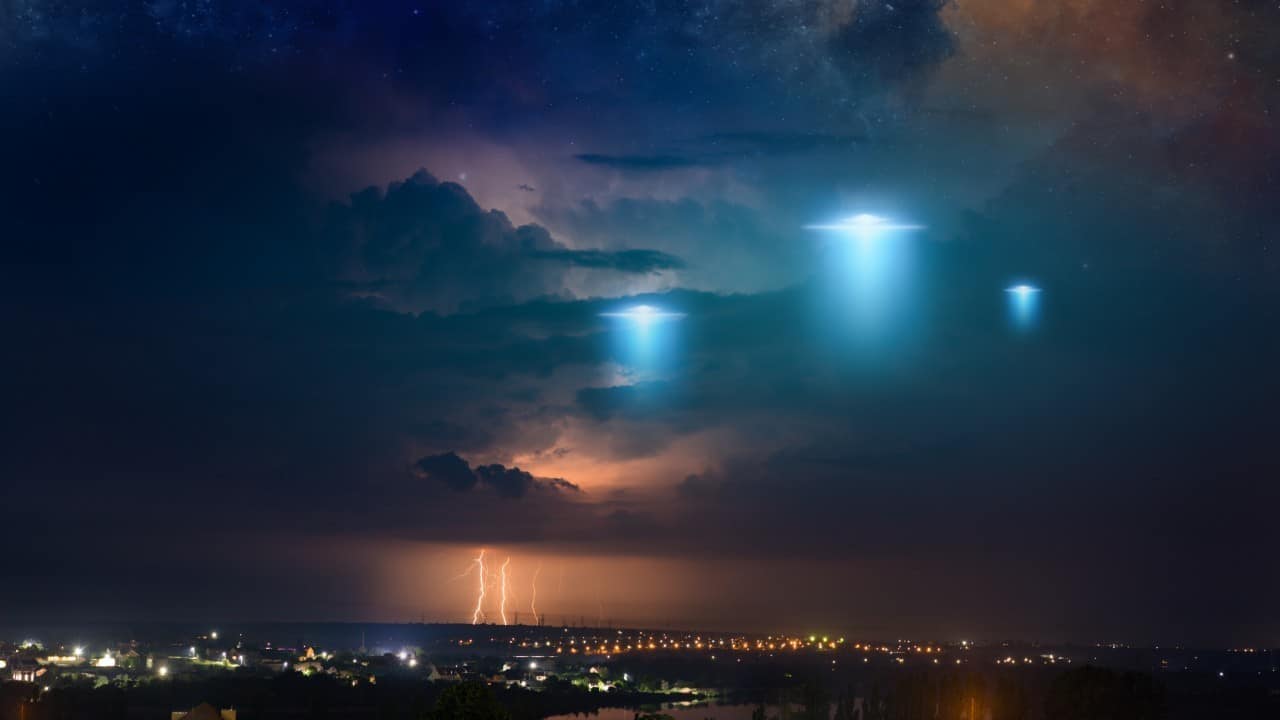
The increase in public interest, also driven by the release of the cinematographic work D-Day, brings to light an old question. People seek to understand exactly what steps global governments would take if science definitively proved that we are not alone in the universe.
Knowing that news of this caliber would change the history of humanity, the International Academy of Astronautics (IAA) created a rigorous manual of conduct. Originally created in the 1980s, this document defines how researchers should act from confirming data to communicating to the population, undergoing a recent reformulation to adapt to modern times.
Guidelines established by the International Academy of Astronautics to guide scientists
The standards stipulated by the IAA do not function as international laws or legal obligations. It is a guide to good scientific practices aimed at astronomers, laboratories and institutes that dedicate their resources to tracking any signs of intelligence beyond Earth.
The document, titled “Statement of Principles Relating to Conducting the Search for Extraterrestrial Intelligence,” guides the operations of groups such as the Scientific Search for Extraterrestrial Intelligence (SETI) project. The text lists fundamental guidelines to avoid errors of interpretation:
- Checking the data needs to be exhaustive: capturing a technological anomaly does not mean confirming the presence of aliens immediately, requiring months or years of technical scrutiny.
- Peer transparency is mandatory: any promising findings must circulate freely among the global academic community so that other laboratories can try to replicate and validate the results.
- Communication follows a rigid hierarchy: before reaching the press, the discovery passes through the screening of research institutes, reaches the table of the United Nations (UN) and specific governments.
- Initial silence is the golden rule: the manual strictly prohibits scientists from trying to send any type of message back to the source emitting the signal.
Guidance for the post-discovery period requires world leaders to thoroughly debate the issue before authorizing a ground response. The academy’s text argues that the right to interact with another civilization belongs to the human species as a whole, and not to an isolated country.
The SETI institute also defends the assembly of a multidisciplinary council, bringing together experts in international law, sociology, philosophy, ethics and mass communication. This team would be responsible for designing long-term strategies to deal with the consequences of definitive contact.
Recent updates to manuals seek to combat the spread of fake news
As the previous edition of the manual dated back to 2010, the IAA needed to modernize protocols to deal with the era of social media and generative algorithms. The main focus of this structural review is to shield science against the epidemic of misinformation and the creation of manipulated videos.
The new text demands even greater rigor in the screening of frequencies captured by observatories. The purpose of this extreme caution is to prevent premature leaks or misinterpreted data from causing collective hysteria in large cities.
Current rules require that unconnected laboratories confirm the same signal using completely different antennas and hardware. Only when all margins of error are eliminated and the origin of the pulse is confirmed, official spokespeople will be able to summon the press.
The document also warns of the need to separate noise generated by commercial satellites from genuine anomalies. Another concern expressed in the manual involves the creation of physical and digital security schemes to protect the researchers involved from media pressure and possible cyber attacks.
The raw data storage infrastructure gained special attention, ensuring that the information is secure, but accessible to peers. Furthermore, governments must act to block terrestrial interference in the exact frequency range where the possible alien signal was detected.
Methods used by researchers to validate possible alien transmissions
The most consolidated strategy in global observatories involves the hunt for technosignatures. This method involves scanning the cosmos for electromagnetic emissions or patterns of light that nature would be unable to produce on its own, indicating the presence of advanced engineering.
Unlike the search for bacteria or atmospheric gases, this aspect focuses strictly on technology, such as directed radio pulses. When computers report an anomaly of this type, astronomers begin a battery of tests to ensure that it is not an equipment failure.
After filtering out all the electromagnetic pollution generated by Earth’s own telecommunications infrastructure, scientists package the data and send it for independent analysis. This cross-review process guarantees the integrity of the research, strictly following IAA standards.
Role of large radio telescopes in capturing anomalies in deep space
To find these technological marks, radio telescope complexes point their gigantic dishes at specific star systems, capturing waves invisible to the naked eye. The algorithms look for very narrow transmission bands or rhythmic pulses that clash with the natural chaos of the universe.
The astronomers’ premise is that civilizations thousands of years older than ours use transmitters of colossal power. These devices would be capable of sending data packets across the interstellar void, overcoming cosmic dust and background radiation.
SETI antennas do not look for flying saucers crossing the solar system, but rather for communications leaks or navigation beacons. It was operating in this way that Ohio State University’s Big Ear radio telescope recorded the legendary “Wow!” in 1977, named after astronomer Jerry Ehman scribbled the expression on computer-printed paper.
Coming from the direction of the Sagittarius constellation, the pulse lasted exactly 72 seconds, reaching an energy peak thirty times greater than the background noise of the galaxy, operating exactly at the frequency of neutral hydrogen. This singular capture kept the scientific community intrigued for decades, fueling heated debates in university corridors.
Treated as one of the greatest mysteries of space exploration, the 1977 event was never repeated, leaving its true nature without a definitive answer. Recent studies indicate that the anomaly may have arisen from a rare and violent astrophysical event, such as the emission of energy from a magnetar, a neutron star with an extreme magnetic field.
Strategies adopted by the American space agency in the face of the interplanetary scenario
The search for extraterrestrial biology occupies a central place in the budget of the United States space agency, NASA. The institution’s current administrator, Bill Nelson, has publicly stated that the chances of finding other forms of life in the cosmos are extremely high, considering the vastness of the universe.
The North American agency applies the same principles of caution suggested by the IAA, treating any anomaly in the sensors only as a working hypothesis. Official confirmation only progresses after partner laboratories around the world independently attest to the veracity of the data.
Robotic missions and probes that scour the solar system for biological traces
To answer humanity’s biggest question, NASA invests in multiple exploration fronts. The astrobiology department focuses on mapping complex organic molecules, identifying subsurface oceans and searching for biosignatures, such as methane or oxygen concentrations that indicate metabolic processes on exoplanets.
The space program also sends laboratories on wheels to search for microscopic fossils in our cosmic neighbors, such as the Mars 2020 mission. The Perseverance vehicle currently travels through the dry bed of Jezero crater, drilling rocks and storing geological samples while transmitting daily reports to control centers.
Other worlds in our system have already received probes to analyze the composition of their clouds and surfaces. The decade’s calendar includes the launch of Europa Clipper, towards Jupiter’s frozen moon, and the Dragonfly mission, which will send a drone to fly over Titan, Saturn’s largest moon, in 2028, both seeking habitable environments.
State-of-the-art tools fuel the hunt for distant civilizations
Guided by the principles of astrobiology, contemporary programs seek indirect clues of alien engineering. Researchers combine the power of orbiting observatories, cloud processing and artificial neural networks to mine distant oceans and possible stellar energy-harvesting megastructures.
Private consortiums like Breakthrough Listen rent airtime on Earth’s largest radio telescopes to listen to millions of stars simultaneously. In space, the James Webb Space Telescope revolutionized the field by being able to read the chemical composition of the atmospheres of planets located tens of light years away.
All this remote monitoring works in conjunction with physical missions that land equipment directly on moons and asteroids. In the practice of space science, long-distance observation and soil collection complement each other to form a clearer picture of the chemical evolution of the universe.
Theological views differ on the impact of a discovery outside our planet
Confirming that we share the universe with other species would shake the structures of philosophy, culture and global politics. In the field of faith, the scenario is complex, as religious leaders do not have a unified vision on how to fit beings from other worlds into their doctrines.
Expected reactions from the world’s main faiths to an official announcement
If scientists present





