
Clocks go back in the United States as Donald Trump tries to fix daylight saving time
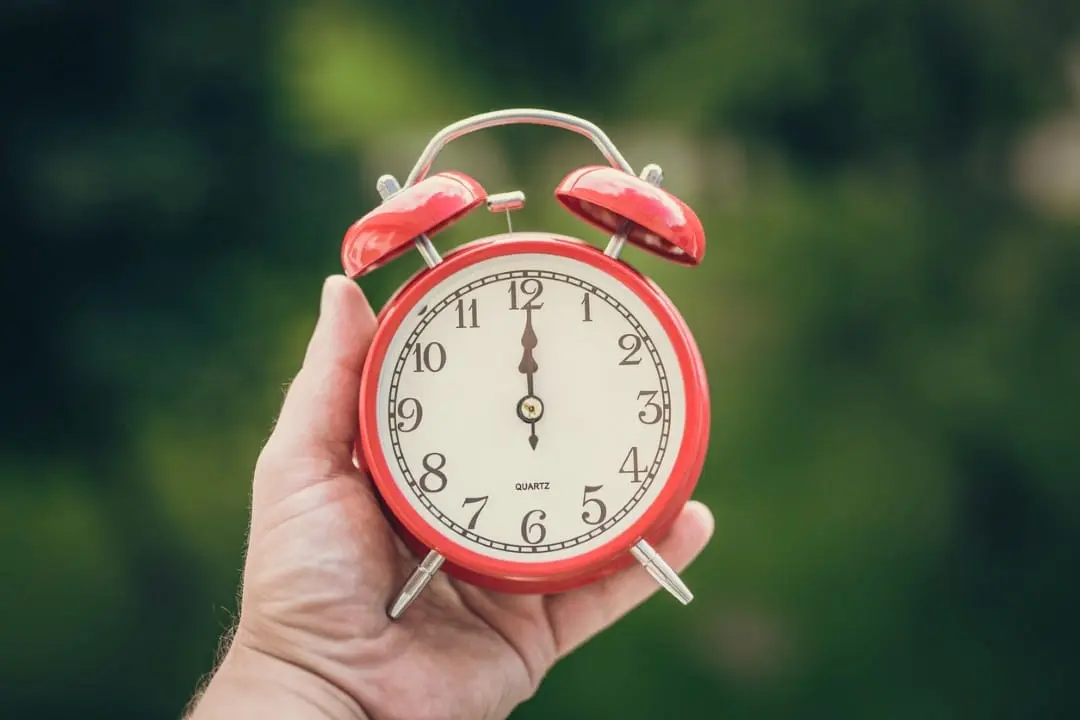
The routine of millions of Americans will undergo yet another compulsory change at the beginning of November 2026, with the traditional delay of the hands. Despite the strong political pressure exerted by Donald Trump to abolish this centuries-old practice and make advancing hours definitive, the United States Congress has not yet transformed the popular will into effective legislation. Without final approval in the Senate, the population will need to adapt to the change again, reigniting a debate that mixes economic interests, partisan disputes and medical concerns.
The coming and going of the clocks, which occurs twice every twelve months, has become one of the most hotly debated topics in the recent American public sphere. Even with the former president’s declared support for ending the transition, years of drawn-out discussions in the legislature were not enough to block the next adjustment. Popular dissatisfaction grows with each cycle, but Washington’s bureaucracy keeps tradition intact for the overwhelming majority of citizens.
If parliamentarians do not reach a last-minute consensus, the entire country will perform the ritual of gaining an extra hour of sleep on the first weekend of November. This persistence of the current system frustrates residents, business owners and sleep experts, who often declare that they are ready to abandon the model adopted during World War I to save coal.
Adjustment mechanics and the immediate impact on American routine
The end of the early hours period is scheduled for November 1st, at exactly two in the morning local time in each zone. At this particular time, digital devices will automatically reset to one in the morning, while analog clocks will need manual adjustment. This regression marks the official return to American Standard Time, which will last throughout the winter in the Northern Hemisphere.
The change gives citizens an additional hour of rest on that specific night, but drastically alters the perception of sunlight in the following months. The adjustment results in much earlier sunsets, causing many people to leave work in the dark, while also ensuring brighter mornings for students walking to schools.
The official United States calendar stipulates that clocks always start on the second Sunday in March. The return to normal time, in turn, invariably happens on the first Sunday in November, creating a cycle of eight months of advanced hours versus four months of standard time.
Learn more: Political pressure tries to eliminate clock changing in the United States in 2026
Legislative barriers and Donald Trump’s offensive in the Senate
The explanation for the survival of this practice lies in the inertia of the Capitol in modifying existing federal legislation. For decades, Democratic and Republican lawmakers have advanced joint proposals to fix daylight saving time or abolish the biannual change altogether. Bills like the Sunshine Protection Act have gained traction in the past, but have invariably run into disagreements over which time zone should become the definitive standard.
The Chamber of Representatives took a significant step in July, approving a text that aims to keep the time advanced permanently. The real battleground, however, has moved to the Senate, where the proposal has met with historical resistance. The fear of many senators goes back to the 1974 oil crisis, when the United States tested permanent daylight saving time and the population quickly rejected the idea due to excessively dark mornings in winter.
Donald Trump took an active role in behind-the-scenes negotiations, personally calling undecided lawmakers in search of votes. The former president publicly declared his expectation that the Senate will validate the measure. However, the House Majority Leader, Republican John Thune, representing South Dakota, has expressed recent skepticism that there is enough support to ensure final passage of the bill.
Territories and states that reject the biannual change
Although federal guidance dictates the change for most of the country, American law allows states to choose to remain on standard time throughout the twelve months of the year, exempting themselves from the adjustment. Currently, several locations are already experiencing this reality and will not need to change their clocks at the beginning of November.
Read also: Daylight saving time ends on November 1st and Donald Trump insists on its permanence
- Hawaii, which due to its geographic location close to the Equator, has minimal variation in sunlight throughout the year.
- Most of the state of Arizona, which suffers from extreme heat and prefers longer nights in the summer (with the exception of the Navajo Nation, which embraces the change).
- American Samoa, unincorporated territory located in the Pacific Ocean.
- Guam, a strategic island located in the Micronesia region.
- Northern Mariana Islands, which maintain a fixed time zone to facilitate regional trade.
- Puerto Rico, a Caribbean territory that operates at the same time all year round.
- American Virgin Islands, which also do not require advance payments.
Apart from these specific exceptions, the entire American continental territory continues to be subject to the obligation to switch between the two systems annually, generating an immense logistical cost for airlines, technology companies and television networks.
Research reveals the population’s exhaustion with the system
Recent statistical surveys prove that American society has lost patience with the requirement to reset its biological and electronic clocks twice a year. The debate went from being just a personal preference to becoming a clear demand for stability in the daily routine.
A study conducted by YouGov revealed that a large majority of 62% of Americans support the permanent elimination of semi-annual exchanges. Another detailed survey, carried out by Gallup in early 2025, found that 54% of respondents demand an end to the practice. Within this dissatisfied group, 48% prefer the country to adopt standard time all year round, while 24% support the permanent fixation of daylight saving time.
The so-called Daylight Act of 2026 appears as the main legislative tool capable of changing this scenario. If supporters of the law can overcome regional differences, the way Americans deal with time could undergo its biggest transformation in nearly a century.
Medical warnings about damage to the biological clock
The scientific community and sleep medicine experts form the most vocal group against maintaining the current system. Researchers categorically state that forcing the human body to advance or delay its rhythm aggressively interferes with the functioning of the organism.
On the same topic: End of daylight saving time in the United States advances under pressure from Donald Trump
Erik Herzog, a professor of biology and neuroscience at Washington University and former president of the Society for Research on Biological Rhythms, serves as a leading critic of the change. The academic argues that the adoption of permanent standard time would be the most responsible decision from the point of view of public health, as it respects human biology.
The neuroscientist details that the forced changes deregulate circadian rhythms, the internal mechanism responsible for dictating sleep cycles, the release of hormones and metabolism. The transition that occurs in spring, when the clocks are set forward and the population loses an hour of sleep, is considered the most dangerous. Hospital data shows a consistent spike in heart attacks, strokes and fatal traffic accidents on the Monday immediately following this adjustment.
The immediate scenario for American citizens
While academic debates and political maneuverings continue in Washington, practical realities demand that United States residents prepare for yet another transition this fall. The lack of a concrete legislative resolution means that the status quo will prevail in the short term.
Discussions in Congress about setting a single timetable will remain active, driven by lobbying from different sectors of the economy and pressure from influential figures. However, until a document is signed in the Oval Office, the tradition of setting the clocks back in November will continue to dictate the rhythm of American life, contrary to the will of voters, doctors and political leaders.
More news in Latest News (EN)
See more → Sony clarifies launch timing and hardware price plans for PS6
 Sony PlayStation 6 cost nears $950 as memory prices climbAfD state election triumph prompts urgent review of Germany’s democratic foundationsAaron Judge returns to Yankees lineup, igniting playoff push after three-month rib injury absenceHigh-altitude tragedy: Climber perishes after fall on Aspen-area 14er summitEgyptian TV personality and 11 co-defendants condemned to death for large-scale synthetic drug traffickingPlayStation 6 component bills surge to $960 amid memory crunch
 Rockstar North adds canine waste throwing to GTA 6 world
More news on Mix Vale
- 1Families turn to online networks for flood victim data amidst official silence near Tibet border
- 2Indian civil servant gains widespread social media fame leading aggressive food safety crackdown
- 3LSU coach Lane Kiffin reveals strategic delay in Clemson game to gain competitive edge
- 4Trump demands Bombardier relocate production to US for market access, escalating trade tensions
- 5Rockstar North details dog mechanics and street combat in GTA 6
- 6Corporate ChatGPT users gain custom text style replication
- 7Workplace ChatGPT starts copying individual writing styles
- 8Top Ukrainian prosecutor resigns following probe into vast illegal call center network scheme
- 9Calls intensify for Australia to assert foreign policy independence over extensive US military presence
- 10Saxony-Anhalt results underscore growing momentum for European far-right parties ahead of key votes