
Observers may notice dark fault in the Milky Way in August; understand how to see

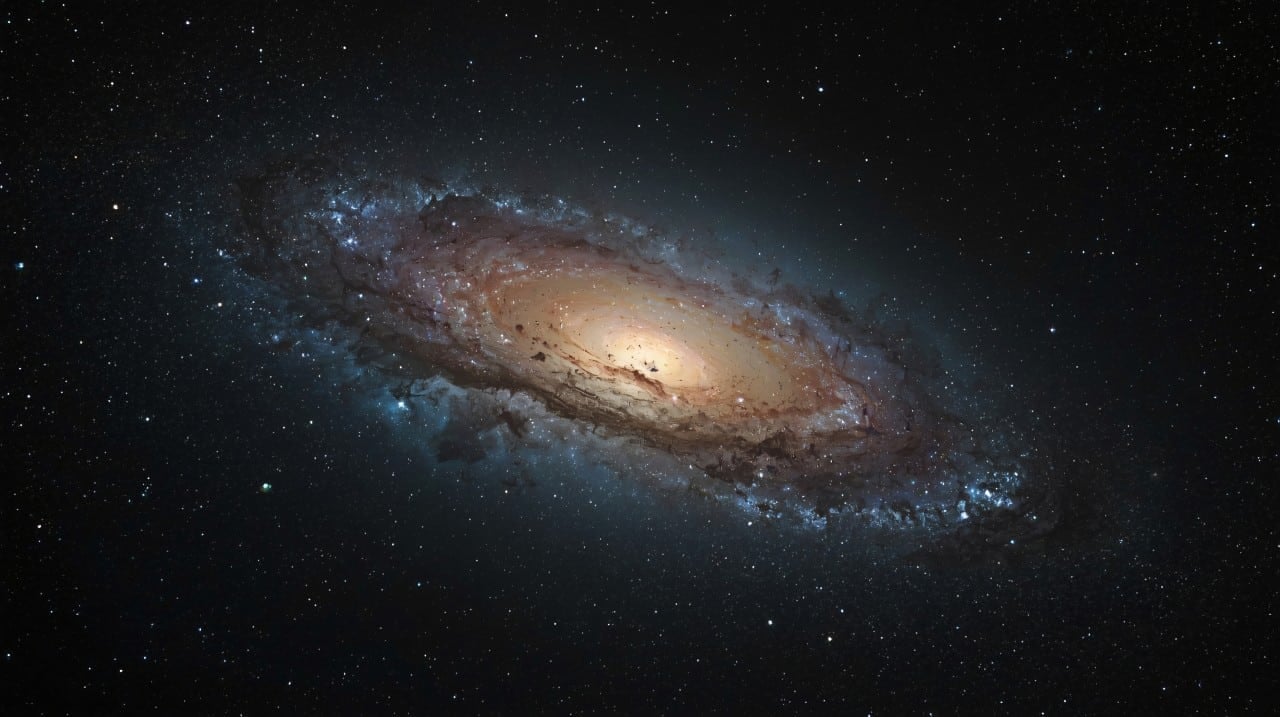
For those looking to admire the Milky Way in the Northern Hemisphere, the month of August offers a special opportunity, especially from August 6th. During this period, the phase of the waning moon, which begins to appear later in the sky, guarantees around ten nights of ideal darkness for observation. Coinciding the experience with the peak of the Perseid meteor shower, between August 12th and 13th, can make the event even more memorable.
Essential conditions for observing the Milky Way in the night sky

- Clear visibility of our galaxy depends on a few crucial factors. To be successful in observing the Milky Way, you need to consider:
- The correct time of year, usually between March and October, when its brightest part is visible.
- The proper lunar phase, which goes from the last quarter to a thin crescent.
- A place away from urban lights, with really dark skies.
- Eyes adapted to darkness, which takes approximately 25 minutes in the complete absence of light.
- A prior understanding of what you expect to see.
How to identify the center of the Milky Way and its hidden rift
The best strategy for getting used to your vision and locating the galaxy is to start looking for known stars in the south direction. Focus on the Summer Triangle, a group made up of the stars Vega, Deneb and Altair, which serves as your guide. As you look across the area stretching from Deneb to Altair on the left side of the Summer Triangle, the Milky Way’s dense arc of starlight will gradually reveal itself. More than that, an intriguing detail that many don’t realize will emerge: the Great Rift.
You can see the glowing halo of gas and stars that marks the Galactic Center of the Milky Way, especially prominent below the Summer Triangle in the constellation Sagittarius. The closer the observer is to the equator, the higher and brighter this region will appear in the sky.
When you look, dark spots appear within the stellar arc that runs from Deneb to Altair. This is the Great Rift, a huge interstellar cloud of gas and dust. It appears to split the Milky Way in half, blocking and scattering visible light from stars and nebulae behind it, giving the impression of a black inkblot across the sky.
Distinctive methods for exploring the Great Rift
There are two main approaches to studying the Great Rift. One of them involves using modern technology, observing it in infrared light and radio waves, which can pass through interstellar dust. Specialized observatories, such as radio telescopes and the James Webb Space Telescope, are built for this purpose, allowing us to investigate the billions of stars at the center of the galaxy that lie beyond the Great Rift. The Vera C. Rubin Observatory, for example, maps the visible sky to understand the structure and formation of the Milky Way, including this dark cloud.
The other way to observe the Great Rift is to appreciate it directly, with the naked eye, for what it is. The section visible from Deneb to Altair is known as the Cygnus Rift or Northern Coalsack, located at a distance of 1,000 to 3,000 light years, in the constellation Cygnus. It lies just below Deneb, over an area of dense stars called the Cygnus Star Cloud. About six degrees across, the Northern Coalsack blocks background starlight and represents just the northern tip of the Great Rift, which observers also call the Dark River or Dark Cloud.
Cultural importance and the depth of the Milky Way
Beyond the Northern Coalsack Nebula, the Great Rift stretches across approximately 120 degrees of the sky, from Swan and Sagittarius in the Northern Hemisphere to Centauri in the Southern Hemisphere, where it houses the famous Southern Cross. Understanding how different cultures interpret this cosmic darkness is fascinating. While modern astronomy sees it as a cloud of dust to be traversed, indigenous people, such as the Wiradjuri of Australia, identify it as the silhouette of an emu, using its position as a seasonal calendar. The Incas of South America, in turn, saw a llama and her cub.
Observing the Great Rift highlights the complexity and depth of our own galaxy, revealing that when we gaze at the arc of light across a summer night’s sky, we are in fact looking at the Milky Way from within.
Tools and tips for the experiment
To plan your observation of the Milky Way and the Great Rift, total darkness and the right timing are essential. Apps like “Milky Way Tonight” can help by checking the position of the Milky Way’s core, the phase of the moon, sunrise and sunset times, cloud forecasts and the Bortle index for your location, an important indicator of light pollution. The app also offers a dark sky finder, a very useful feature for those looking for the best conditions.
Although it is stunning to the naked eye, taking binoculars can enrich the experience, allowing you to explore the dense star fields and the edges of the Great Rift.
Observation suggestions between July 31 and August 7, 2026
This period is ideal for organizing an expedition to observe the Milky Way and the Great Rift, but the recent full moon can overshadow the galaxy for much of the night. This could make it difficult to see the peak of the South Aquarid Delta meteor shower, around July 30 and 31, and also the Perseids, which are approaching their peak in August. Saturn is a good pre-dawn viewing option, and Venus remains bright in the night sky if the horizon is clear. Astrophotographers and enthusiasts with powerful telescopes can use light pollution filters to take advantage of nebula season, especially the Lagoon Nebula and Trifid Nebula (M8 and M20), the Small Sagittarius Star Cloud (M24) and the Wild Duck star cluster (M11).
Discover the Hanger asterism or Brocchi Cluster
The asterism known as The Hanger, or Brocchi Cluster, is a pattern of ten stars in the constellation Vulpecula. Six of them form a straight bar and four create a curved hook, resembling the shape of a coat hanger. To find it, locate the Summer Triangle (Vega, Altair, and Deneb) and look approximately halfway between Vega and Altair. The small constellation of Sagitta, the Arrow, points nearby, with The Hanger just to the north. In very dark skies, it is possible to see it with the naked eye, but binoculars are the best choice to appreciate the full shape. Although it was once considered a cluster of stars that were born together, today it is known that The Hanger is just a fortuitous alignment of unrelated stars at different distances, a kind of cosmic illusion.





