
Titan, Saturn’s moon, has a unique atmosphere where humans do not need a space suit

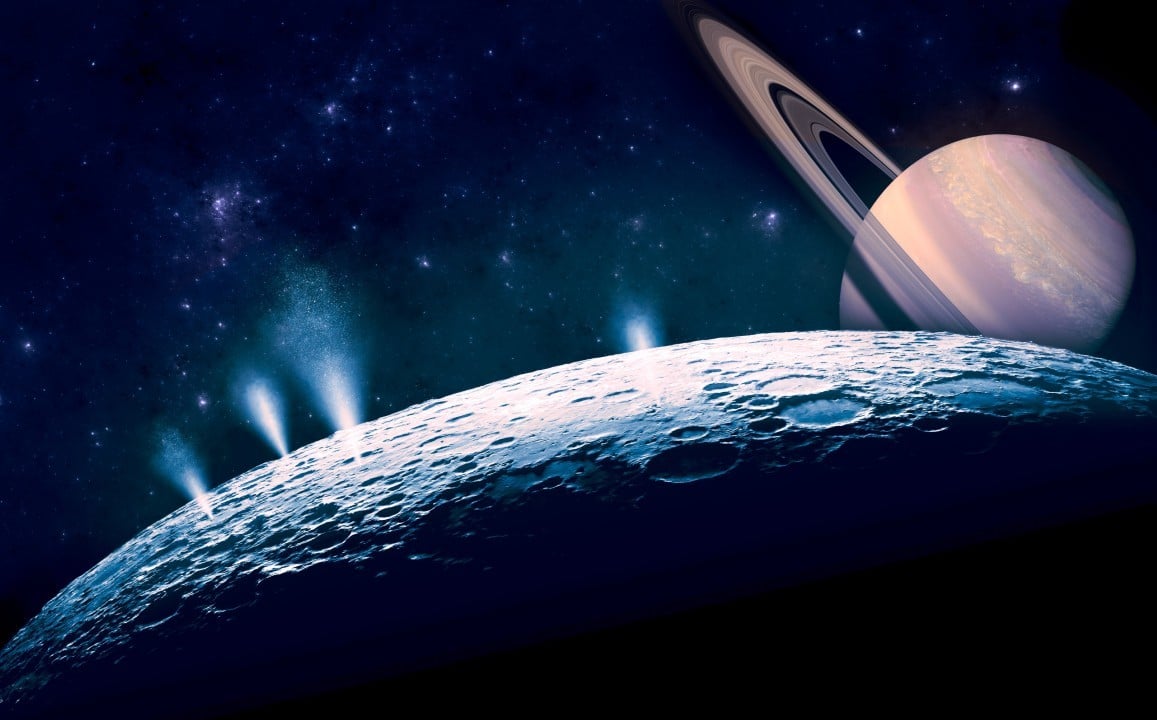
The moon Titan, Saturn’s largest natural satellite, has a characteristic that differentiates it from any other celestial body in the solar system, with the exception of Earth: it is the only place where a human being could stand on the surface without the need for a pressurized space suit. Despite this notable particularity, the local reality still requires protection against extreme temperatures and the lack of breathable oxygen, making it a brutally challenging environment. This singularity, however, redefines the way in which the possibility of life and exploration on other worlds is imagined.
The unique characteristics of Saturn’s largest moon
With a diameter of approximately 5,150 kilometers, Titan surpasses the planet Mercury in size, consolidating itself as the second largest moon in the solar system. Titan’s dense atmosphere is made up of about 95% nitrogen and 5% methane, exerting a surface pressure of approximately 1.5 bar. This pressure is almost 50% greater than Earth’s atmospheric pressure, providing the necessary support for the human body, which does not occur in other places where people could land.
Titan’s surface maintains an average temperature of around -179 degrees Celsius. In this glacial environment, methane and ethane exist in a liquid state, forming rivers, lakes and seas. It is the only celestial body, besides Earth, known to have stable liquids on its surface. Human exploration has already reached this icy moon; The Huygens probe, carried by the Cassini spacecraft, made a successful landing on Titan in January 2005, marking the only human landing in the outer solar system.
Why Titan is an intriguing place for future exploration
Titan’s atmospheric characteristics, added to its composition, offer several advantages over other candidates for future exploration. Its thick atmosphere and high-altitude haze act as a natural shield, protecting the surface from the radiation that makes places like Mars and the Moon so hostile in the long term. This would eliminate the need to bury settlements under multiple layers of regolith.
Furthermore, the nitrogen and methane present on Titan represent abundant raw materials for the production of fuel, plastics and even breathable air, if oxygen can be extracted from the abundant ice. The moon’s low gravity, approximately one-seventh that of Earth’s, combined with the dense air, generated one of the most famous curiosities: the possibility of a person with wings being able to fly using their own muscular strength. This is a real consequence of local physics, although engineering any useful activity in extreme cold remains a challenge.
Immense Challenges for Human Habitation on Satellite
Despite the particularities that make Titan fascinating, the obstacles to human habitation are significant and numerous. The hostile environment imposes a series of limitations that are insurmountable with current technology.
- Extreme cold:Temperatures of -179 degrees Celsius are so low that they make many common materials brittle. Keeping humans and equipment warm would require enormous amounts of energy.
- Solar energy shortage:Titan’s distance from the Sun means that the sunlight it receives is only about 1% of that reaching Earth. Titan’s atmospheric haze further reduces this irradiation, rendering solar energy practically useless. Any form of life or settlement would rely exclusively on nuclear energy.
- Frozen water and lack of oxygen:Titan’s surface liquid is methane, not water. Water exists, but it is frozen in rocks as hard as granite, with the possibility of a deep underground ocean. Additionally, there is no oxygen to breathe, meaning that even with favorable atmospheric pressure, bottled oxygen and a heated, although not pressurized, suit would be required.
- Distance and isolation:Titan’s vast distance from Earth results in a delay of more than an hour for a one-way radio signal. A manned voyage with current propulsion technologies would take years, and isolation on such a scale would pose a psychological danger apart from the chemical and physical challenges.
The Dragonfly mission will investigate Titan’s potential for life
NASA is preparing for a deeper investigation of Titan with the Dragonfly mission, led by the Johns Hopkins Applied Physics Laboratory. This spacecraft, a nuclear rotorcraft with eight propellers, will act as a drone capable of flying between different locations on Titan’s surface. The launch is confirmed for 2028, with arrival on Titan around 2034.
It is essential to clarify the meaning of “habitability” in this context, as the term can be interpreted in different ways. Dragonfly was designed to study Titan’s chemistry and see whether the moon could harbor, or has harbored, the basic components of life. This research focuses on prebiotic chemistry and possibly the existence of microbes. This is not an investigation into the viability of human settlements. Maintaining this distinction is crucial to an honest understanding of Titan’s capabilities.
Although Titan is not an immediate home for humanity with current technologies – the cold and energy budget are insurmountable challenges for now – it remains one of the most intriguing and unique places in the outer solar system. Among all the dead, airless rocks we could reach, Titan is the only place where the air would support a human, the pressure wouldn’t crush it, and the sky would have a climate. This isn’t the same thing as “habitable,” but it’s as close to familiar as the outer solar system has to offer, and the Dragonfly mission is about to provide valuable information about this mysterious moon.





